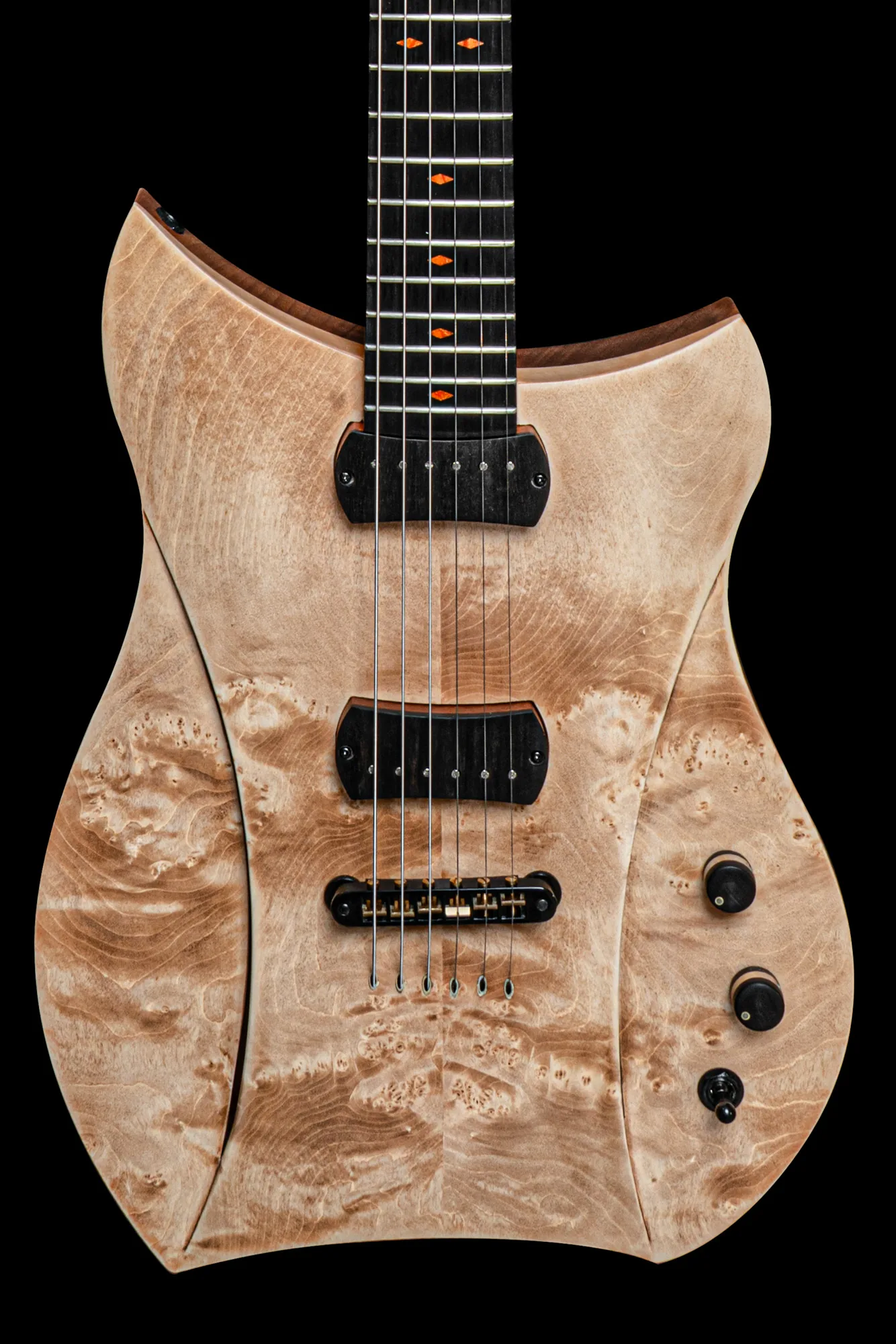
What a hollow body really does.

Bacci GuitarsPescia, Tuscany
Every electric guitar body is one of three things, and the difference is not cosmetic, it changes how the instrument sounds and feels. A solid body is a single block of wood: the string's energy stays focused, sustain is long and feedback is low, which is why it suits high gain and high volume. A semi-hollow adds chambers around a solid centre block, keeping much of that focus while adding warmth and air. A fully hollow guitar removes the centre block entirely, so the whole body resonates.
Fully hollow is the most acoustic of the three, and by far the hardest to build well. The very thing that gives it its voice, an open, resonating body, is also the thing that has to stay stable, controlled and free of runaway feedback. Get it right and you have a guitar that breathes. Get it wrong and you have a box that howls.
This article explains what a hollow body actually does, how it differs from semi-hollow and solid, the trade-offs, and how Bruno Bacci spent ten years building a fully hollow electric that resonates like an acoustic without losing control.
A fully hollow electric that resonates like an acoustic, ten years in the making.
On a solid body, almost all the string's energy stays in the string, which is why solid guitars sustain and stay tight. On a hollow body, the vibrating strings drive the top and the air inside the body, and that moving air feeds back into the strings. The body becomes part of the instrument's voice rather than just a platform for the pickups.
You hear it as warmth, air and a rounder attack, a note that blooms slightly instead of starting dead flat. It is the sound of jazz boxes, of old blues and rockabilly, of clean tones with depth. It is also, on most hollow guitars, a tendency to feed back once the amp gets loud, because the body is so eager to resonate.
The whole craft of a great hollow body is keeping the good part, the resonance, while taming the awkward part, the uncontrolled feedback. Different builders solve it differently. The fully hollow approach keeps the most resonance and takes on the most difficulty.
The Tosca is built on a skeletal frame. Rather than hollowing out a solid body, Bruno designed a structure where mass is taken away to create controlled air chambers, with the vibration guided through the frame itself. The architecture carries a name of its own, Bacci and the designer Eri Goshen, who spent seven years on the subtractions and proportions of the body.
The result resonates like an acoustic, deep, dynamic and alive, while custom Kloppmann pickups capture the body without mud. Michael Kloppmann wound fourteen pickup versions specifically for the chambering, because a hollow body needs pickups voiced for it, not borrowed from a solid guitar.
Clarity and warmth at once sounds impossible on paper, two qualities that usually pull against each other. On the Tosca it is the entire design goal, reached across ten years and eight prototypes.
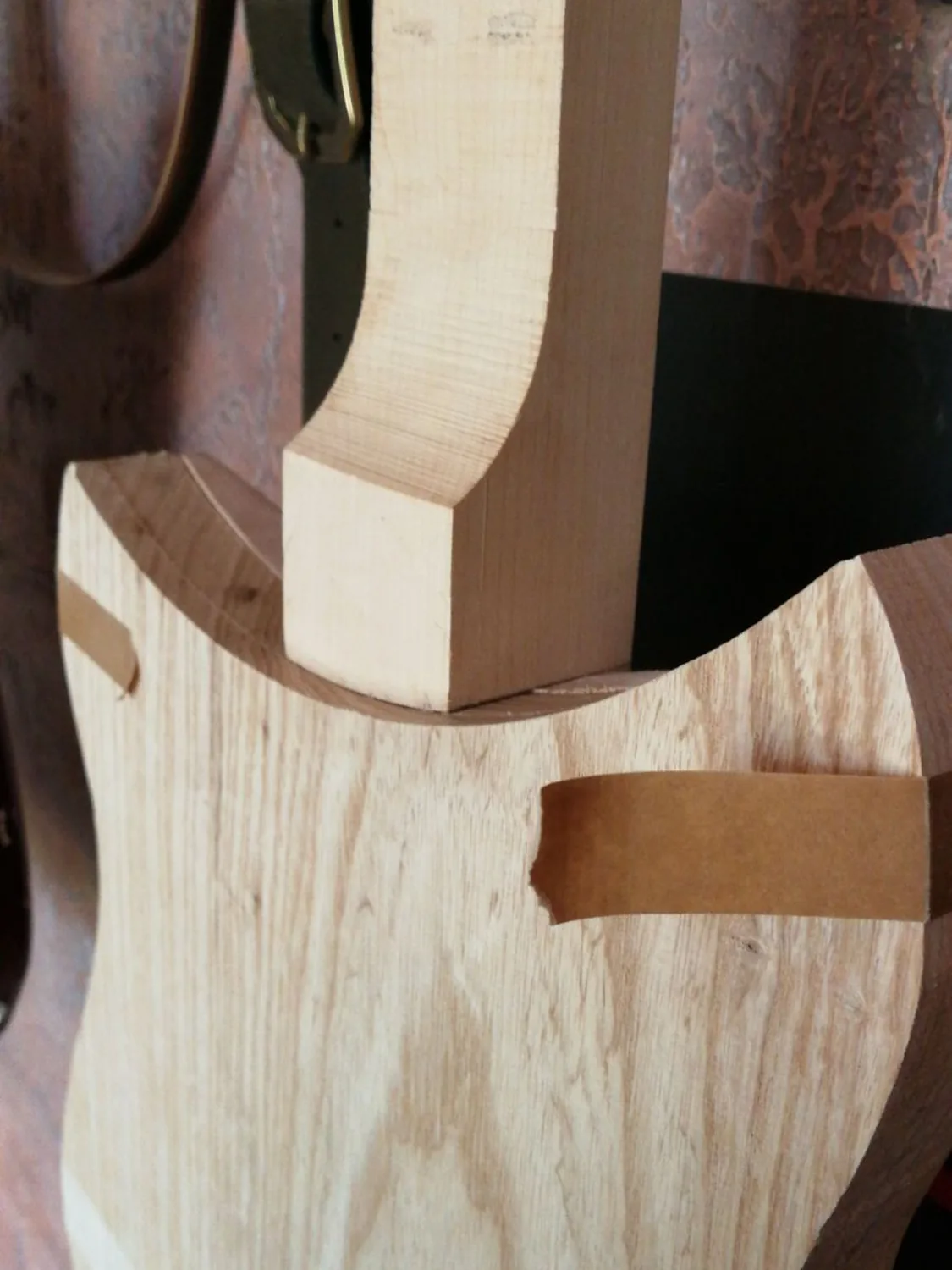
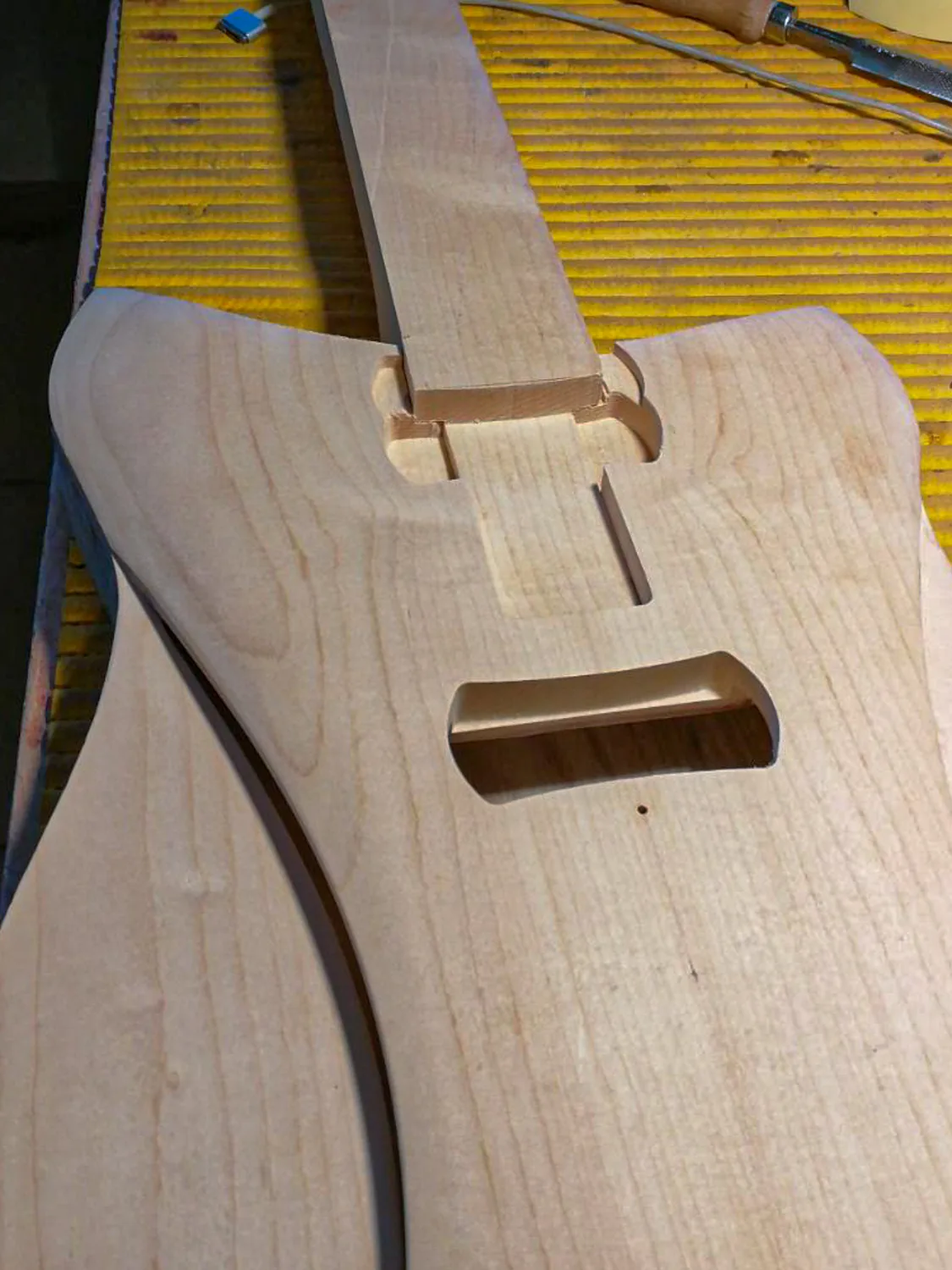
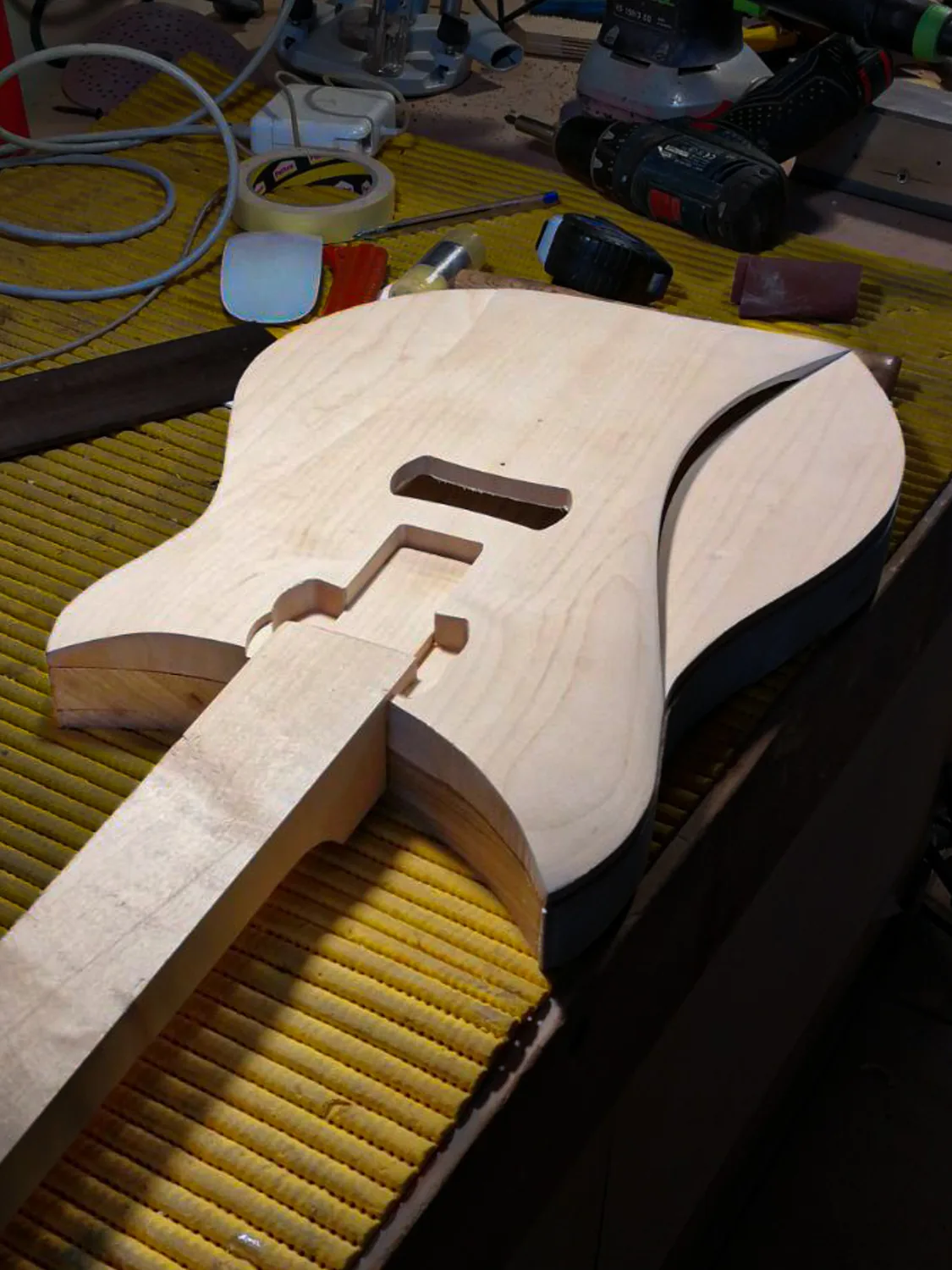
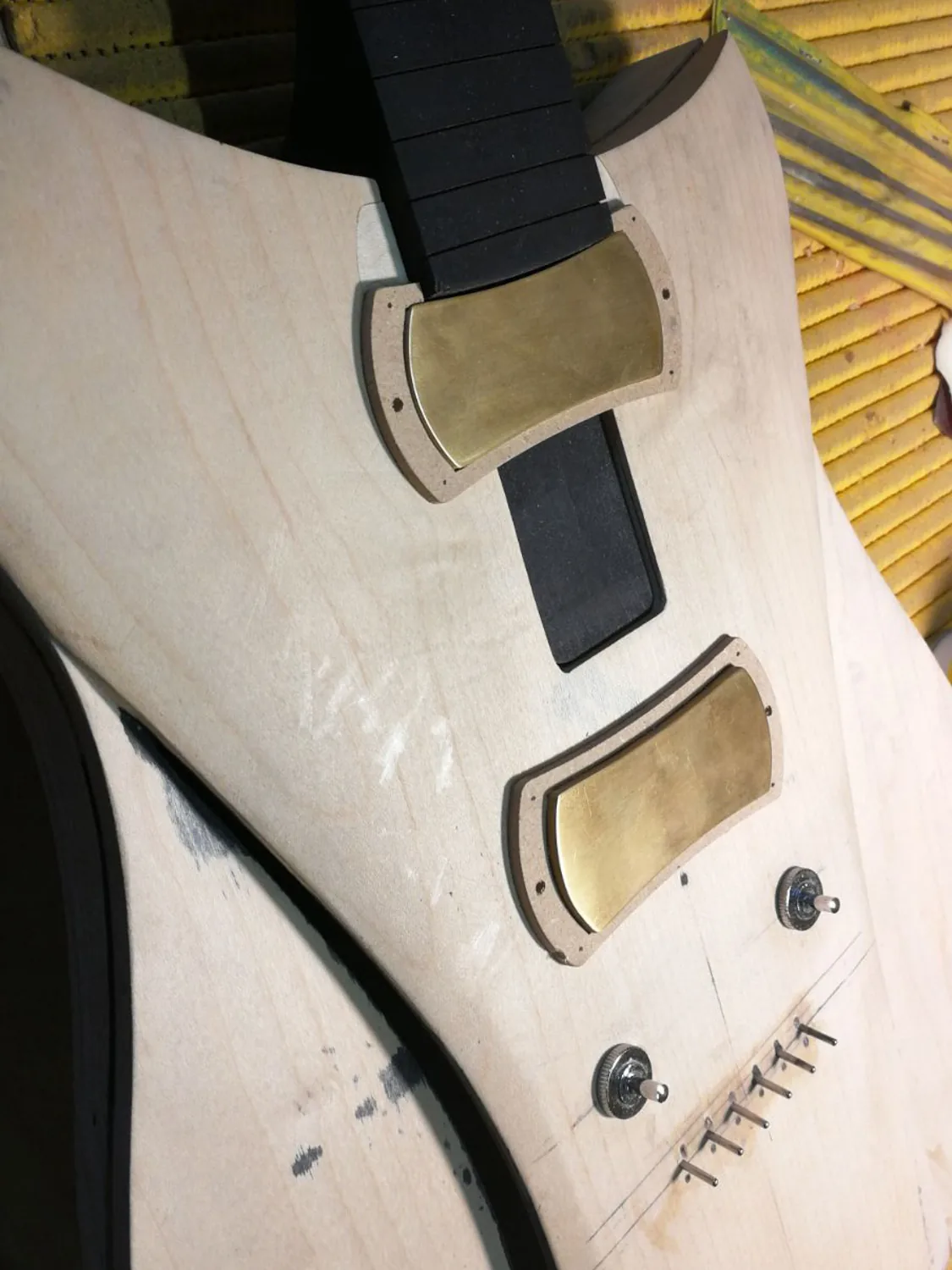
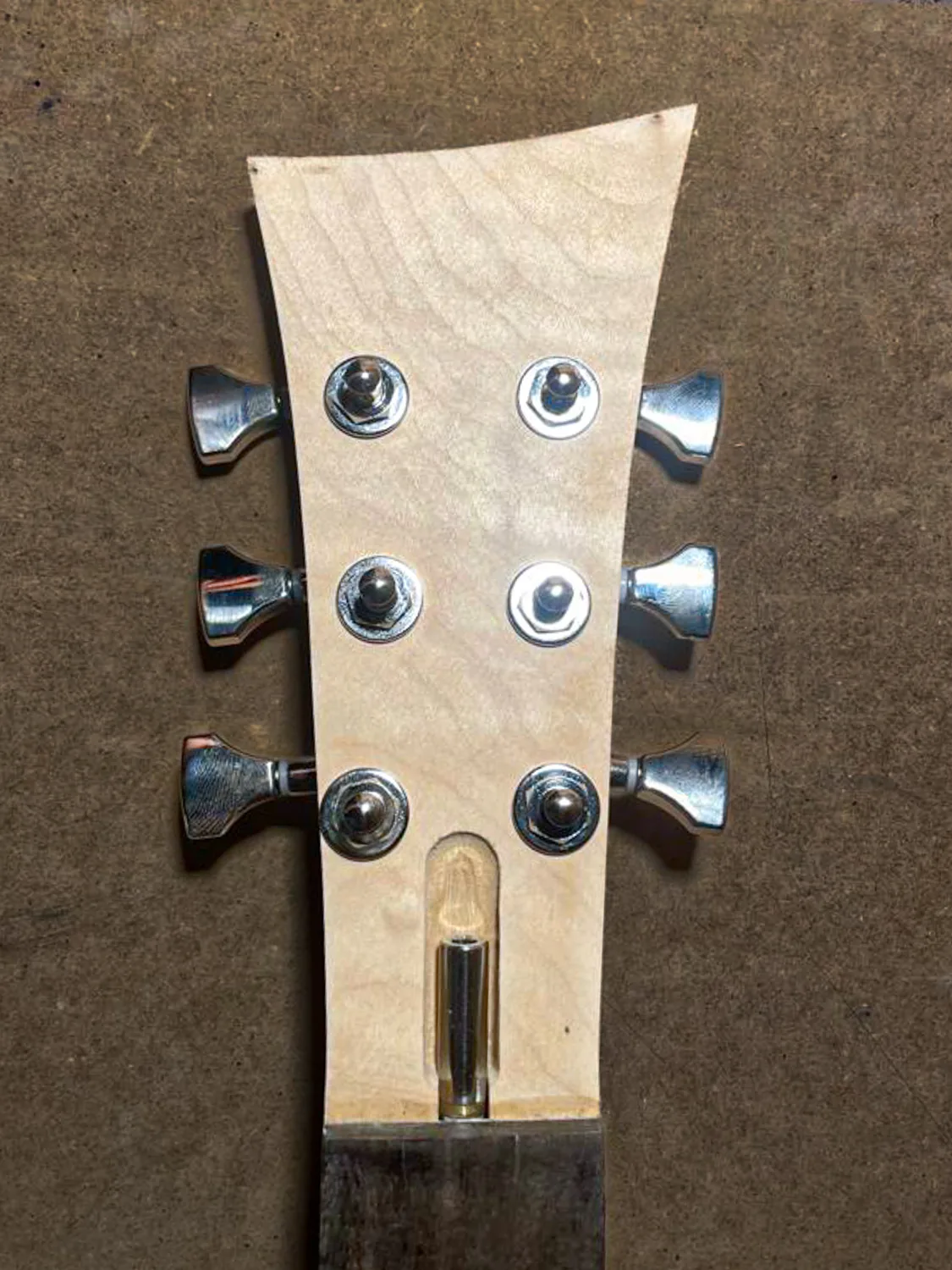
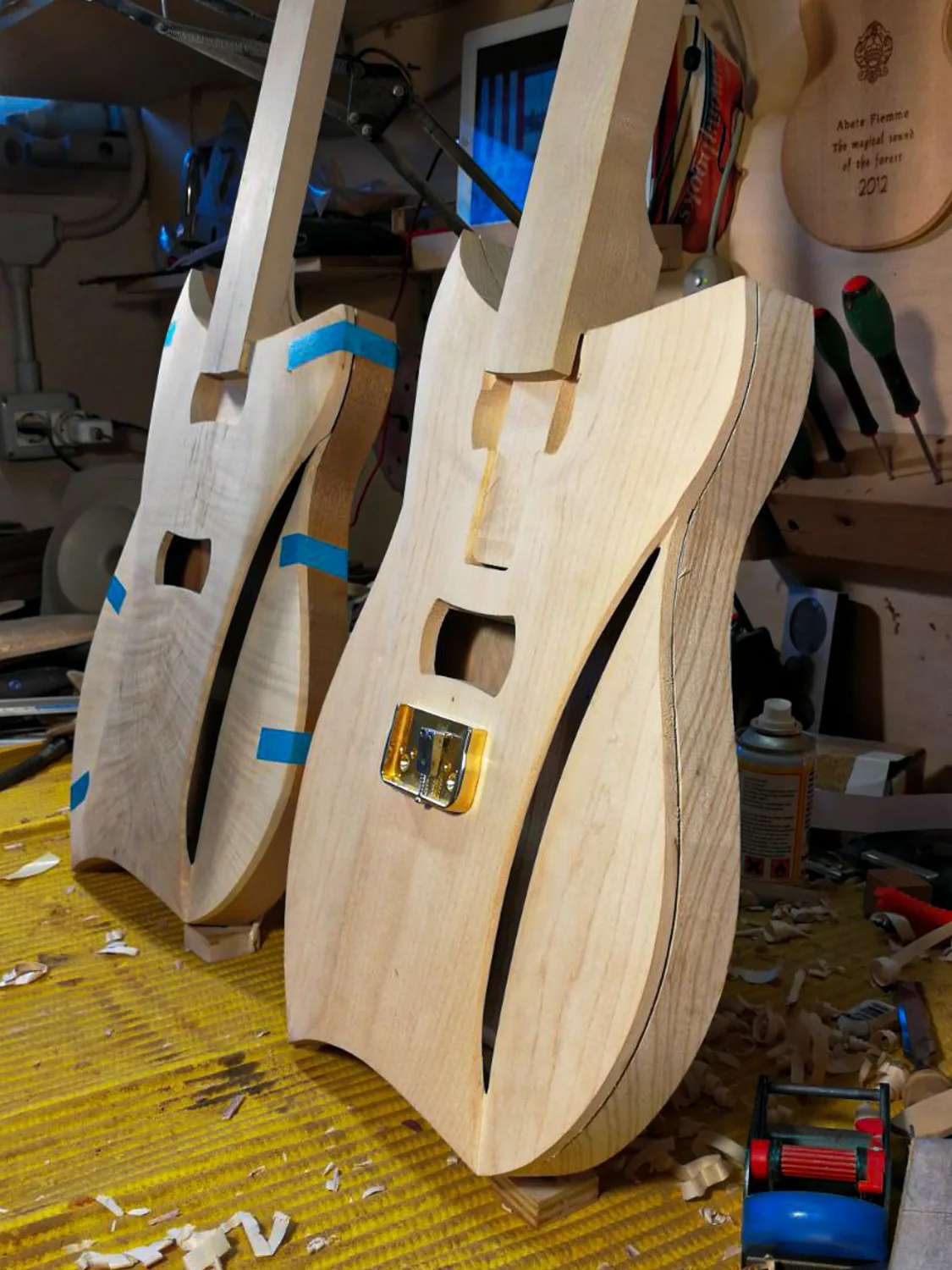
A fully hollow guitar that feeds back at stage volume is a studio ornament. The reason most loud electric guitars keep a centre block is precisely to stop that from happening. The Tosca takes the harder road and solves it in the structure instead.
Because the frame and chambers are shaped and proportioned deliberately, a balance of voids and solids, the body resonates where it should and stays controlled where it must. You get the acoustic breath of a fully hollow instrument with a usable, musical relationship to the amp, rather than an uncontrolled howl the moment you turn up.
I was ready to destroy everything, because that sound had never existed before.
Bruno BacciOn a solid body the wood plays a supporting role. On a fully hollow guitar, where the body itself vibrates, the wood moves to the front, which is why the Tosca is offered in three woods, each voiced like a violin maker chooses a top.
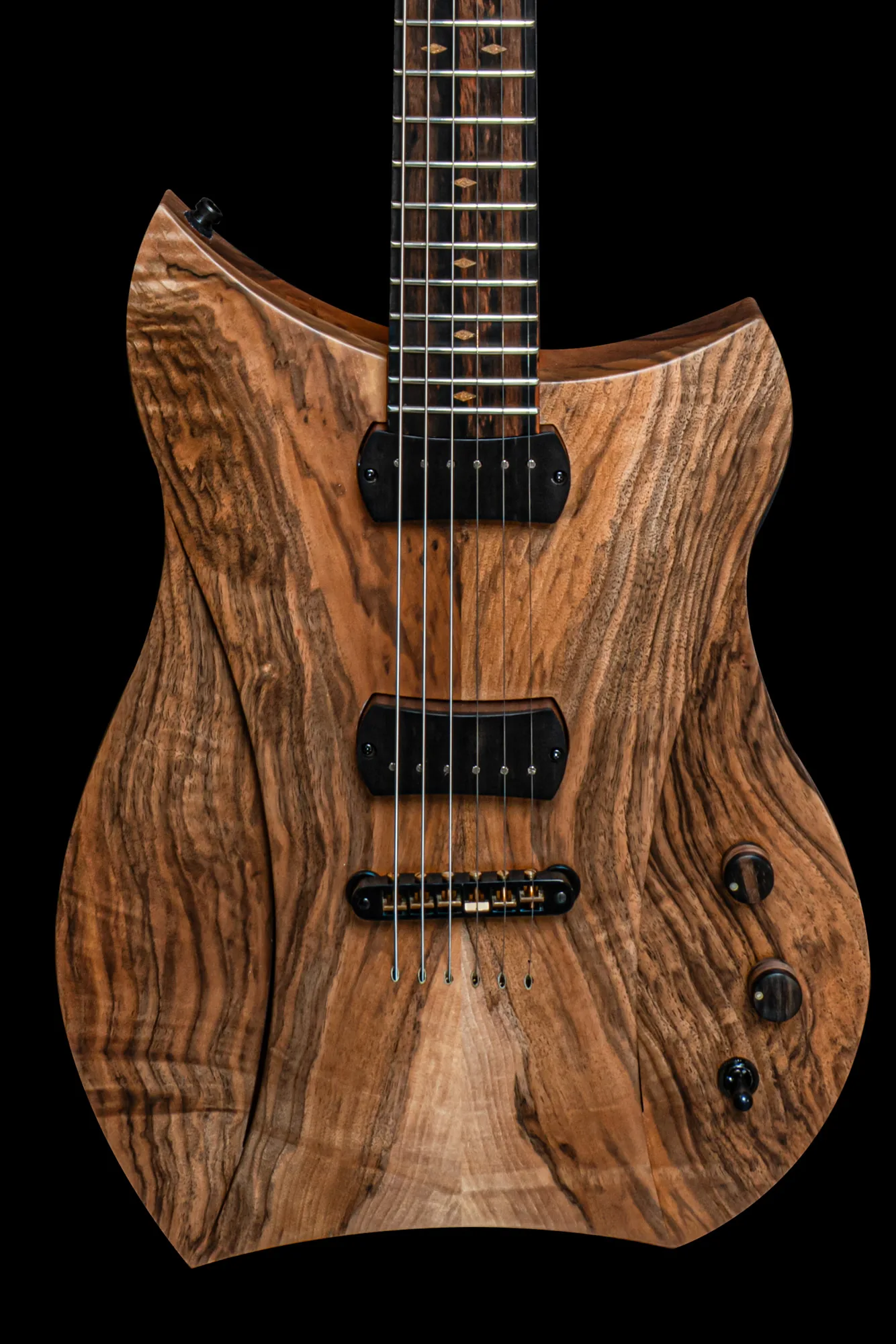
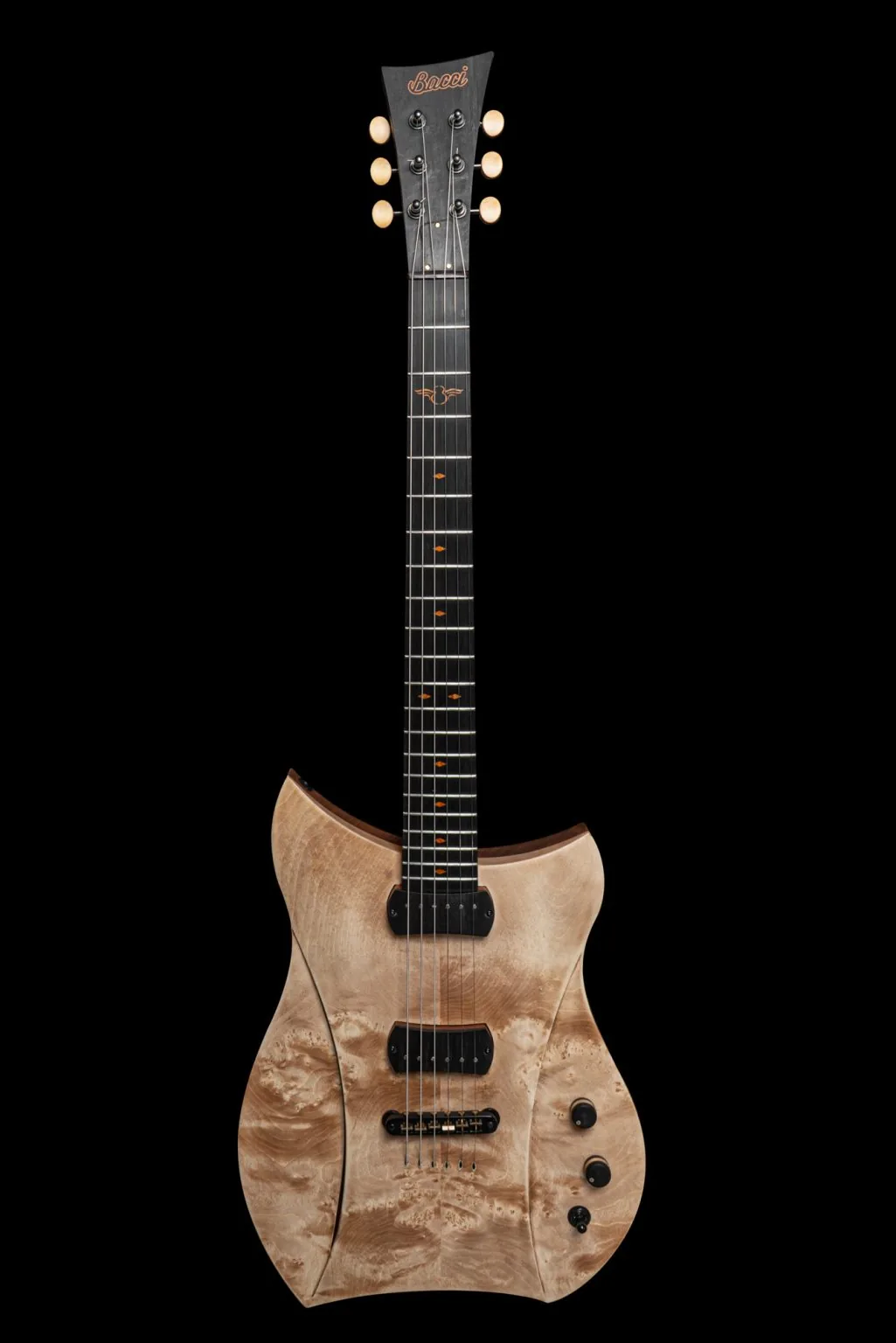
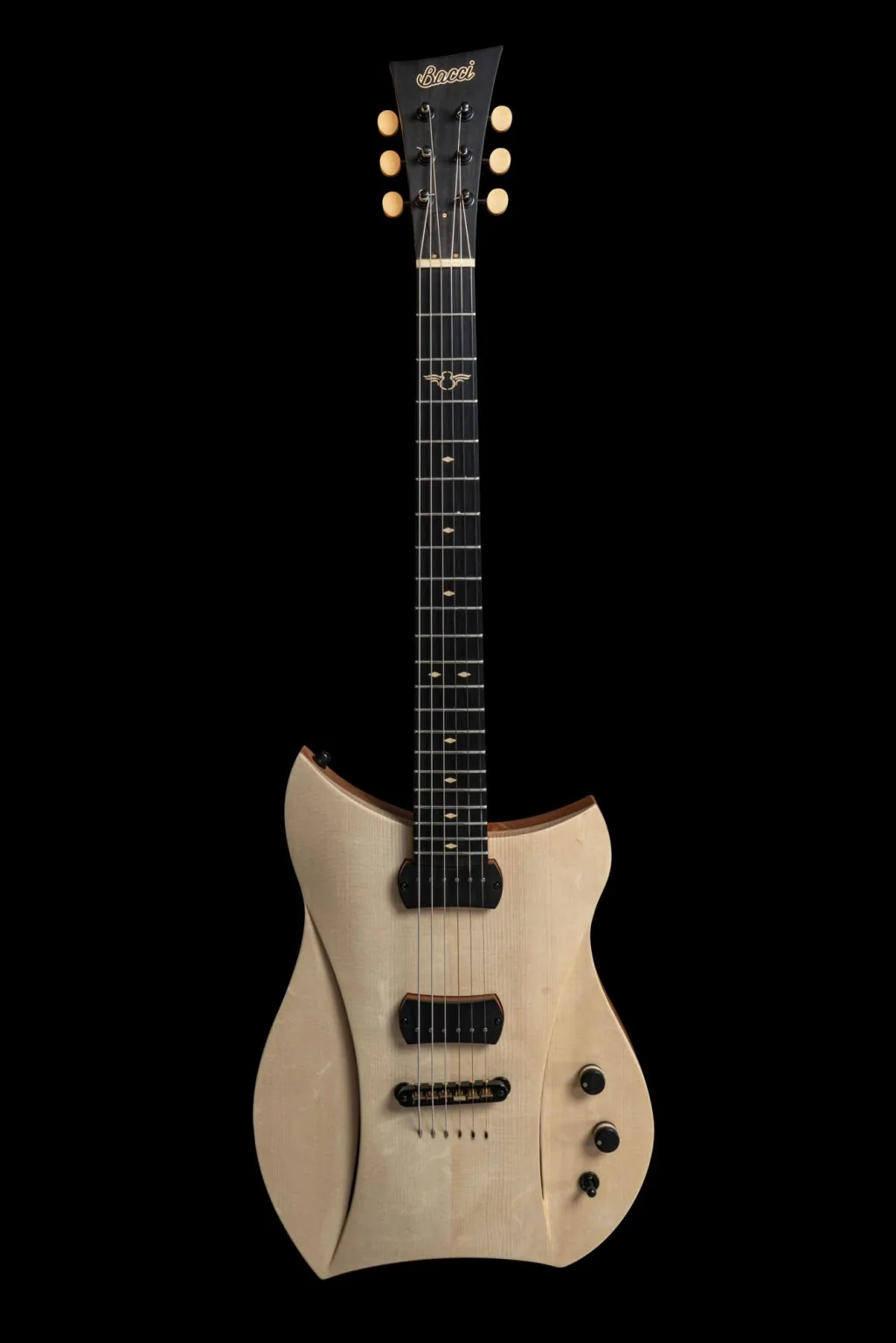
A fully hollow electric gives you something a solid body never will: an acoustic breath under the amplified note, a body that is part of the voice rather than a platform for the strings. It is a more demanding instrument to build and a more alive one to play.
That is the reason the Tosca exists at all. Bruno gave himself ten years to find a sound that did not exist before, and the fully hollow body is how he found it, a limited edition of fifty, each one numbered, each one built in eleven months.
A hollow body electric has a resonating chamber inside the body instead of a solid block of wood. That chamber lets the body vibrate, which adds air, warmth and acoustic character to the amplified sound, giving a rounder, more open voice than a solid body.
A semi-hollow guitar keeps a solid centre block running through the body with chambers to each side. The block tames feedback and keeps the attack focused while the chambers add warmth. A fully hollow guitar has no centre block, so the whole body resonates, for the most acoustic and open voice of the three.
Neither is better, they are built for different sounds. Solid bodies are focused, sustaining and feedback-resistant, ideal for high gain and volume. Hollow bodies are warmer, airier and more acoustic, prized for jazz, blues and clean tones. The right choice depends on the voice you want.
They can at high volume, because the resonating body picks up energy from the amp. Many designs manage this with a centre block or smaller chambers. A fully hollow guitar like the Tosca answers it through structure, a skeletal frame and chambers shaped so the body resonates in a controlled way.
Yes. The Tosca is a fully hollow electric built on a skeletal frame, where mass is taken away to open controlled air chambers, so the body resonates like an acoustic while custom Kloppmann pickups capture it cleanly, for clarity and warmth together.
The Tosca is offered in three woods, each with its own voice: Italian walnut, dark and compressed, a mahogany body with a spalted maple top, bright and articulate, and a pearwood body with a spruce top, open and dynamic.
The Tosca is a limited edition of fifty numbered guitars. Bruno could make more, but chooses not to, because the limit is part of the instrument. Each one is built in eleven months.
The Tosca is handbuilt to order in Tuscany. You can reserve one of the fifty, in walnut, maple or spruce, from the Tosca page.
Forty-five of the fifty remain. Each is numbered, built in eleven months, in walnut, maple or spruce. Handbuilt to order in Tuscany.
Every Tosca is designed, built and set up by Bruno, one at a time, in Pescia.