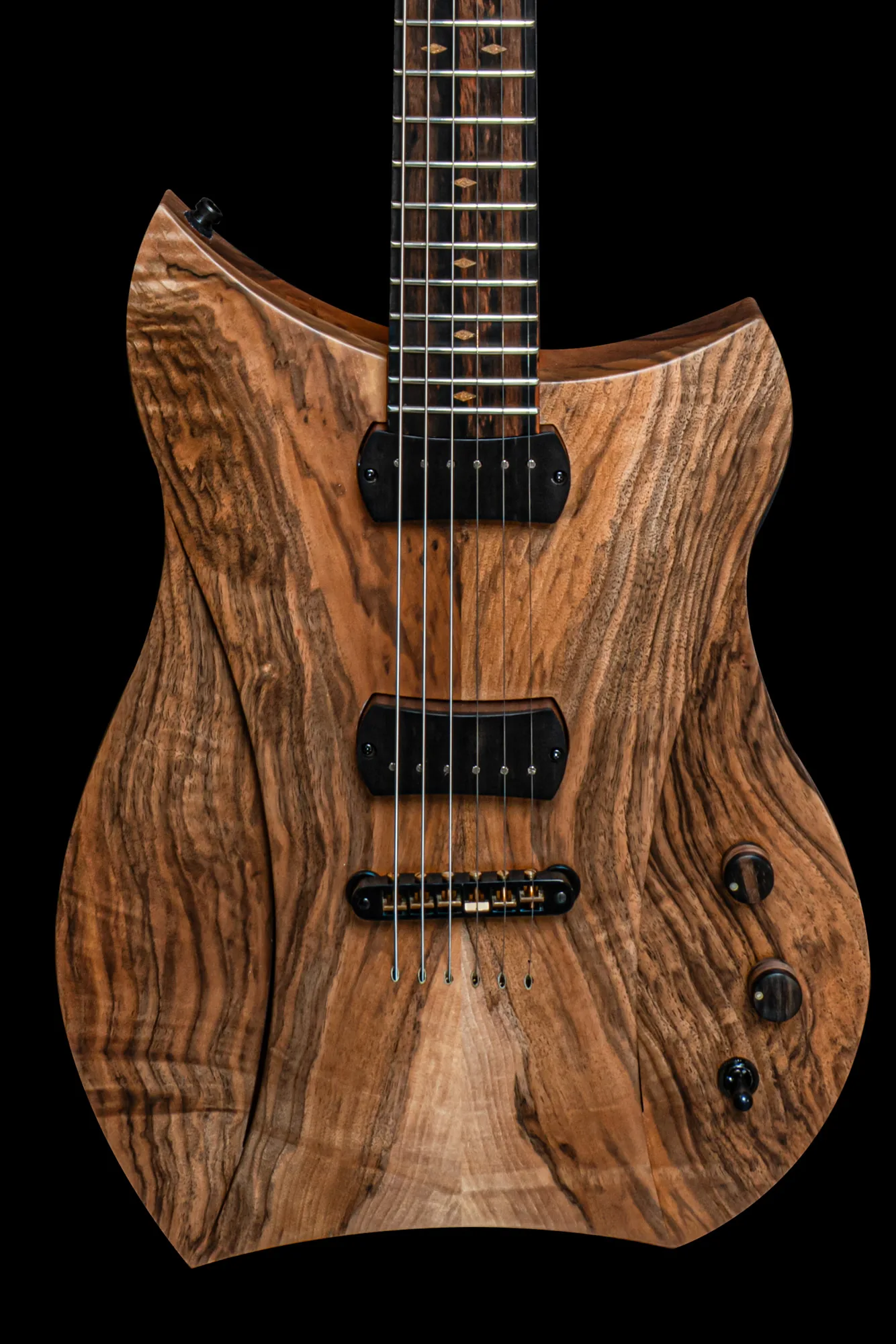
The guitar that breathes.

Bacci GuitarsPescia, Tuscany
The Tosca began as a sound Bruno Bacci could hear and could not yet build. He gave himself ten years to find it, and eight prototypes along the way, before a single guitar carried the name.
It is a fully hollow electric that resonates like an acoustic, with custom Kloppmann pickups that capture the body without mud. Deep, dynamic and alive, and once the sound was settled it took eleven months to build each one.
I was ready to destroy everything, because that sound had never existed before.
Bruno Bacci, Bacci GuitarsThe Tosca is a limited edition of fifty numbered guitars. Bruno could make more. He chooses not to, because a limit is what gives the work its gravity.
The design question that drove the Tosca was a subtraction, not an addition. Years went into material, proportion and shape, all in service of removing everything that was not sound.
The structure is a skeletal frame, built around the flow of vibration. The voids are strategic, mass taken away to open controlled air chambers. The arc of the body is curved for a playing position that stays comfortable for hours.
The architecture carries a name of its own, Bacci and the designer Eri Goshen, and it is the reason the guitar sounds the way it looks: open, resonant, and nothing in the way.
This one made me stop talking.Bruno Bacci
Eight prototypes, from 2016 to 2018, each one a step in taking mass away without losing the voice.
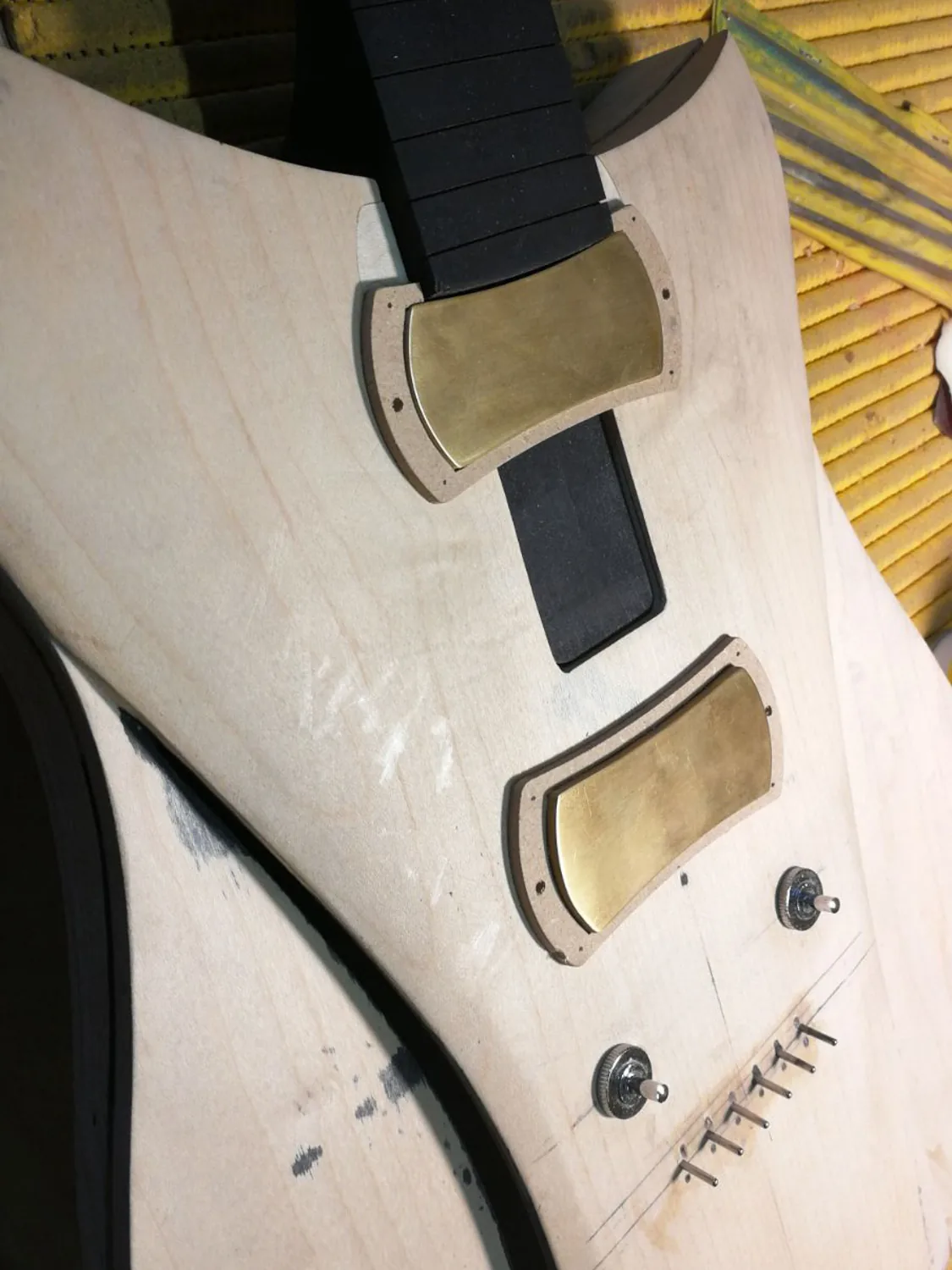
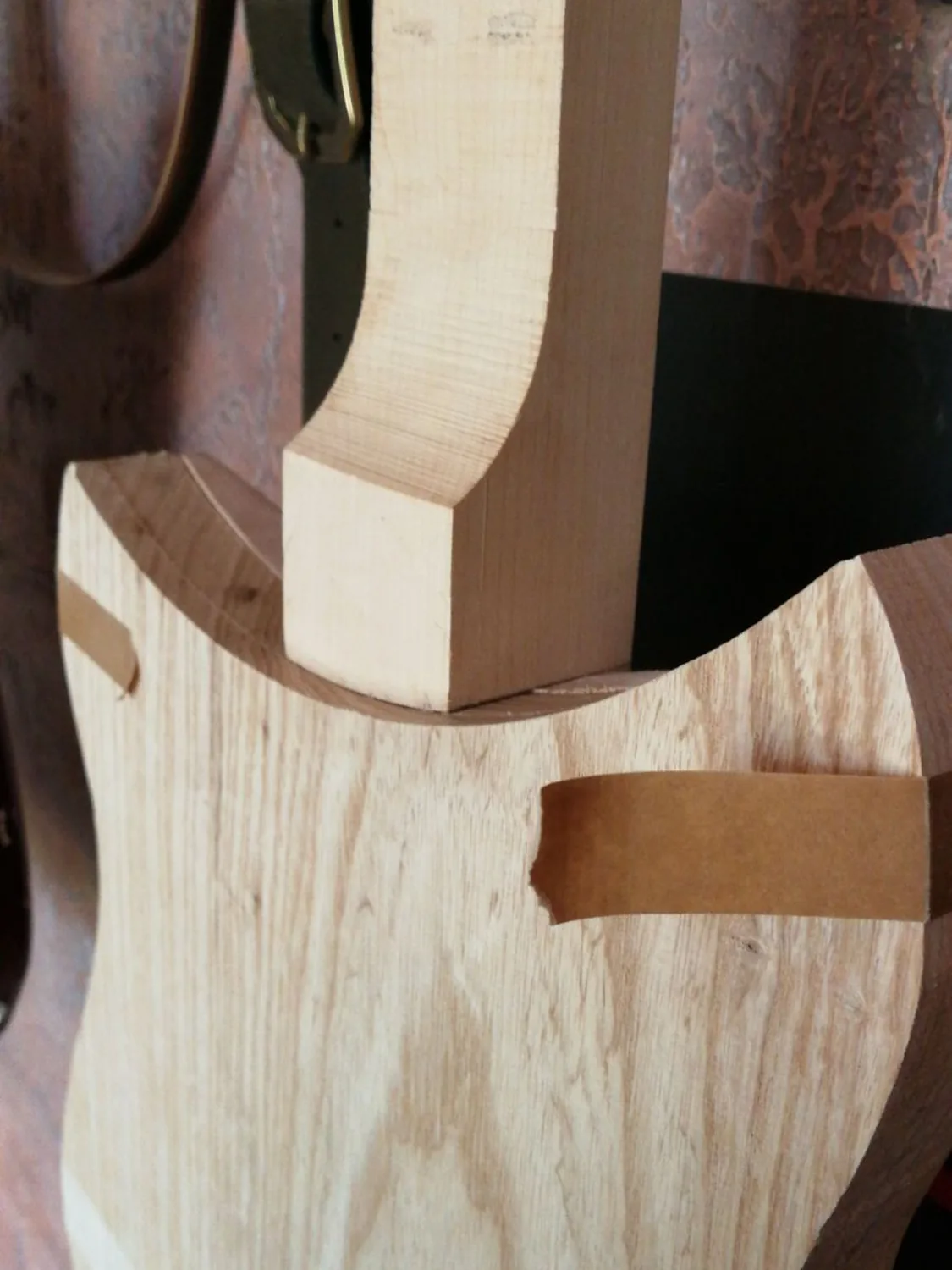
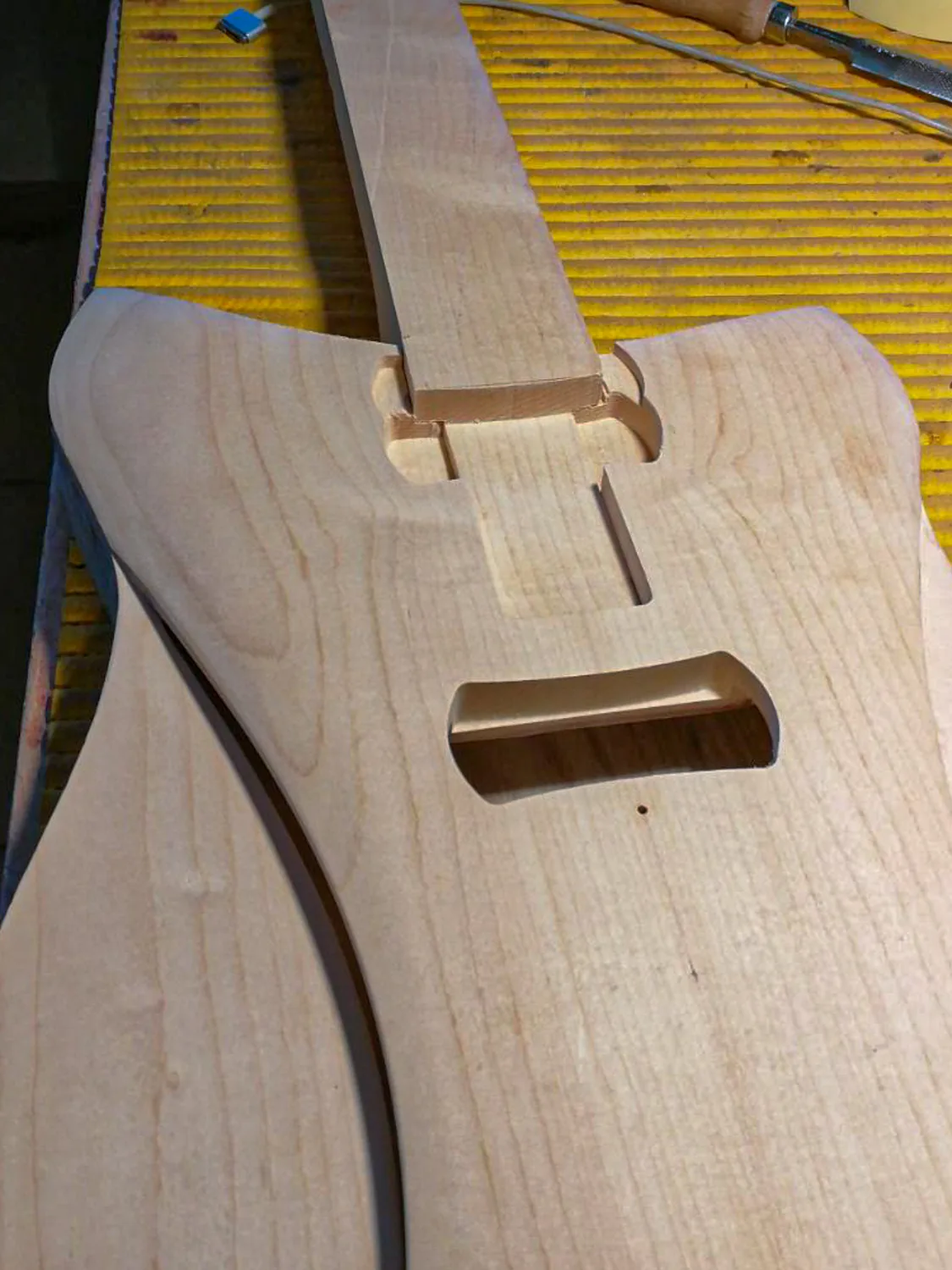
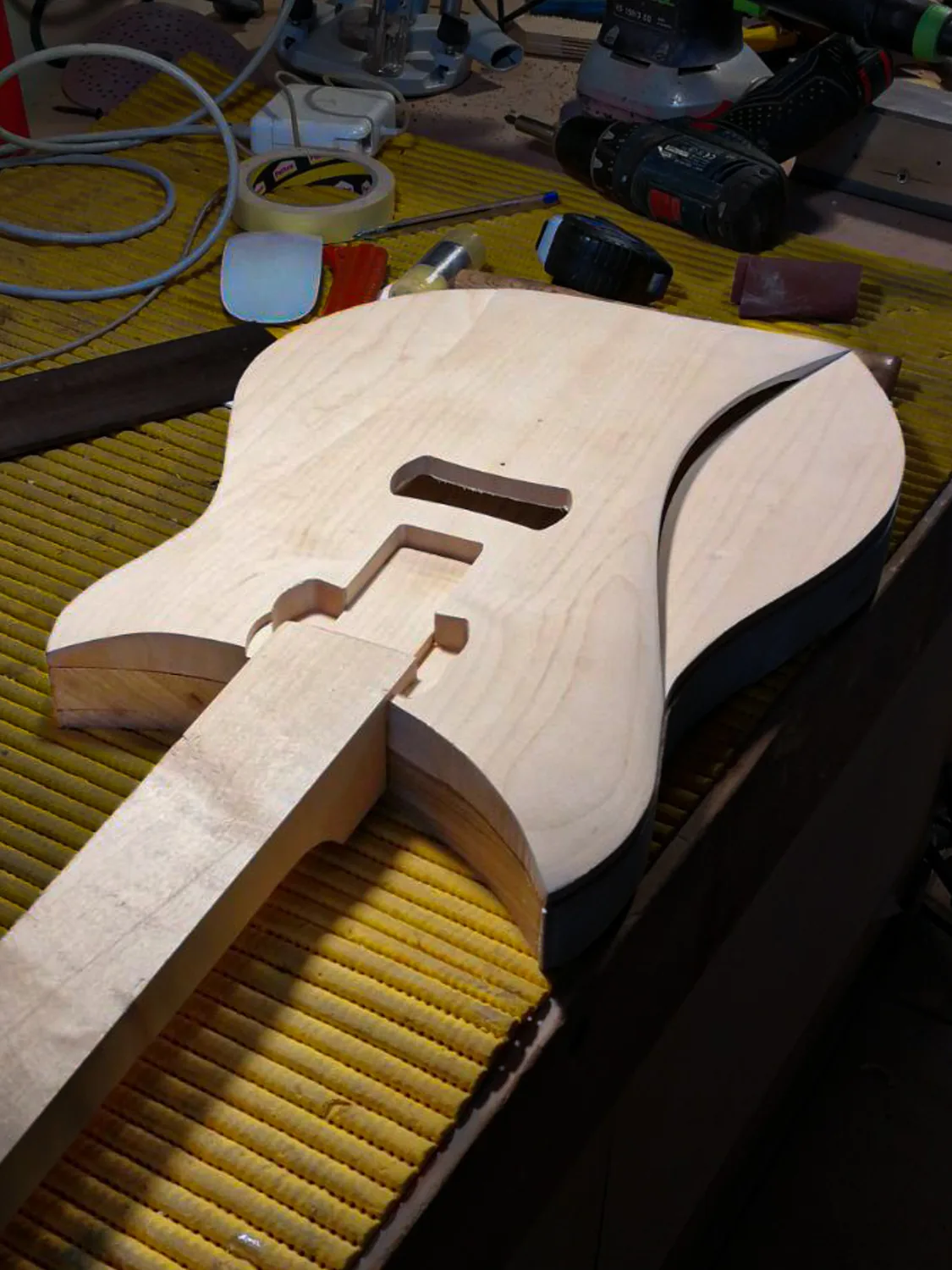
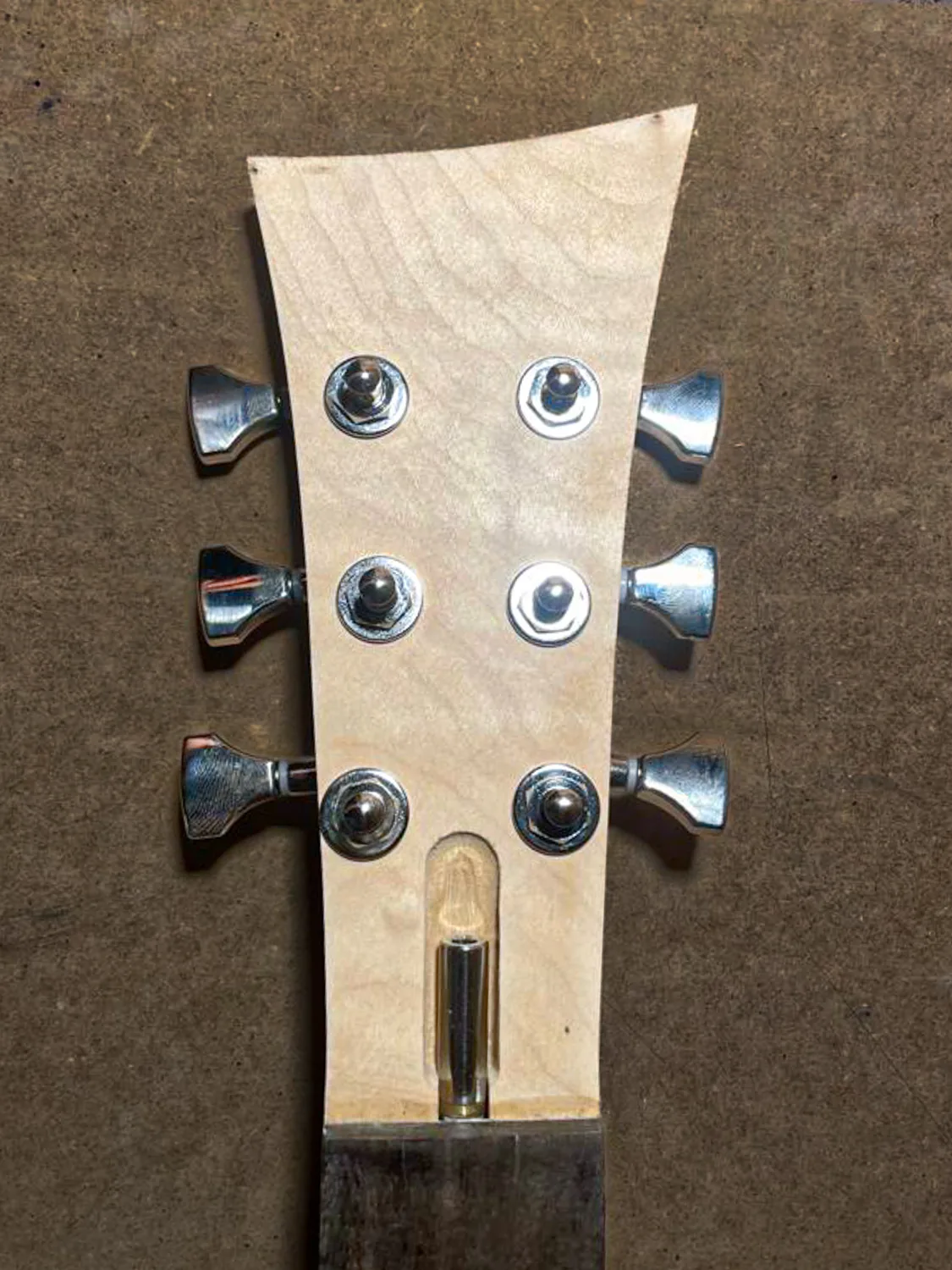
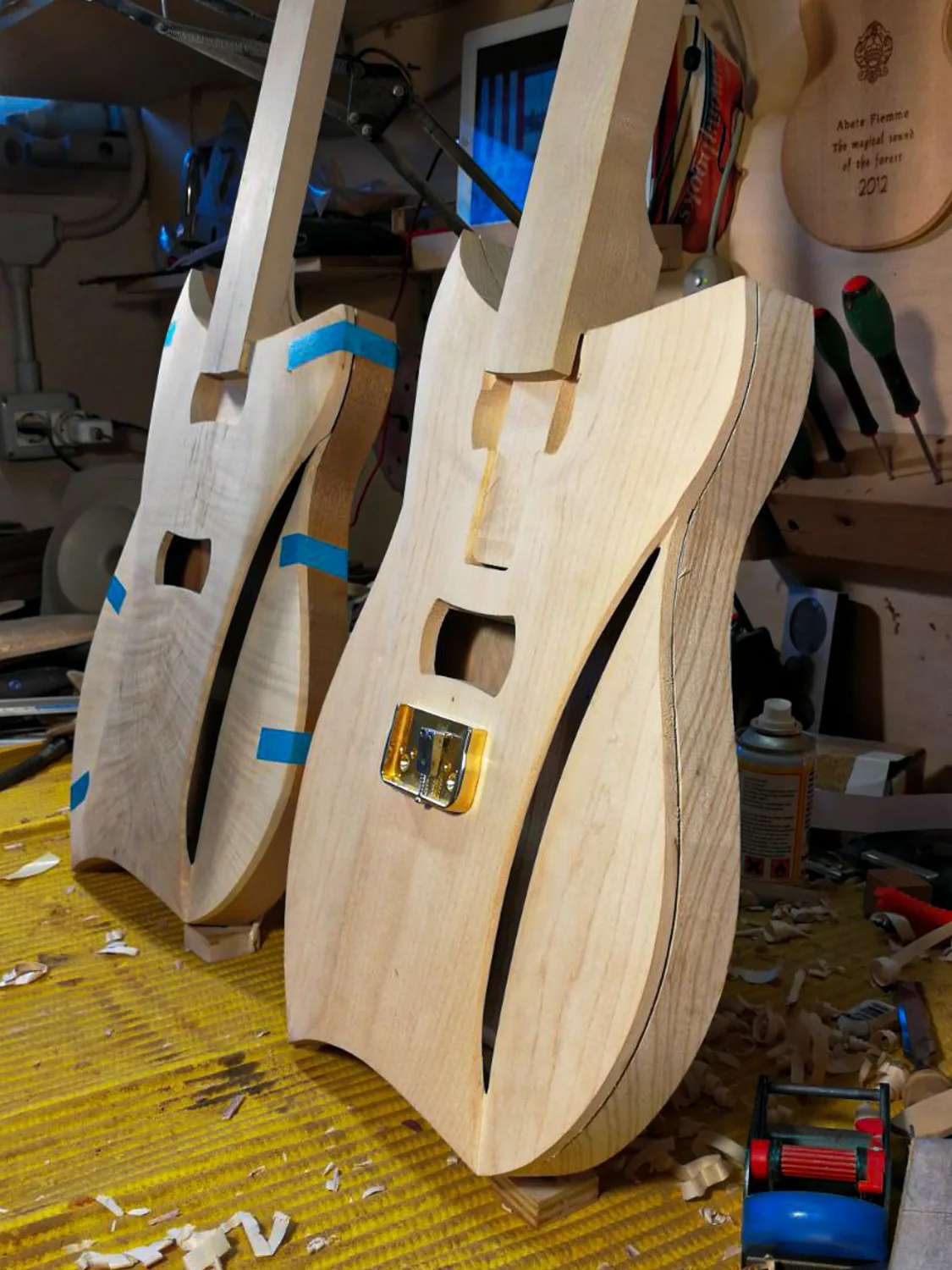
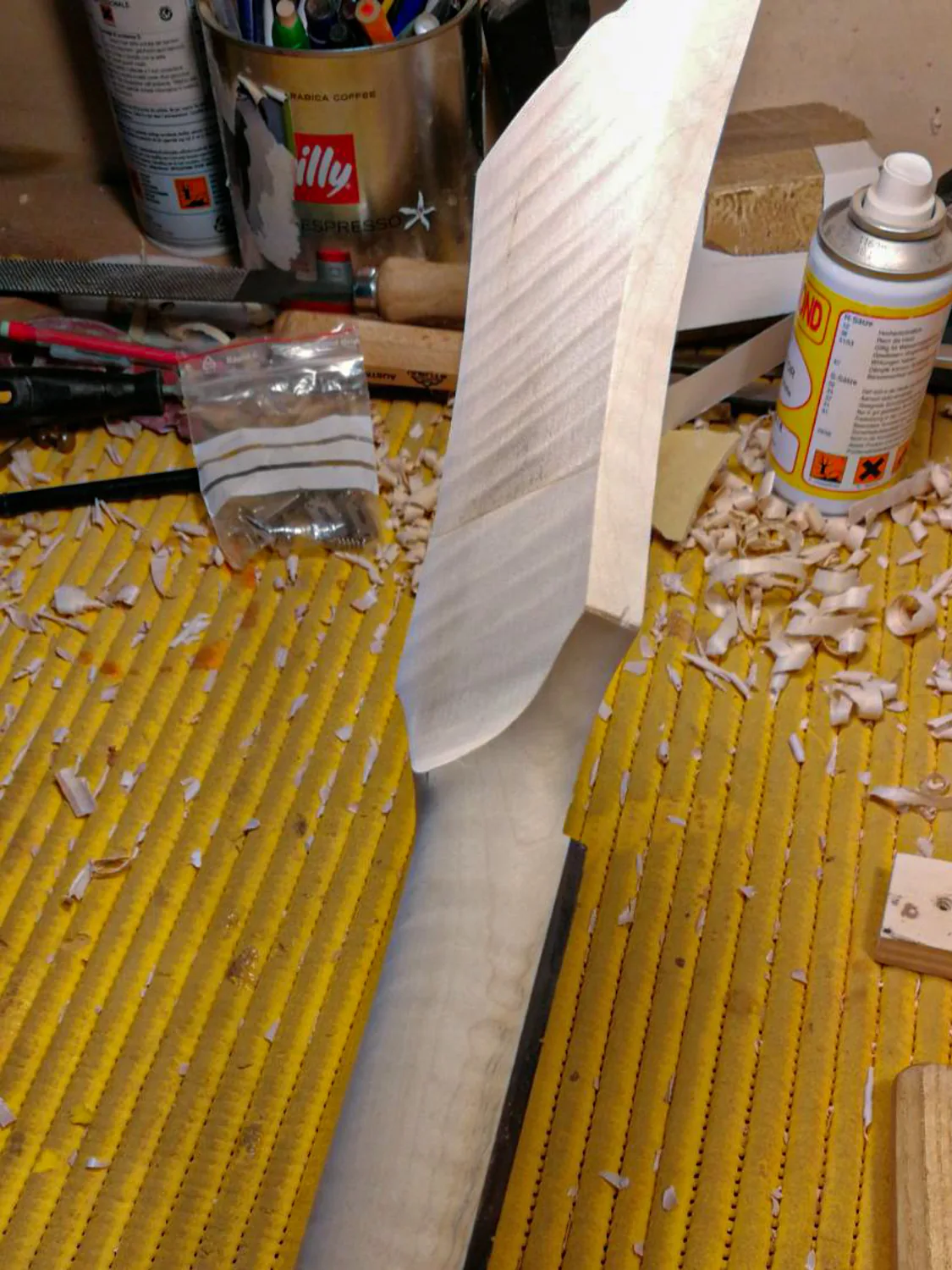
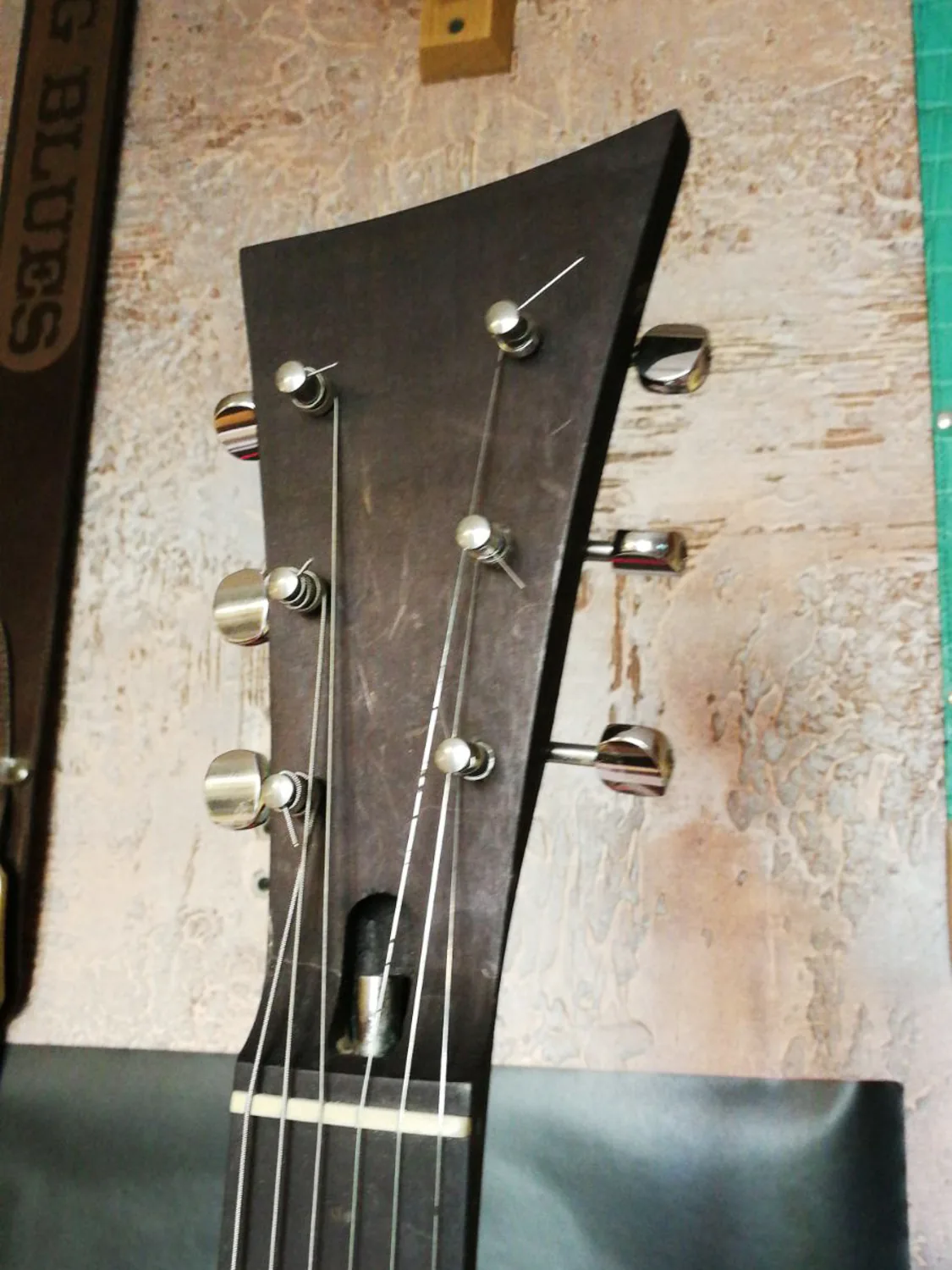
Ten years of prototypes do not end with a phone call to a vendor. The Tosca was finished with two specialists who had spent forty years refusing to settle. Michael Kloppmann wound fourteen pickup versions for it. Eri Goshen spent seven years on the subtractions and proportions of the body.
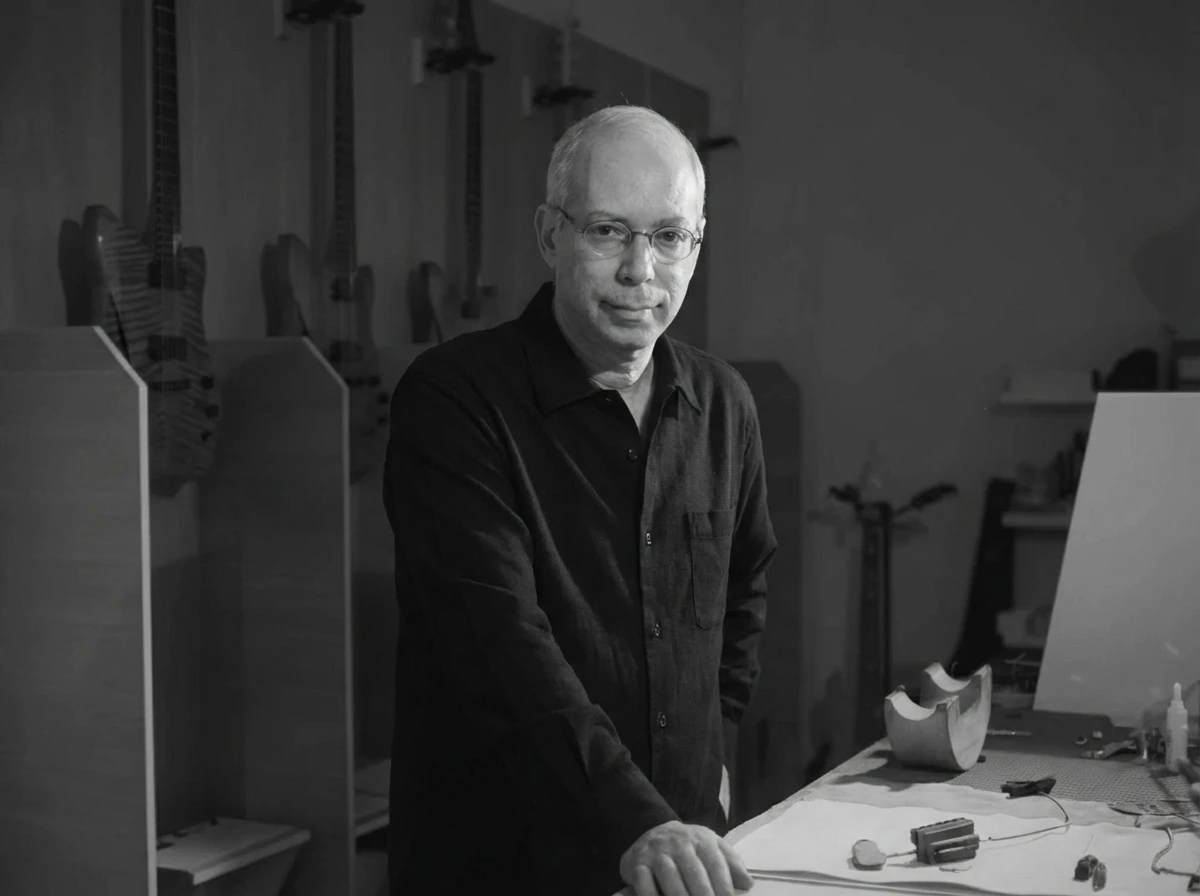
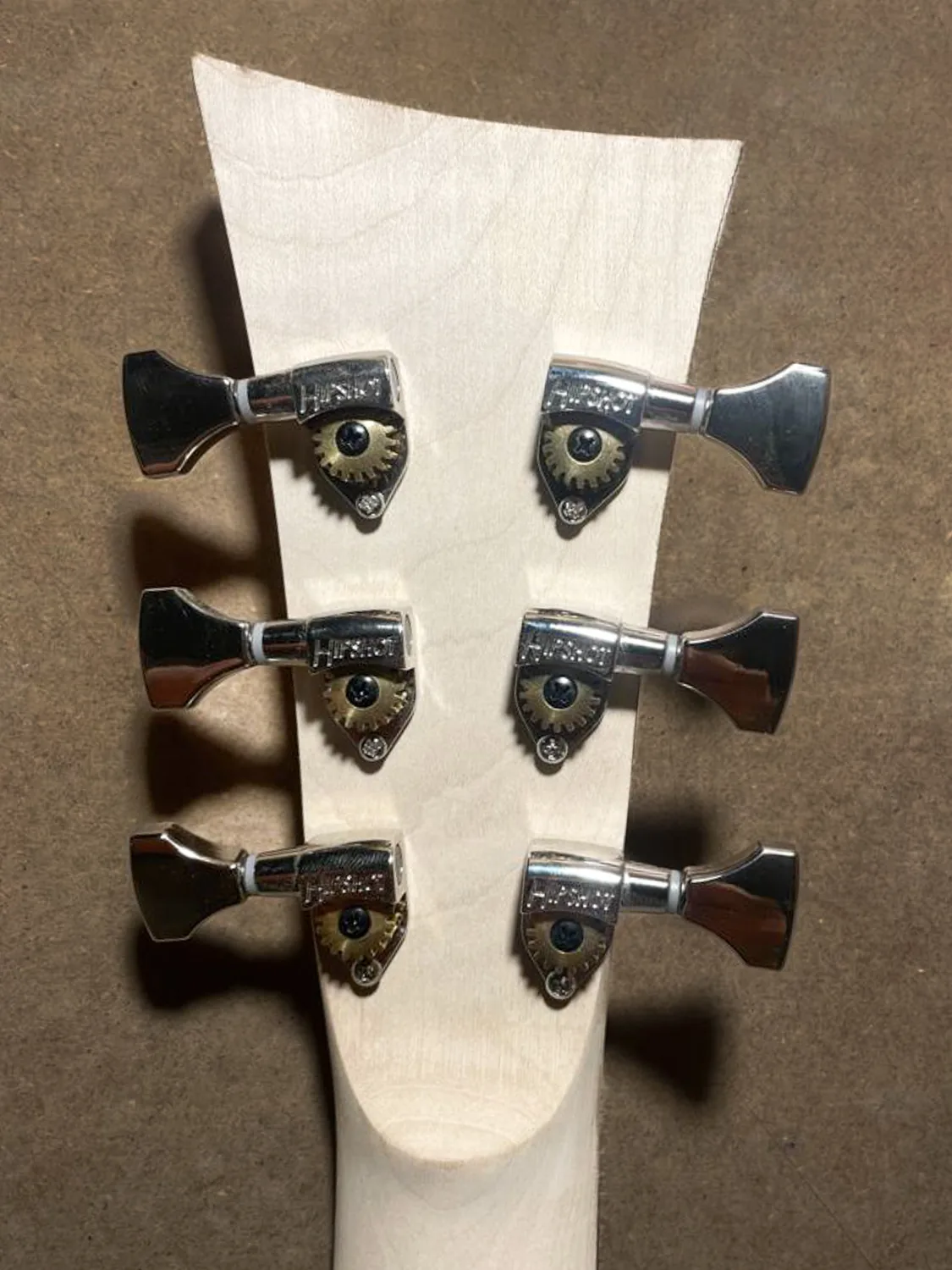
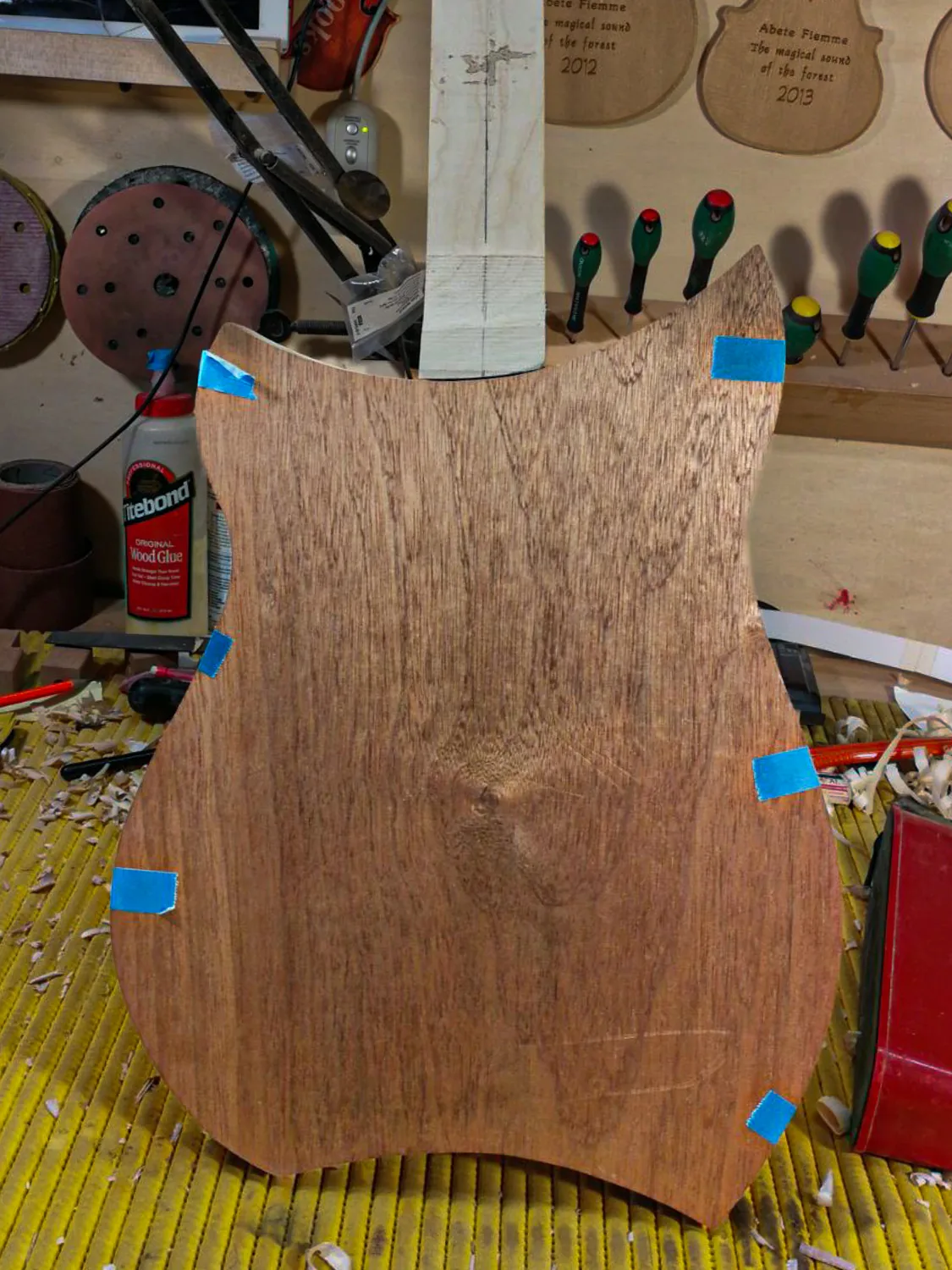
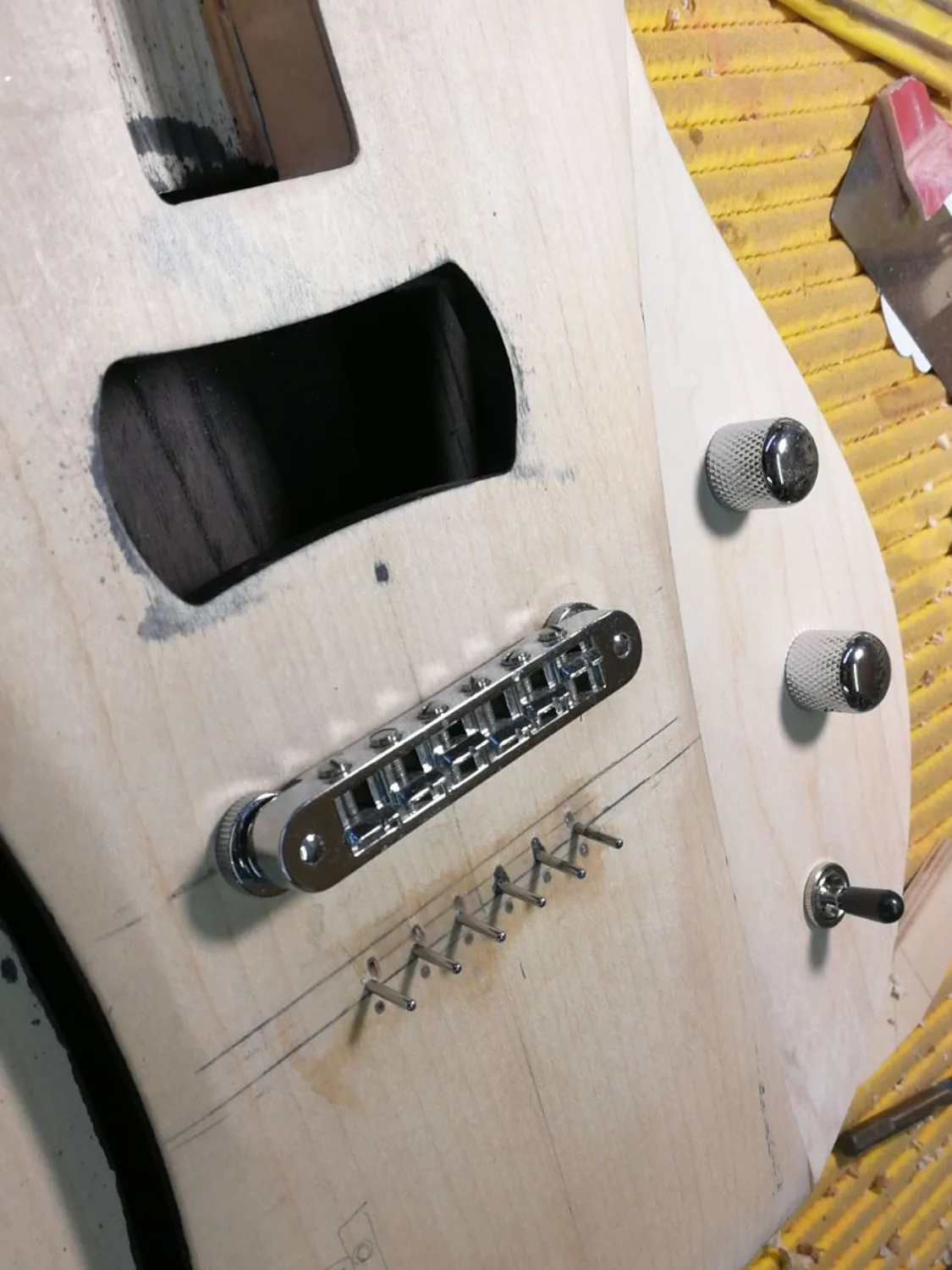
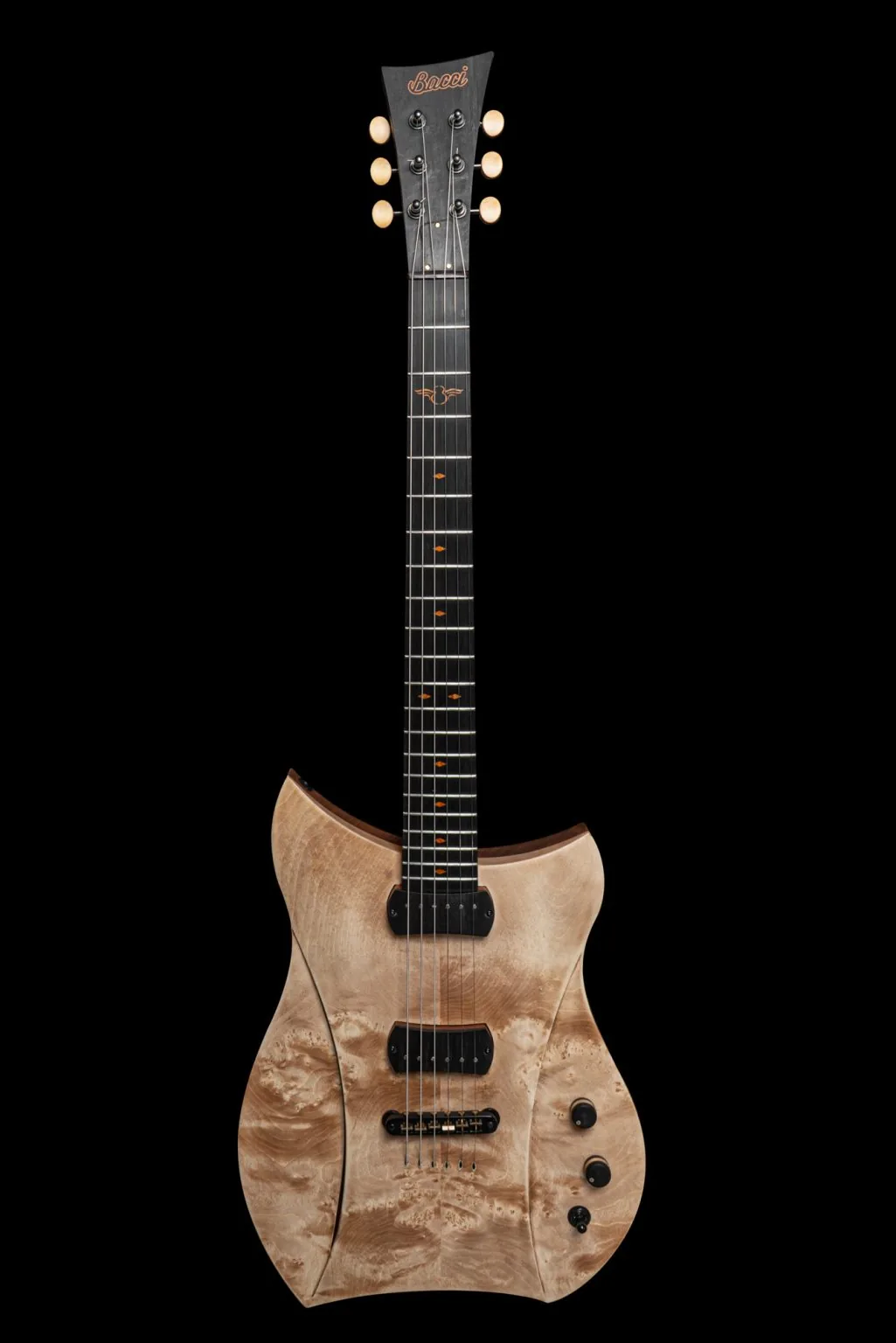
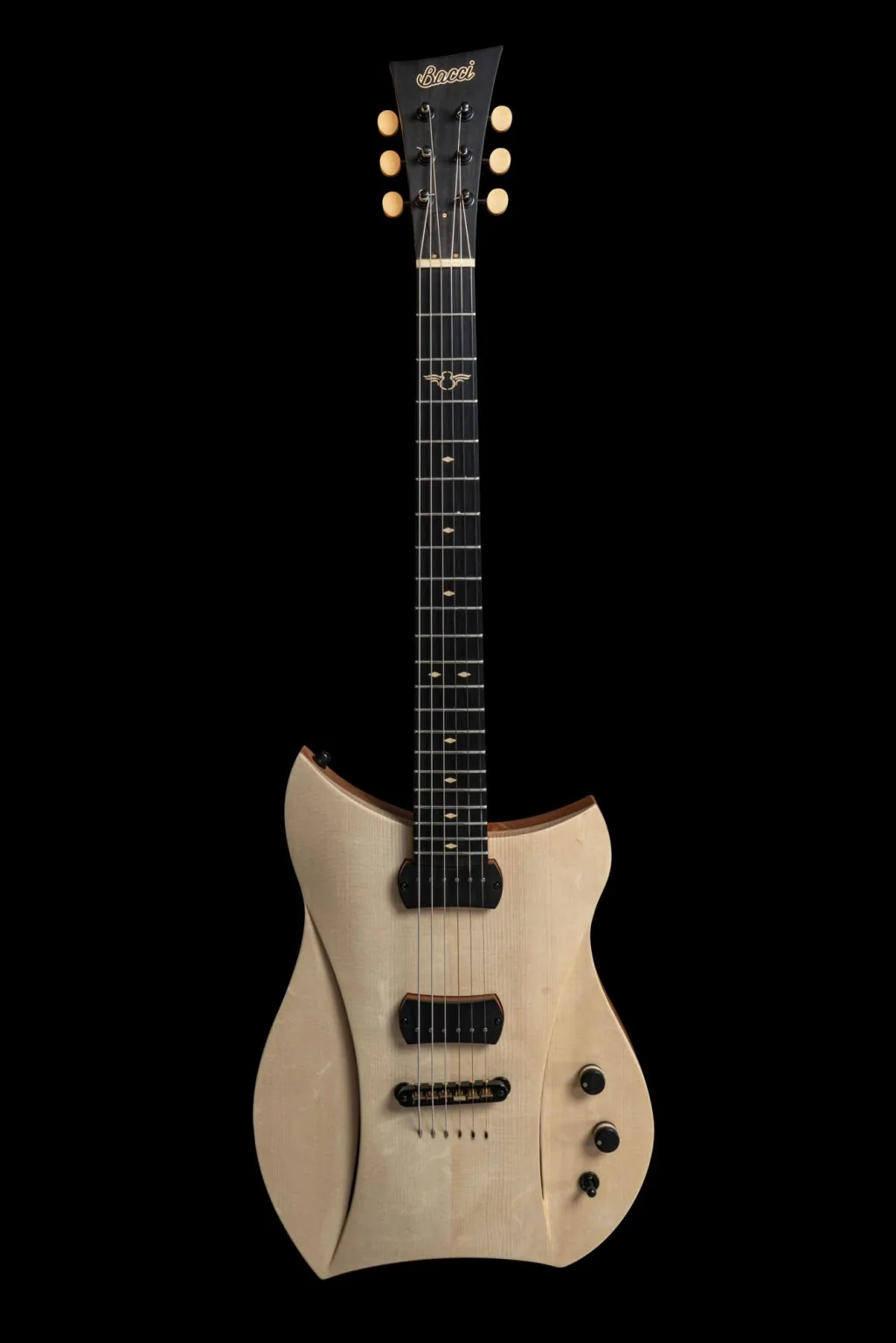
The Tosca is offered in three woods, each chosen for a character of its own. The shape stays the same. The voice changes with the tree.
Selected Italian walnut, responding fast and controlled. The attack has a sandy grain that gives the sound character, the midrange stays focused, and every bend and vibrato lands precisely where you put it.
A mahogany body with an Italian spalted maple top, tight and direct. The attack has snap and precision, and every note separates cleanly, even under gain. Each spalted top is naturally patterned, so each one is distinct.
A pearwood body with a spruce top, lively and airy. The attack comes quick, the midrange stays warm and balanced, and every dynamic shift from soft picking to hard attack stays immediate.
The woods are selected by hand, matched to the chambering, and voiced with a Kloppmann set made for that body. A rare top is the voice, waiting to be freed.
The Tosca was recorded across its three pickup positions, each with a player and a piece chosen to suit it. The neck position runs ambient and jazz, the middle funk and fusion, the bridge a slow blues.
The full session, with the amp, the pedals and the microphones all named, lives on the Tosca page, recorded at Studio Matteini's.
Farewell, improvised by Tommaso Sturlini, through a Walrus Audio Slö and a Pigtronix Echolution 3.
Grip & Rip, no effects, straight into the amp.
Slow Burn Blues, through a Vemuram Jan Ray.
Each position was captured through a Brunetti Singleman 35, with a Shure SM57 and an AKG P120 on the cabinet. The full demo plays on the Tosca page.
The guitar that breathes like a violin.
On the ToscaThe parts that do not shape the voice are fixed and dependable. The parts that do were made for this guitar.
Forty-five of the fifty remain. Each is numbered, built in eleven months, and voiced around the wood you choose.
Every Tosca is designed, built and set up by Bruno, one at a time, in Pescia.