What the wood brings.

Bacci GuitarsPescia, Tuscany
Tonewood is one of the most argued-over subjects in guitars, and most of the heat comes from skipping a single distinction: how the body is built. On a solid-body electric, the wood is one voice in a choir with the pickups, the scale and the strings, and its contribution is real but subtle. On a hollow or chambered instrument, where the body itself vibrates, the wood moves to the front and becomes a decisive part of the sound.
That is why a serious builder treats wood as a structural decision rather than a finish. On the fully hollow Tosca and the chambered Art of Nature baritones, the top is chosen and voiced the way a violin maker chooses a top, because on those instruments you genuinely hear it. On a solid plank, pickups do most of the talking.
This article explains what wood actually contributes, where it matters most, the characters of the woods Bacci uses, and how the maker chooses and matches them.
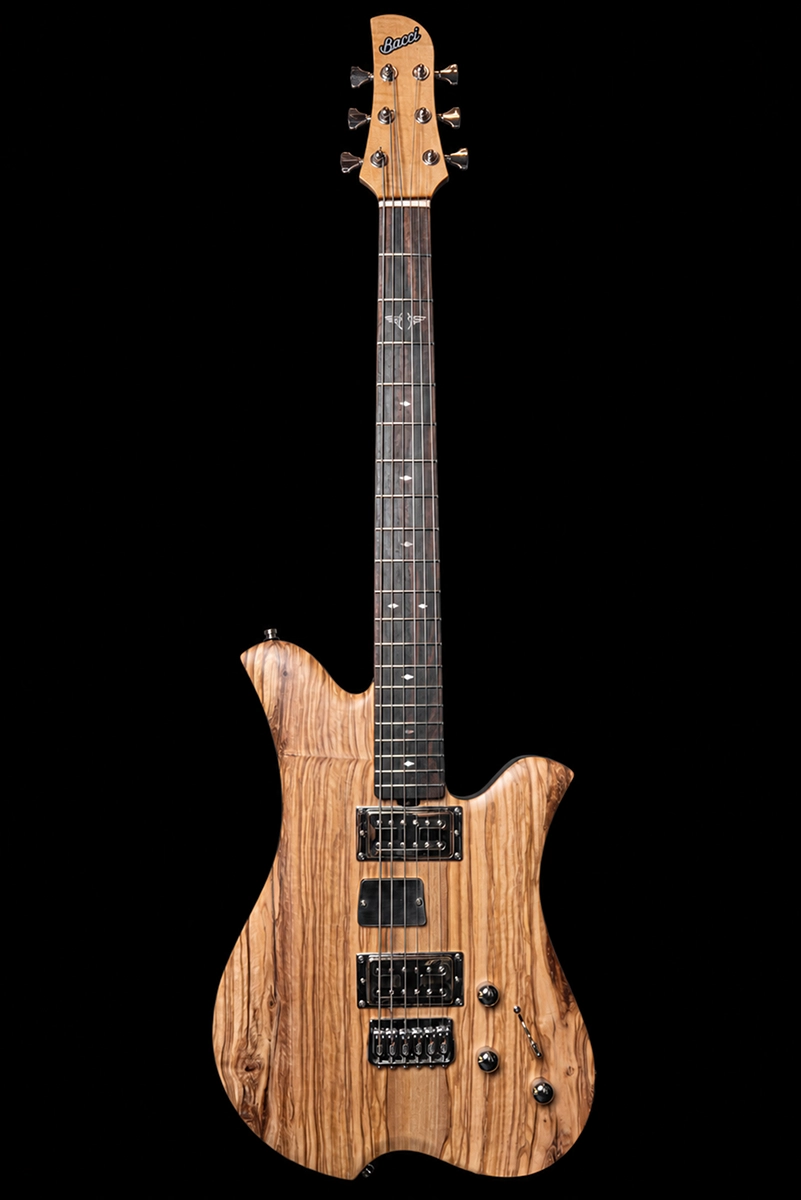
Art of Nature baritones are never painted. Olive, walnut, maple and spruce, left on show.
When wood does affect tone, it works mostly through density and stiffness. A denser, stiffer piece tends to transfer energy quickly and sound tighter and brighter with a fast attack. A lighter, softer piece tends to sound warmer, rounder and more open. Weight and balance follow from the same properties, and a well-chosen piece plays its part in how an instrument sits against the body and sustains.
On a resonant body these differences are amplified, literally. The vibrating top and the air inside the body carry the wood's character into the amplified sound, which is why two hollow guitars in different woods can sound like different instruments, while two solid guitars in different woods are far closer once the pickups are the same.
This is the honest version of the tonewood debate. The wood matters, how much depends on the build, and on a hollow or chambered Bacci it matters a great deal.
The Art of Nature baritones are offered in four Italian woods, each chosen for a character of its own, on a mahogany or ash body, and never painted over.
A dense, complex grain that reads across a room, with a warm, singing voice. This is the wood Matteo Mancuso took to the stage on his Art of Nature baritone.
A sandy, textured attack with a focused midrange and a controlled sustain, the voice behind the hollow Tosca Noce. Dark, warm and compressed.
Bright, clear and direct, with snap and precision, and notes that separate cleanly even under gain. On the Tosca, a spalted maple top over mahogany.
Lively and airy, quick on the attack, light and balanced in the midrange. On the Tosca, a spruce top over pearwood, the most acoustic of the three.
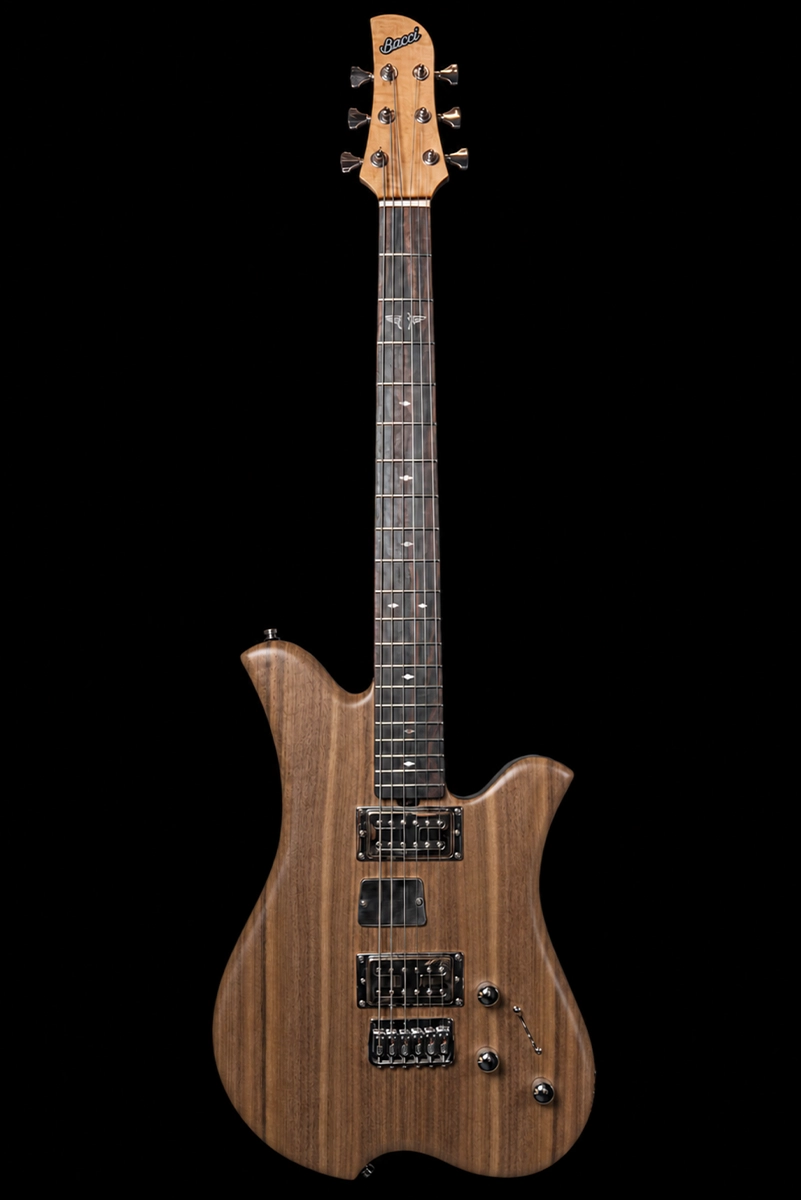
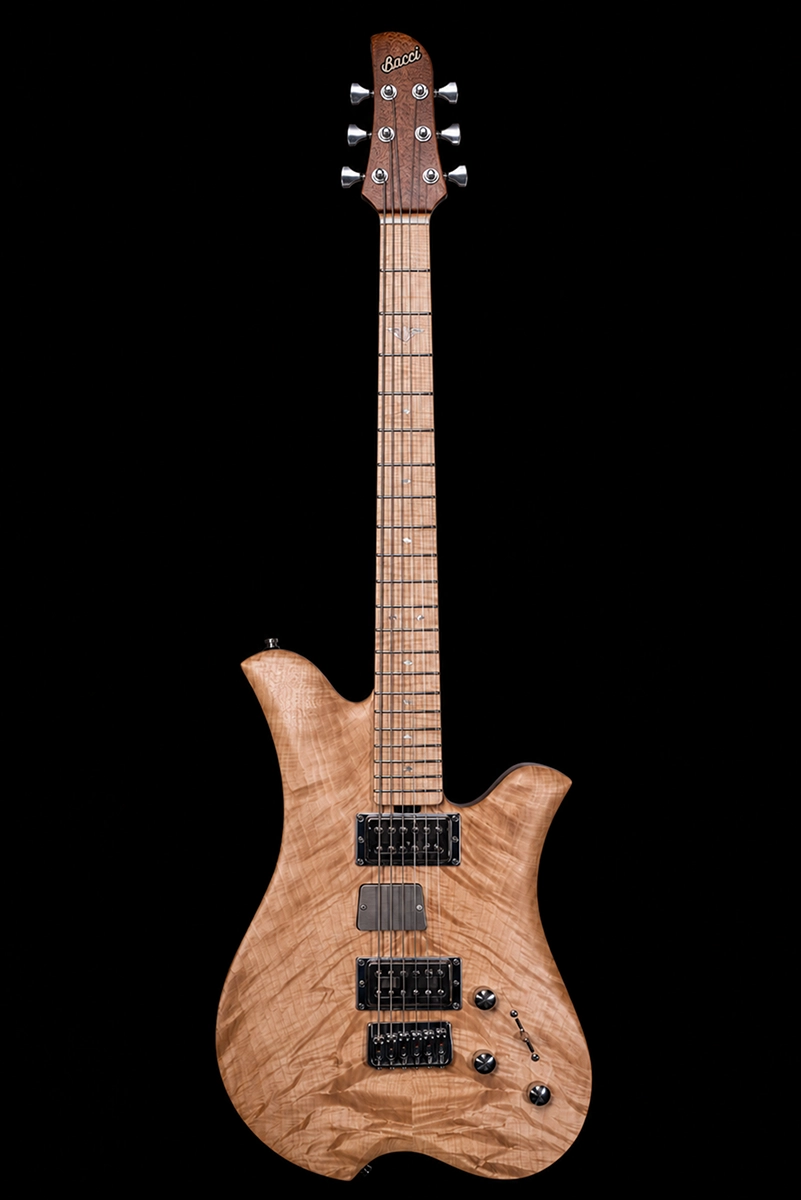
Away from the show tops, the family leans on woods chosen for how they behave over a lifetime of playing rather than only for how they look. Red alder carries the Marleo bass and the whole Parato line, a balanced, dependable body wood with a long pedigree in electric instruments. Figured maple is hand-matched to each neck and tuned to its own body, chosen for the strength and stability that keep a neck straight for decades. Ebony gives the fingerboards their firm, clear attack.
The Marlita bass is the vivid exception. It uses worm-eaten alder, whose tiny voids, left by woodboring beetles, act as small tonal chambers inside the body, for a punchy, airy voice that is never the same twice. It is the clearest proof that in the right hands a flaw becomes a feature.
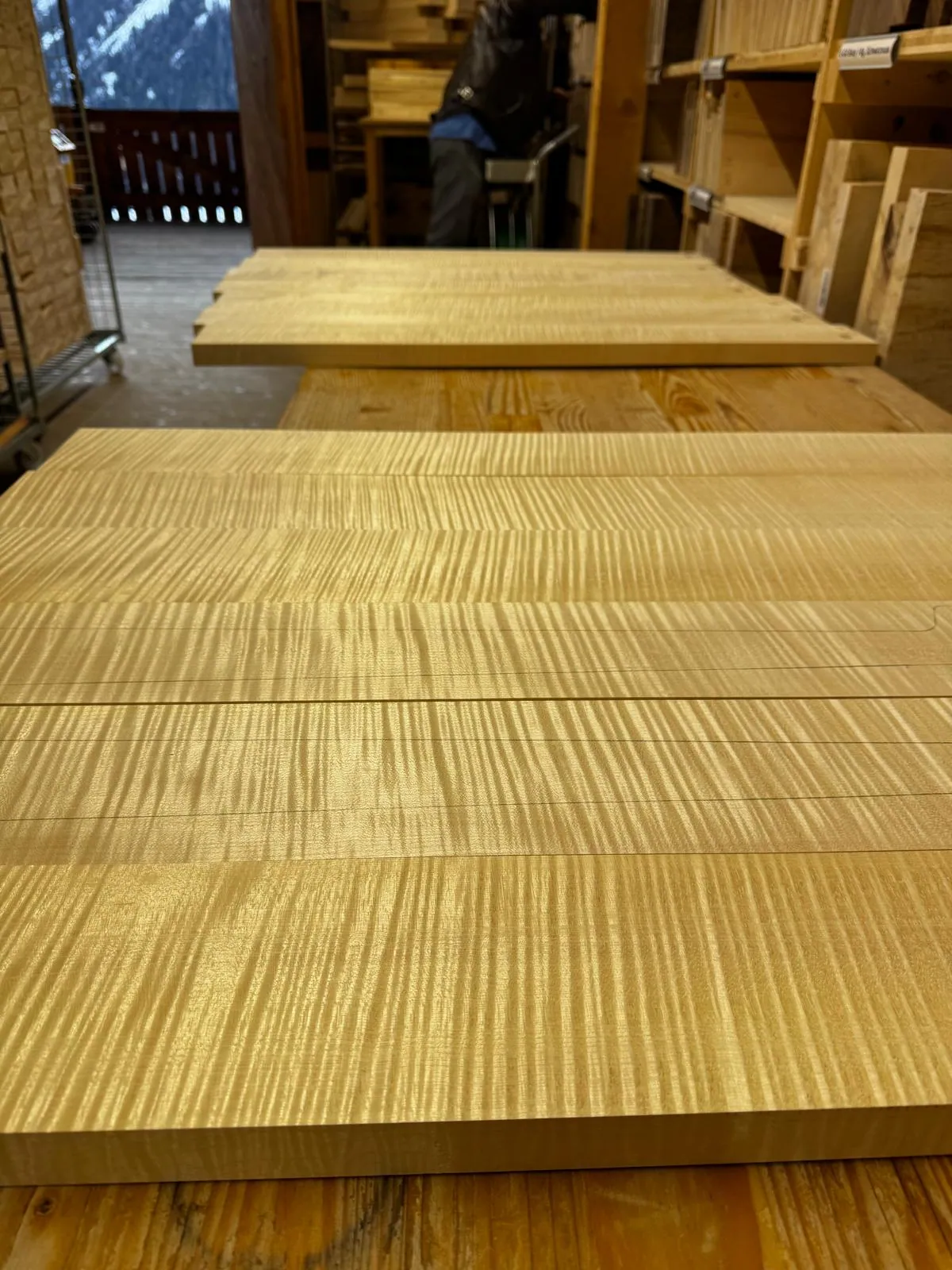
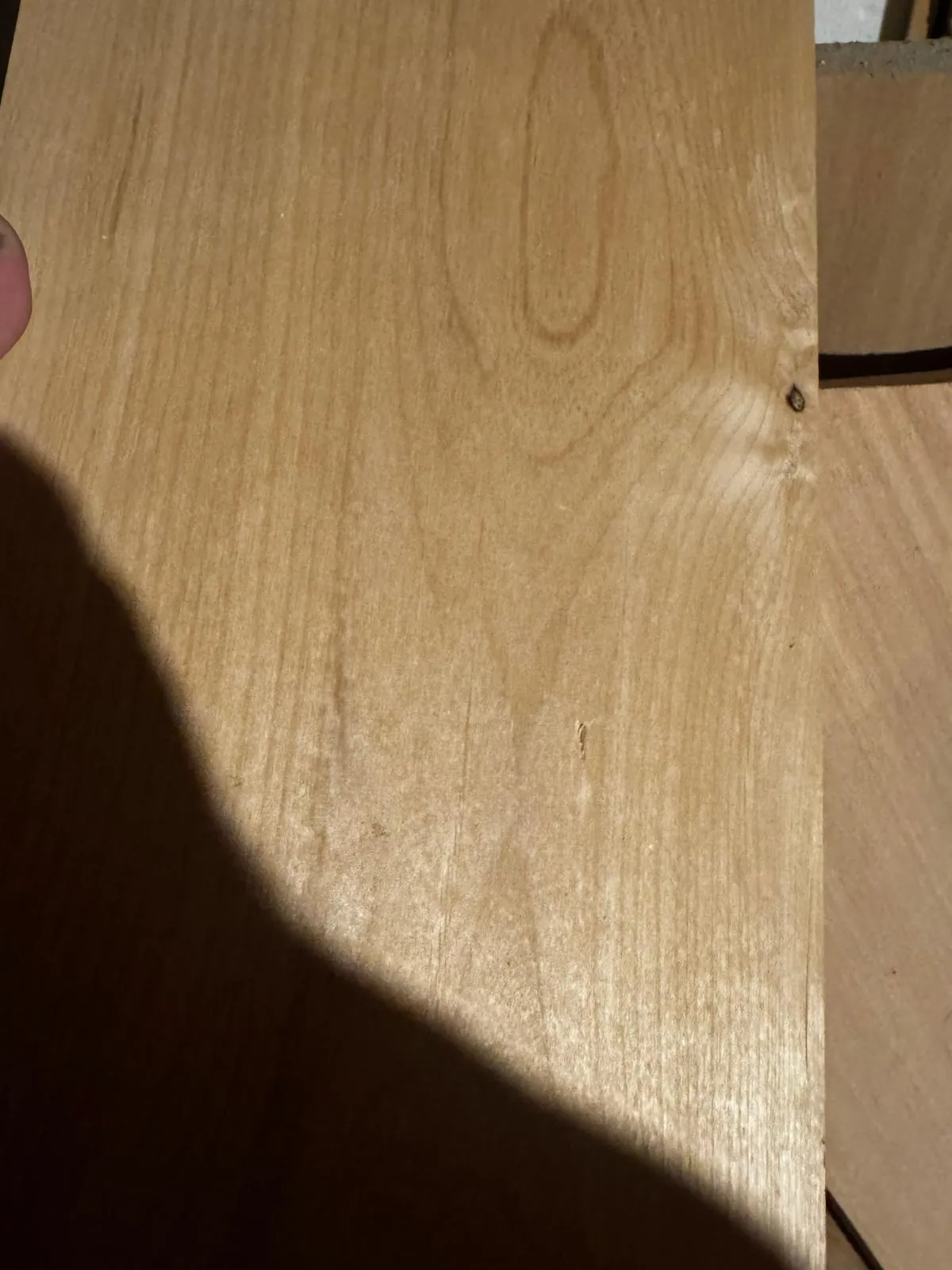
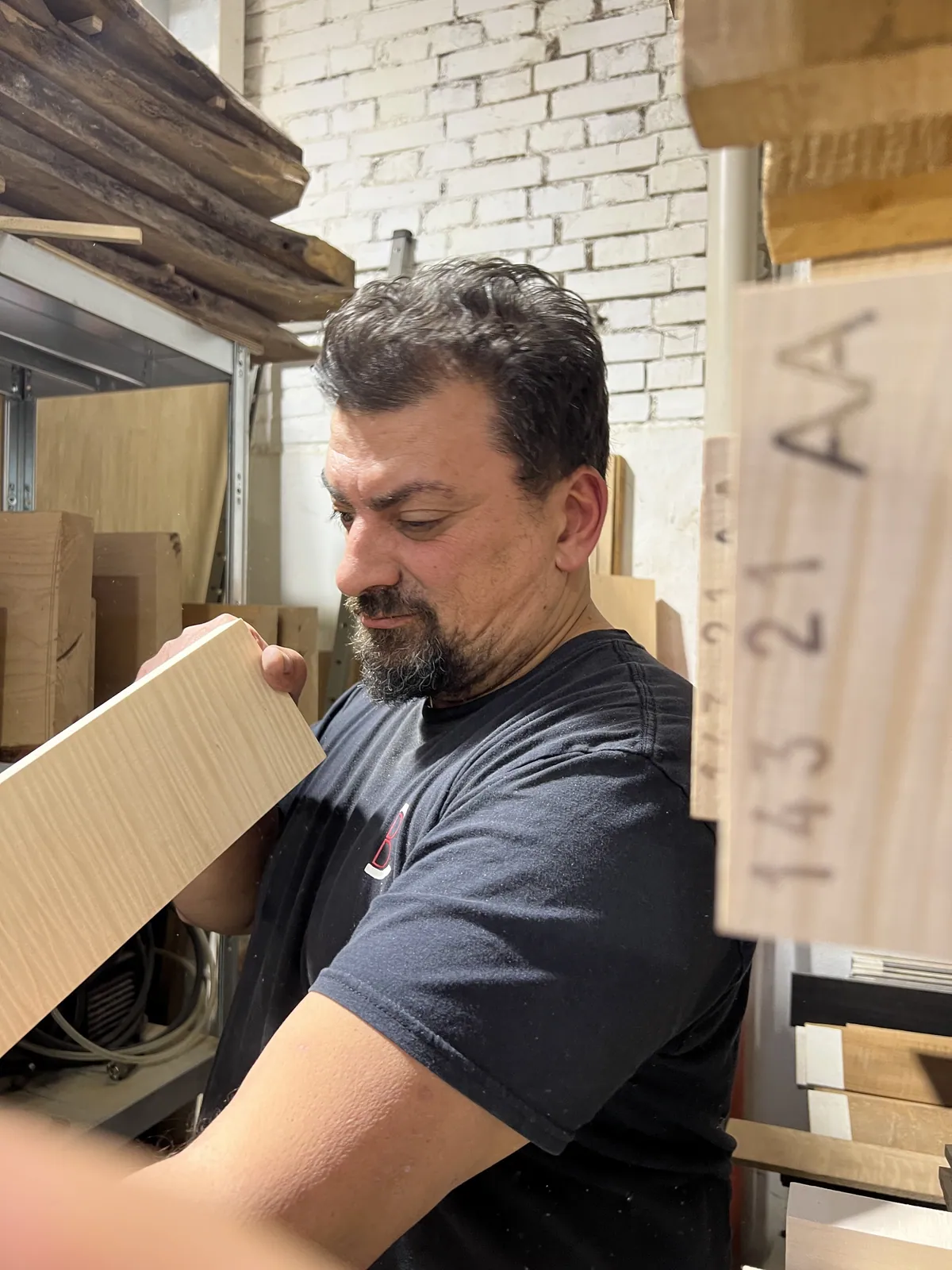
None of this works from a catalogue number. Bruno chooses each piece by feel, reading the board by eye and by hand before it is cut, and keeps the finest tops for years, waiting for the right instrument. On a resonant body, that choice is the single biggest decision in the voice of the finished guitar.
It is why a Bacci starts in a timber store rather than at the bench, and why the wood on an Art of Nature baritone is left on show. The tree is doing half the work, so it is chosen like it matters.
What you hear is the tree as much as the build.
On every Art of Nature baritoneOn a solid-body electric the wood plays a supporting role next to the pickups, the scale and the strings, and its effect is subtle. On a hollow or chambered instrument it matters far more, because the body itself resonates and becomes part of the voice. That is why Bacci voices its hollow Tosca and chambered Art of Nature baritones around the wood.
There is no single best wood, only the right one for the voice you want. Denser woods tend to sound tighter and brighter, lighter woods warmer and more open. On a resonant body the choice is far more audible than on a solid body, where pickups dominate.
Red alder for the Officina and Parato bodies, figured maple for necks, ebony for fingerboards, and olive, walnut, maple and spruce tops on the Art of Nature baritones, each chosen for voice and grain. The Marlita bass uses rare worm-eaten alder.
Again, there is no single answer. Bacci builds the Marleo bass on red alder for a balanced, classic foundation, and the Marlita on worm-eaten alder whose tiny beetle-left voids act as small tonal chambers, giving a punchy, airy character.
On the Art of Nature baritones the wood is the point, so nothing is painted over. The tops are chosen for voice and grain rather than colour, and left on show, so what you see and hear is the tree.
Yes. The more the body resonates, the more the wood is heard. On a fully hollow guitar like the Tosca, or a chambered Art of Nature baritone, the top is chosen and voiced the way a violin maker chooses a top, which is far more decisive than on a solid plank.
Figured maple has a rippled, three-dimensional grain pattern, flame being one type. Beyond its looks, straight, stiff maple is prized for necks because it is strong and stable, which is why Bacci hand-matches a figured maple neck to each body.
Yes. Every Bacci is built to order and the wood is chosen with Bruno. On the Art of Nature line you can ask for a rare top set aside years ago, and the instrument is built around that piece of wood.
Tell Bruno what you hear, and the instrument is built around that piece of wood, chosen by the maker himself.
Every Bacci is designed, built and set up by Bruno, one at a time, by the maker who chose the wood.