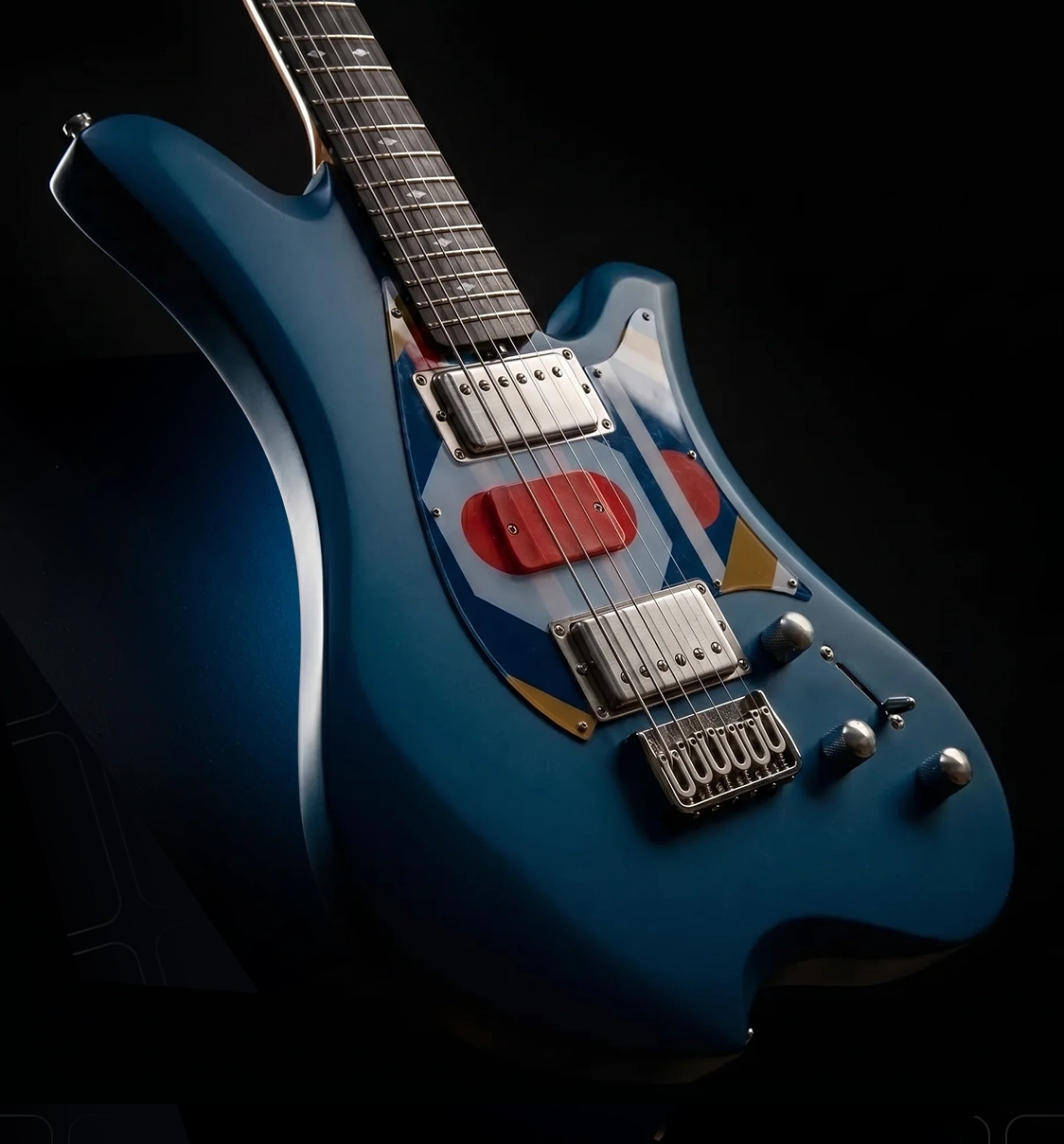
One guitar, two voices.

Bacci GuitarsPescia, Tuscany
Most instruments speak in one register. A guitar lives up top, a bass holds the bottom, and filling both usually means two players or two overdubs. A dual-output instrument breaks that rule: it carries two genuinely different voices and sends them out on two separate jacks, so one player can cover the guitar part and the bass part at the same time.
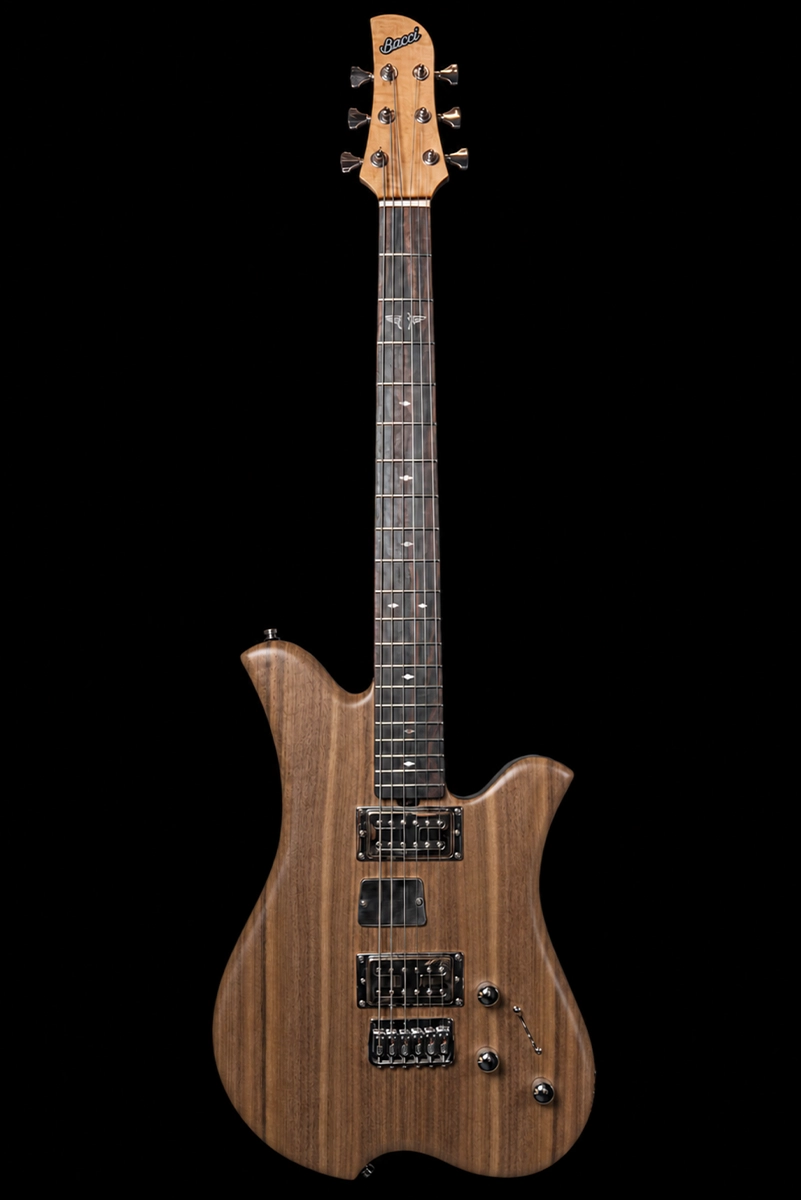
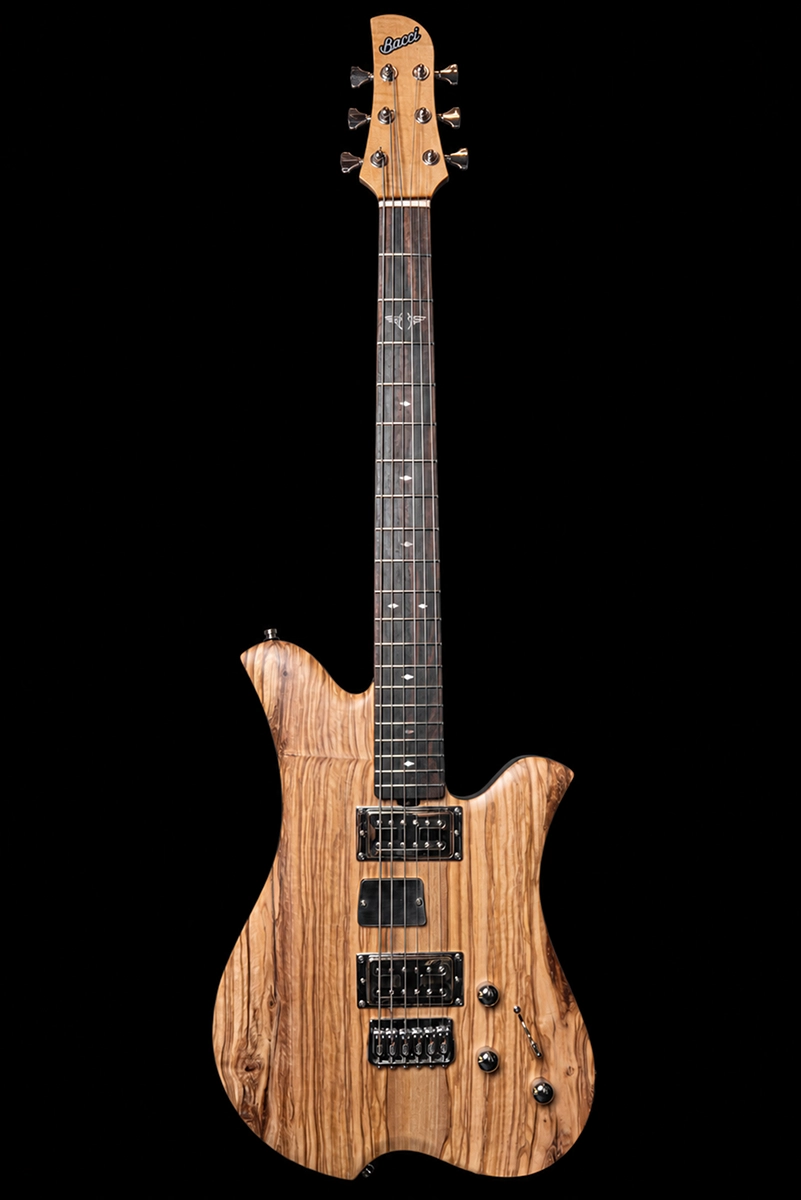
The Bacci Leonardo is built around exactly this idea. It is a baritone guitar with a full guitar output and a dedicated bass voice from a Modern Bass capsule on the three low strings, each with its own volume and its own jack. That second jack is the whole point: send the two voices to two amps and one player fills the room, keep them on two tracks in the studio and the mix stays yours after the take.
This article explains what a dual output actually is, how it differs from a stereo guitar or an octave pedal, how the Bacci version works, the three practical ways to use it, and how to decide whether it belongs in your setup.
A baritone that carries a bass inside, designed and built by Bruno Bacci, one at a time, in Tuscany.
The phrase dual output gets used loosely, so it helps to be precise. A stereo guitar usually takes one instrument and splits it, for example sending the neck pickup to one output and the bridge pickup to another, for stereo width or for running two different amp tones. The two signals are two halves of the same guitar voice.
A dual-output baritone is different in kind. The two outputs carry two separate instruments: a guitar voice across all the strings, and a dedicated bass voice generated from the low strings alone. You are not widening one sound, you are playing two.
That distinction matters because it changes what you can do. With two halves of one guitar you get a bigger guitar. With a guitar voice and a bass voice you get an arrangement, the parts a band would split between two people, coming from one instrument and one performance.
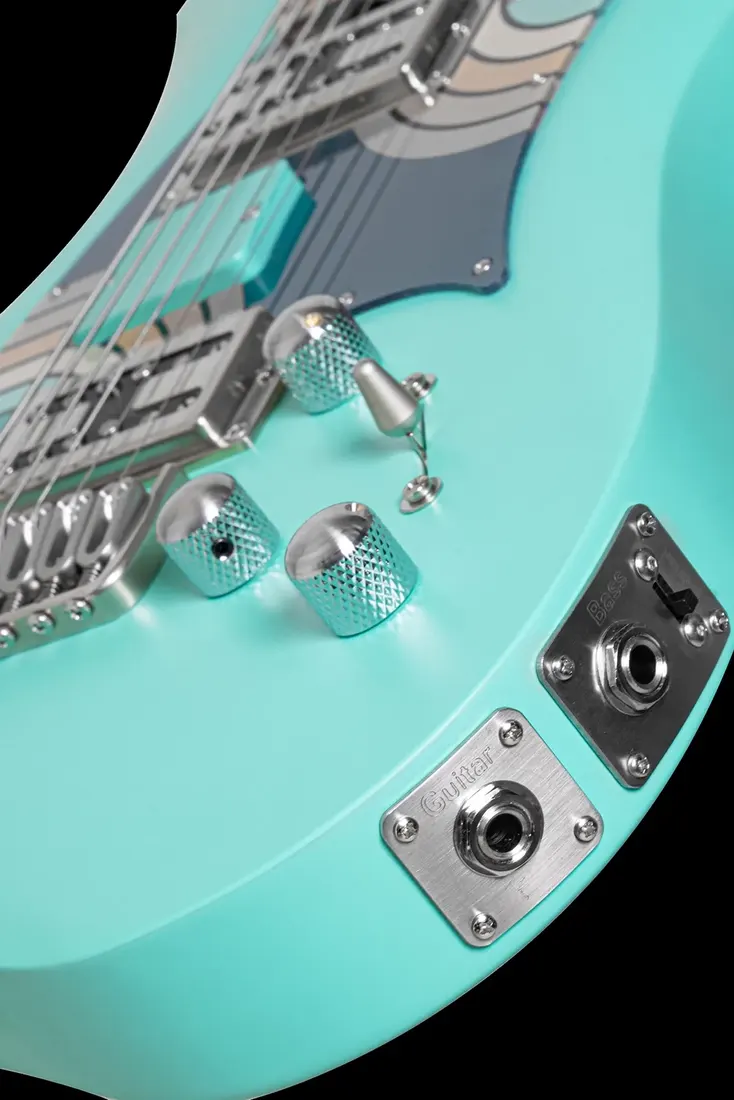
On the Leonardo, the guitar output is exactly what you expect: the full range of the instrument, voiced for the baritone register. Alongside it sits the bass voice, produced by a Modern Bass capsule that reads the three low strings and gives them their own body, their own volume control and their own jack.
Because the bass voice has its own volume, you balance the two at the instrument before anything reaches an amp. Roll the bass voice back for a mostly-guitar part, bring it up when you want the bottom to carry, and the relationship between the two is in your hands in real time.
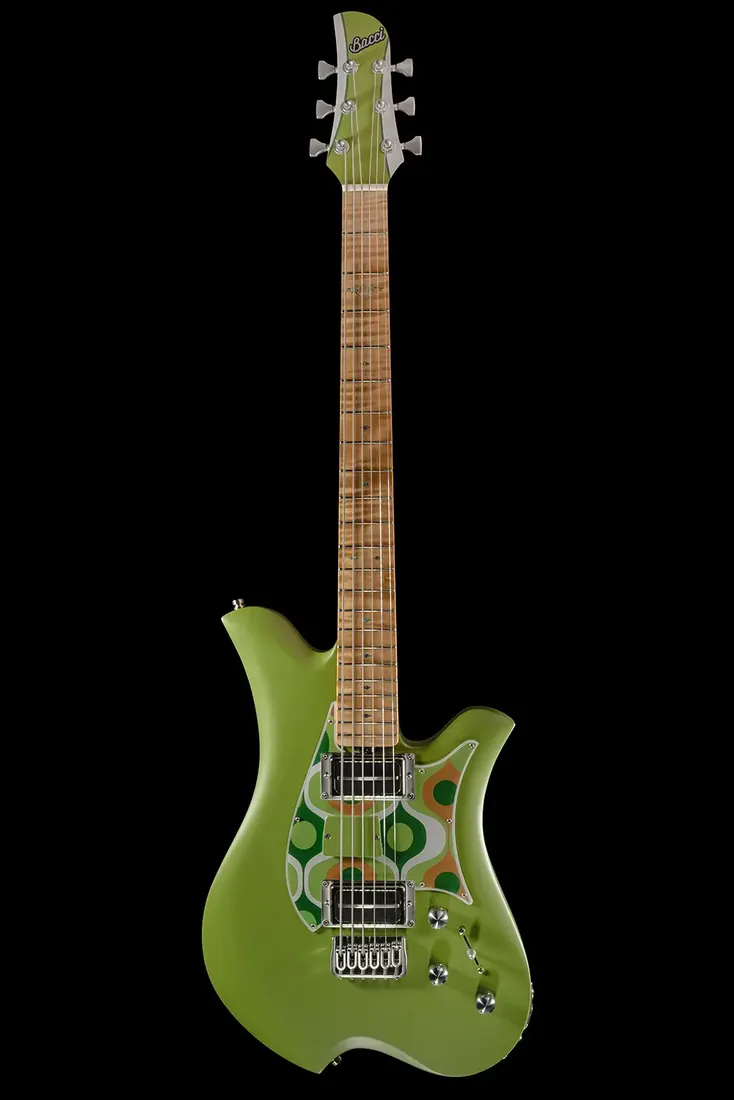
The platform under all of this is a 28-inch scale. A baritone's longer scale is what lets the low strings stay tight and defined, so the bass voice speaks as a real pitch with definition and not as a loose, woolly rumble. The scale and the capsule work together: one keeps the low notes clear, the other gives them a voice of their own.
A guitar voice and a bass voice, each on its own jack with its own volume.
The Modern Bass capsule reads the three low strings.
Long enough to hold the low note as a clear note.
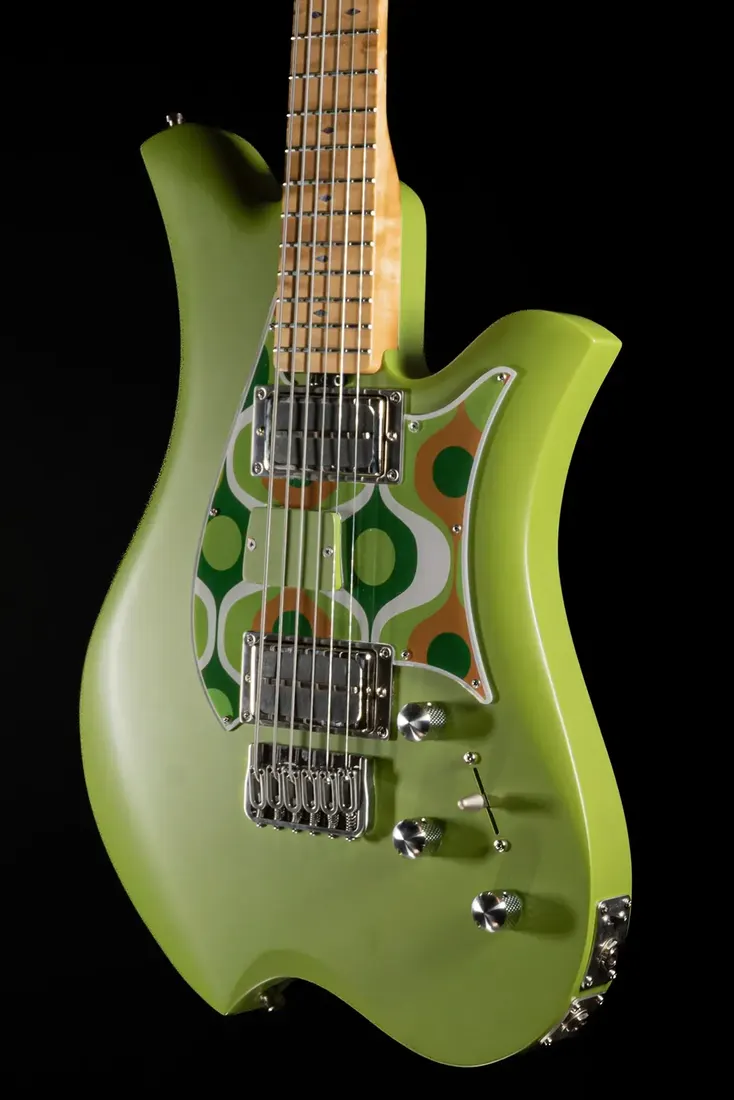

A baritone is a guitar with a longer scale, tuned lower than standard, usually B to B or A to A. You play it exactly like a guitar, the chord shapes and technique are identical, it simply lives in a deeper register between a guitar and a bass. That in-between position is precisely why it makes such a good dual-output platform.
Start from a standard guitar and the low strings are too high to double as a convincing bass. Start from a bass and you lose the chordal, melodic top. The baritone sits in the middle, close enough to a guitar to play like one and low enough that its bottom strings can carry a genuine bass line. Splitting those low strings off into their own voice is a short, natural step rather than a stretch.
It is also why the Leonardo feels familiar from the first minute. Nothing about the playing is new. The novelty is entirely at the output, in what you choose to do with the second jack.
Fat, involving, unforgettable.
Bruno's three words for the dual outputThe instrument stays the same in every case. What changes is how you patch it, and that decides what you walk away with. There are three practical setups, from the simplest to the fullest.
Use the guitar output alone and play it as a baritone. One channel, fastest to track, easiest to place in a mix. This is the setup for a part that wants to sit in a guitar's place in the arrangement, a register below a standard six-string.
Take both jacks into two inputs, the guitar voice on one channel and the bass voice on the other. The same performance arrives as two tracks you can pan and balance against each other, and keep separate for the mix. One player, two parts, one take.
Send the guitar voice to a guitar amp and the bass voice to a bass amp, and record or mic each on its own. This is the fullest version: two amplified tones, each shaped for its register. Run an octave pedal on the bass voice and it sounds as though it were born for it.
A practical note for each. In the one-cable setup, treat the Leonardo as you would any baritone and let the scale do the work. In the two-channel setup, a little high-pass on the guitar track and a little low-pass on the bass track keep the two from fighting in the low mids. In the two-amp setup, physical separation between the cabinets, or a DI on the bass voice, keeps each voice clean for the mix.
The clearest case is the solo or duo performer. A single guitarist can hold down a bass line and a chordal or melodic part at once, filling a stage that would otherwise need a rhythm section. Loop the bass voice and play over it, or keep both live, and one person becomes a section.
In the studio it is a time machine. Two parts from one take means the feel is locked, the two voices breathe together because they came from the same hands at the same moment, and you still have them on separate tracks to mix independently. For writers and producers working alone, that is the difference between sketching an idea and finishing it.
It also opens sounds that neither a guitar nor a bass reaches on its own. The guitar voice gives the chambers their acoustic breath, the second output gives the low end, and an octave or filter on the bass voice pushes it into synth-bass and ambient territory while the top stays articulate.
There are other ways to chase a guitar-and-bass sound, and it is worth being honest about where each one stops.
An octave pedal on a normal guitar drops a copy of whatever you play an octave down. It is useful, but it tracks one blended signal, it struggles with chords, and the low octave is an effect on the guitar rather than a true, separately controllable bass voice. A bass VI, a six-string bass tuned like a guitar an octave down, gives you a real low instrument but then you have lost the guitar register, you are playing a bass. Stacking two instruments, a guitar and a bass through a splitter, means two necks and two performances, which is exactly the thing a dual output removes.
A dual-output baritone is the one approach where a single performance produces a real guitar voice and a real, independently controlled bass voice at the same time. That is the gap it fills, and it is why it is a category of its own rather than a variation on a pedal.
None of the alternatives are wrong, and plenty of great music uses every one of them. The point is simply that they solve different problems. If what you want is one player, one take, two genuine voices, the dual output is the tool built for it.
A single baritone with two independent outputs, so one player can deliver both voices at the same time, live and in the studio.The Bacci dual output, in one line
Every Leonardo is designed, built, voiced and set up by Bruno Bacci himself, one at a time, in his workshop in Pescia. There is no production line: the scale, the strings, the pickups and the finish are chosen when you order, and the instrument is built around the sound you are after.
Because it is handmade to order, the dual output is not a bolt-on feature but part of the instrument's design from the first cut, which is why the two voices sit together as naturally as they do. Every Bacci is backed for life by a lifetime warranty from Bruno himself.
A dual-output guitar has two separate output jacks that carry two different voices from the same instrument: a full guitar voice and a dedicated bass voice. One player can send them to two amplifiers, or record them as two tracks, so a single instrument covers both registers at the same time.
A stereo guitar usually splits one signal, for example the neck and bridge pickups, across two outputs for width. A dual-output baritone like the Bacci Leonardo splits two genuinely different voices, a guitar voice and a bass voice from a dedicated capsule on the low strings, so the two outputs are two instruments rather than two halves of one.
The Leonardo carries its normal guitar output plus a dedicated bass voice from a Modern Bass capsule on the three low strings, with its own volume and its own jack. You decide how to use them: one cable for the guitar voice alone, both into two channels, or both into two amplifiers.
Yes. With the two outputs sent to a guitar amp and a bass amp, the guitar voice carries the chords and the top while the bass voice holds the bottom, so one player fills a space that usually needs two. Players use it live as a one-person section and in the studio to lay two parts from one take.
No. Each output is a standard jack. You can run the guitar voice into a guitar rig and the bass voice into a bass rig, or take both into two channels of any interface or mixer. An octave or filter pedal on the bass voice is optional, not required.
No. You play it exactly like a baritone guitar, with the same chord shapes and technique as a standard guitar on a slightly longer neck. The second voice is a routing choice at the output, not a different way of playing, so a guitarist is at home within minutes.
The Leonardo is a 28-inch baritone. The longer scale is what keeps the low strings tight and defined, so the bass voice reads as a clear note rather than a loose rumble.
Every Bacci Leonardo is handbuilt to order in Tuscany, to your scale, strings, pickups and finish. You can start a build, or read the full dual output story, from the Leonardo page.
The Leonardo is a baritone that carries a bass inside. A full guitar voice, a dedicated bass voice, and the choice of how to use them. Handbuilt to order in Tuscany.
Every Leonardo is designed, built and set up by Bruno, one at a time, in Pescia.