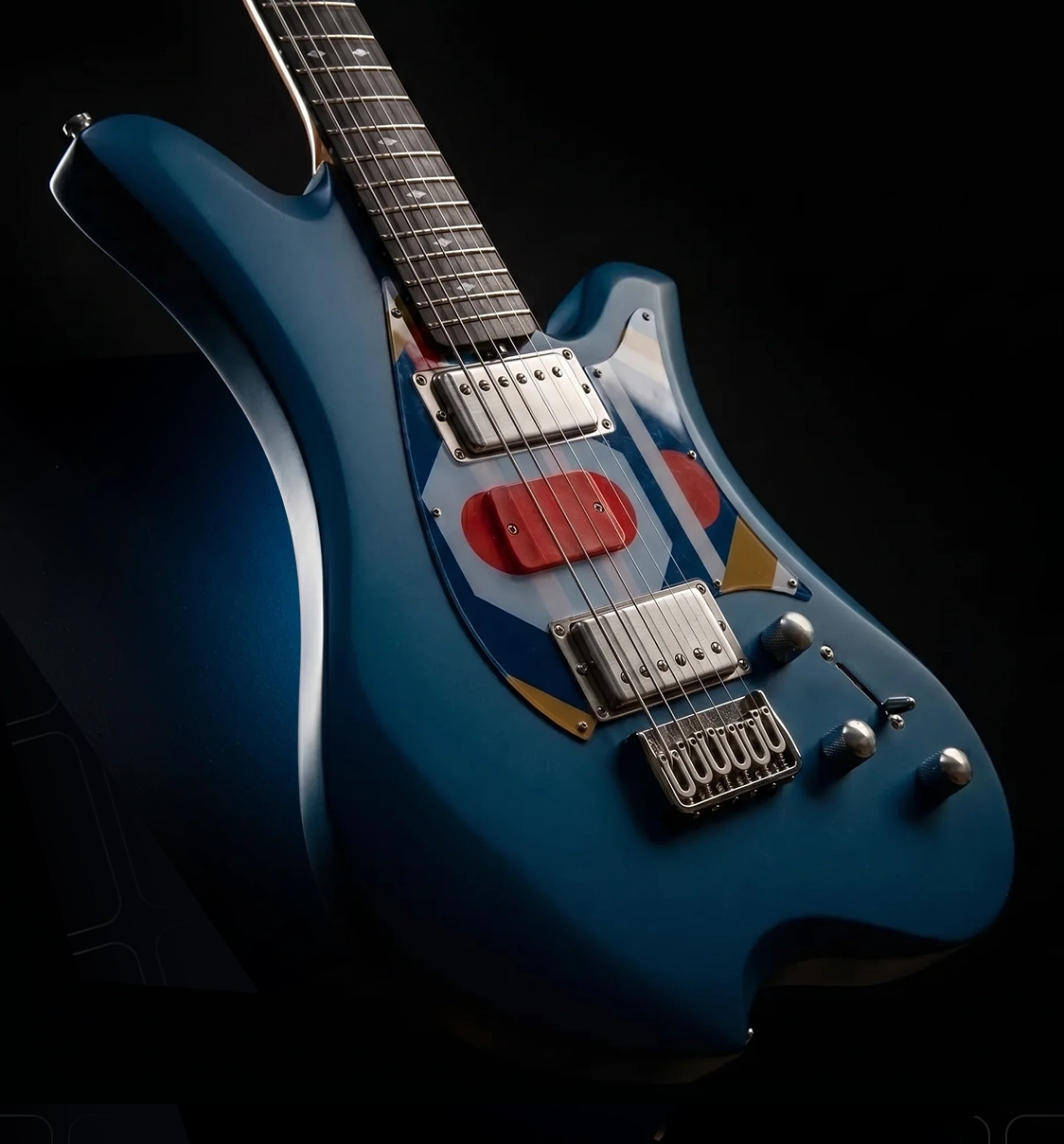
One baritone, two jacks.

Bacci GuitarsPescia, Tuscany
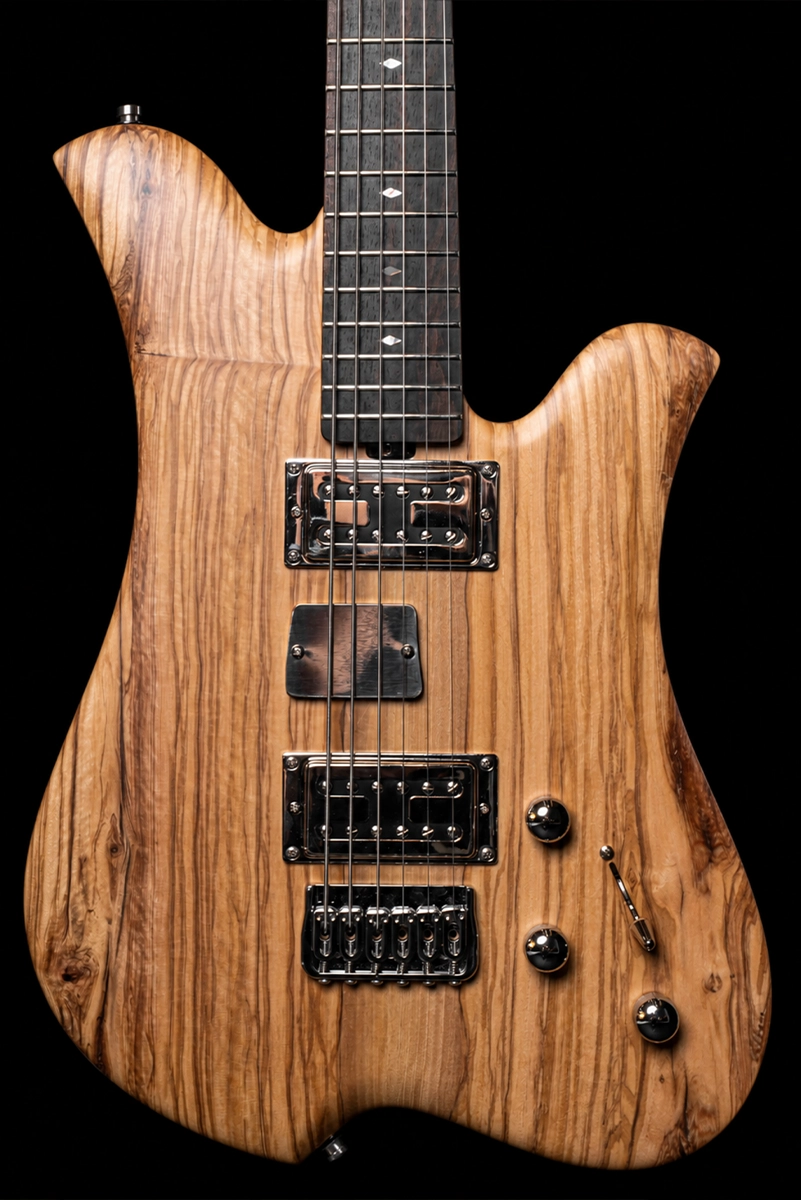
Every Leonardo baritone carries two outputs. A full guitar voice, and a dedicated bass voice from a Modern Bass capsule on the three low strings, each with its own volume and its own jack.
The scale is 28 inches, long enough to hold the low note as a note rather than a rumble, with pickups chosen for the baritone register. The two jacks are what open it up in the studio: you can treat the Leonardo as one instrument or as two, and the setup you pick decides which.
The chambers give the acoustic breath, the second output gives the low end. One player, two voices, two cables.
The simplest way to record the Leonardo is to use the guitar output alone and treat it as a baritone. One cable, one channel, and the longer scale doing the work.
This is the setup for a part that wants to sit in a guitar's place in the arrangement, a register below a standard six-string, with the low string still speaking clearly. It is the fastest to track and the easiest to place in a busy mix.
Take both jacks into two inputs, the guitar voice on one channel and the bass voice on the other. Now the same performance arrives as two tracks you can balance against each other.
Pan them, level them, and one player fills the room: the guitar voice carries the chords and the top, the bass voice holds the bottom. Keep the two on separate tracks and the mix decision stays yours after the take.
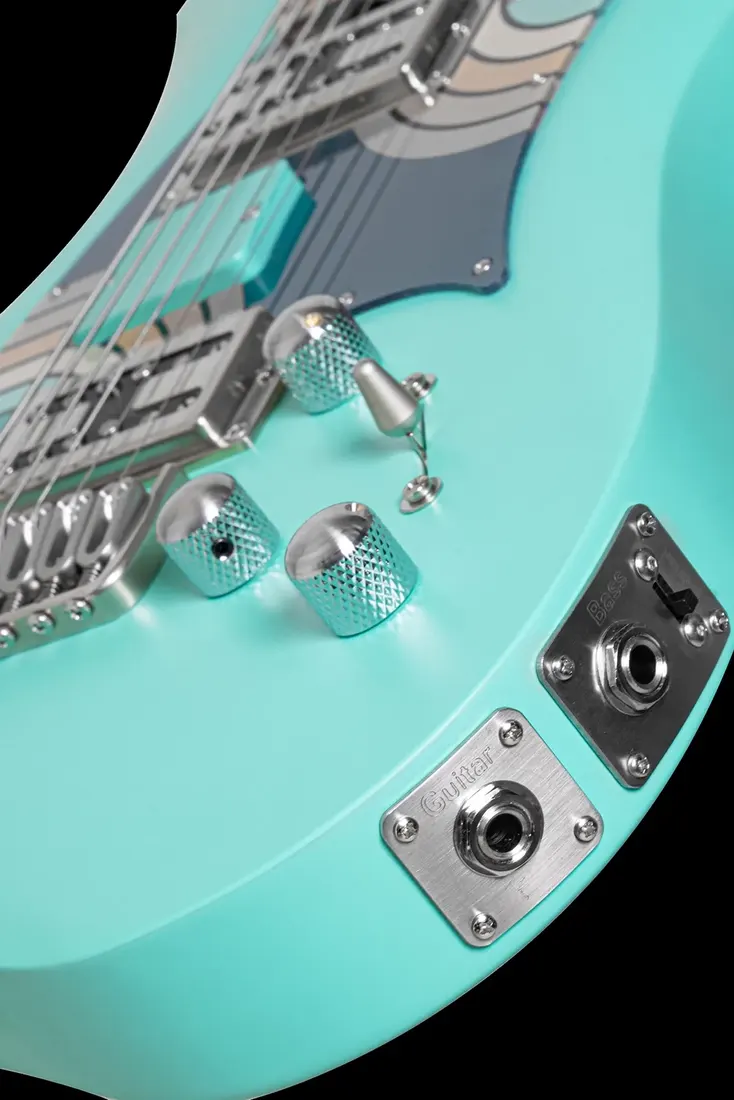
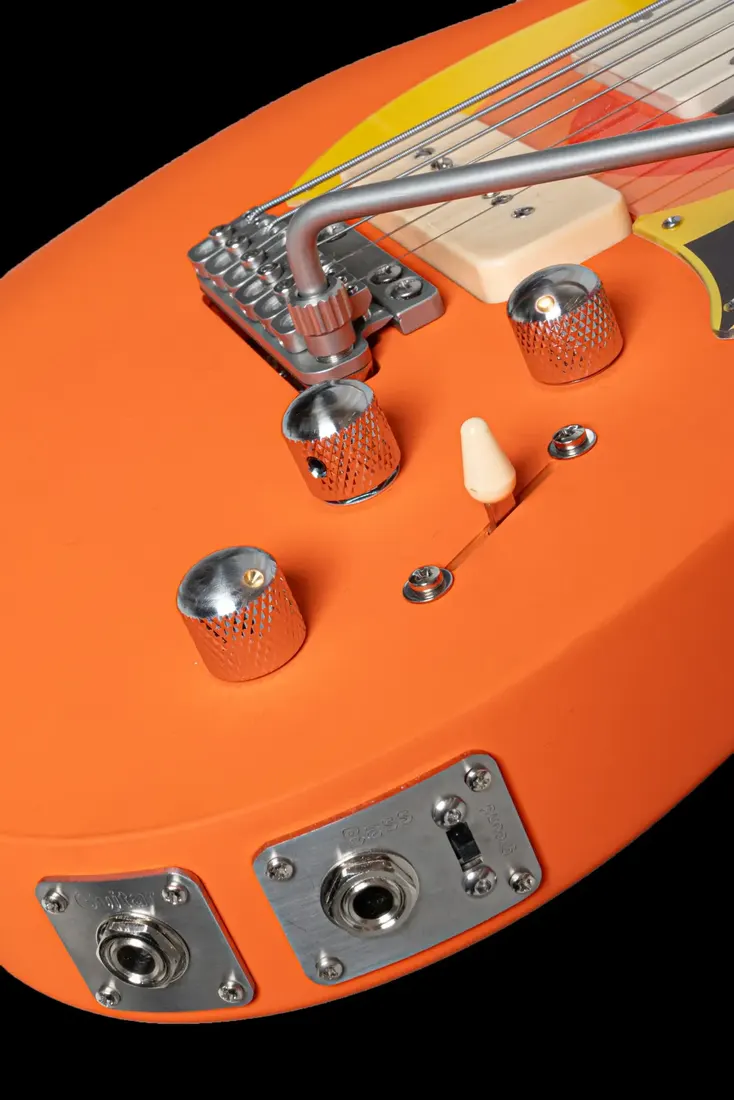
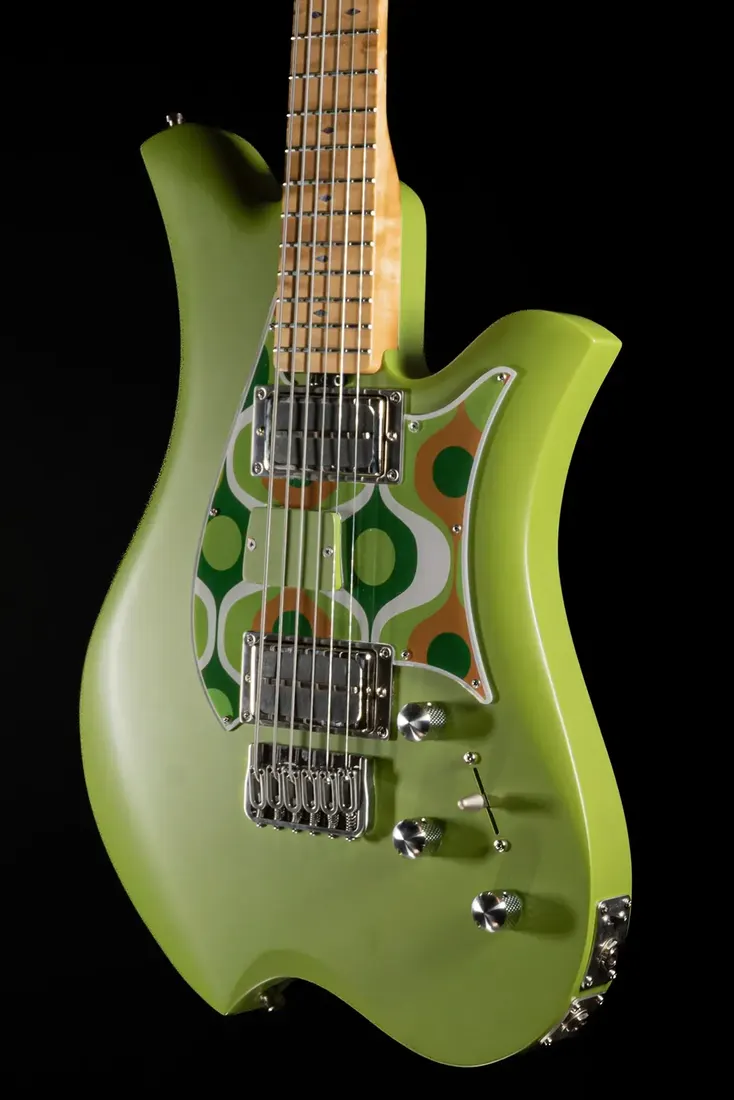
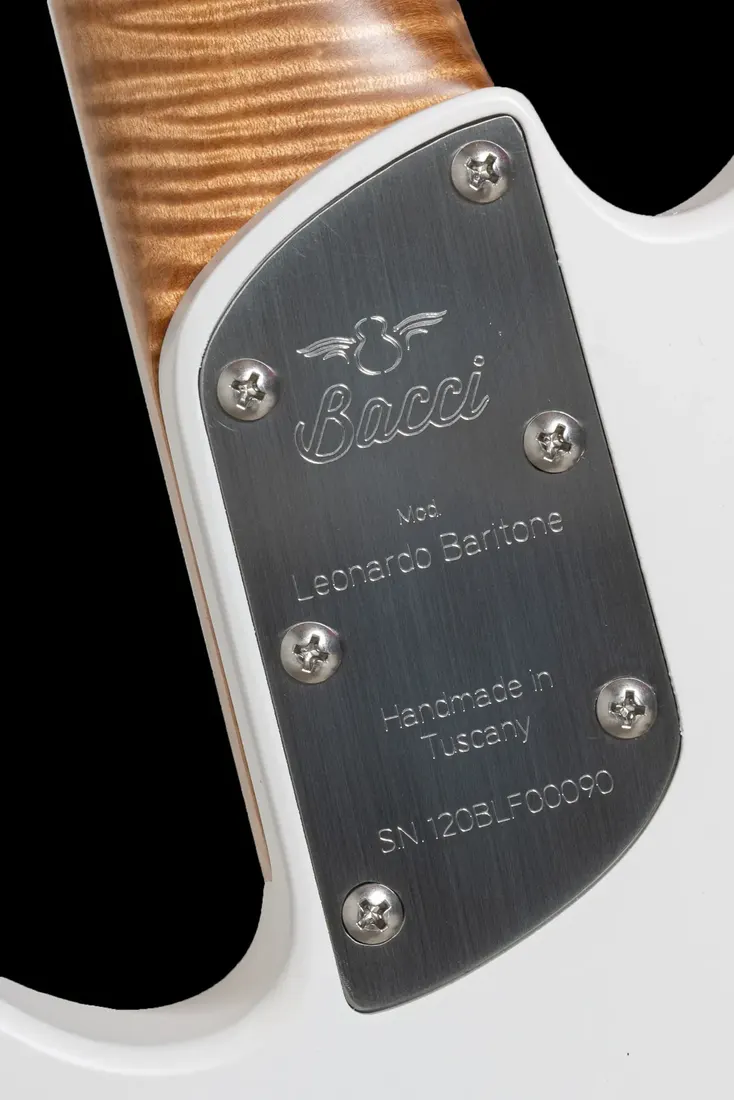

Send the guitar voice to a guitar amp and the bass voice to a bass amp, and record each cabinet on its own. This is the fullest version: two amplified tones, each shaped for its register, from a single pair of hands.
Run an octave pedal on the bass voice and it sounds as though it were born for it. It is the setup that makes the clearest case for why the second jack exists at all.
Fat, involving, unforgettable.
Bruno's three words for the dual outputThe instrument stays the same. The patch changes what you walk away with.
Treat it as a baritone. Fastest to track, easiest to place. One channel.
Both voices as separate tracks, balanced in the mix. One performance, two tracks.
Guitar amp and bass amp at once, each miked. Add an octave on the bass voice.
The Leonardo is a baritone that carries a bass inside. A full guitar voice, a dedicated bass voice, and the choice of how to use them.
Every Leonardo is designed, built and set up by Bruno, one at a time, in Pescia.