
One groove, three ways.

Bacci GuitarsPescia, Tuscany
A groove does not change when you move it down a register. Where it sits in the song does. The Leonardo lets one part live in three different places, and the interesting choice is which one serves the track.
It is a baritone at 28 inches with a dual output: a full guitar voice, and a dedicated bass voice from a Modern Bass capsule on the three low strings, each on its own jack. That is three starting points for the same idea.
Played as a guitar voice, the part sits where a six-string sits: chords, hooks and the upper half of the arrangement. It is the familiar place, and the baritone's longer scale gives it a little more weight at the bottom of the chord without moving it out of a guitar's register.
Drop the same groove into the baritone register and it moves into the space between a guitar and a bass. The 28-inch scale is the reason it works: the low string holds its pitch and its definition, so the part reads as music rather than mud.
This is where a riff gains gravity. The notes are the same, the room they take up is larger, and the rest of the arrangement has to make space for it.
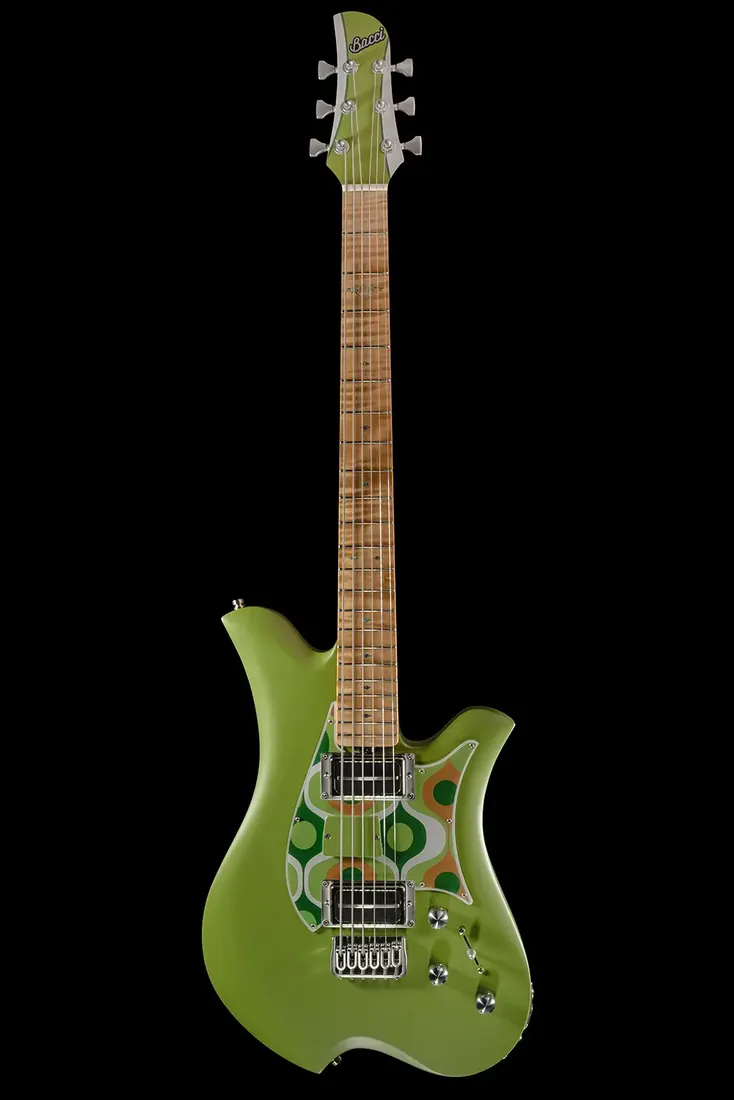
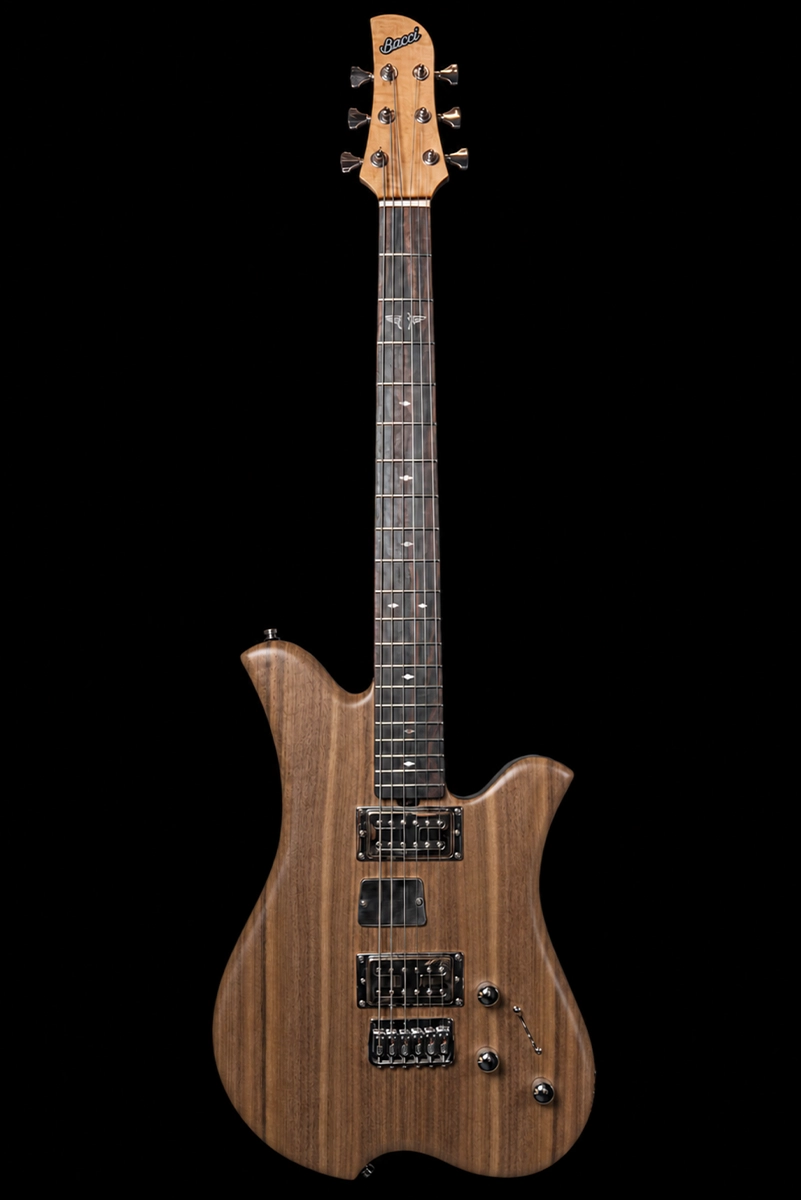
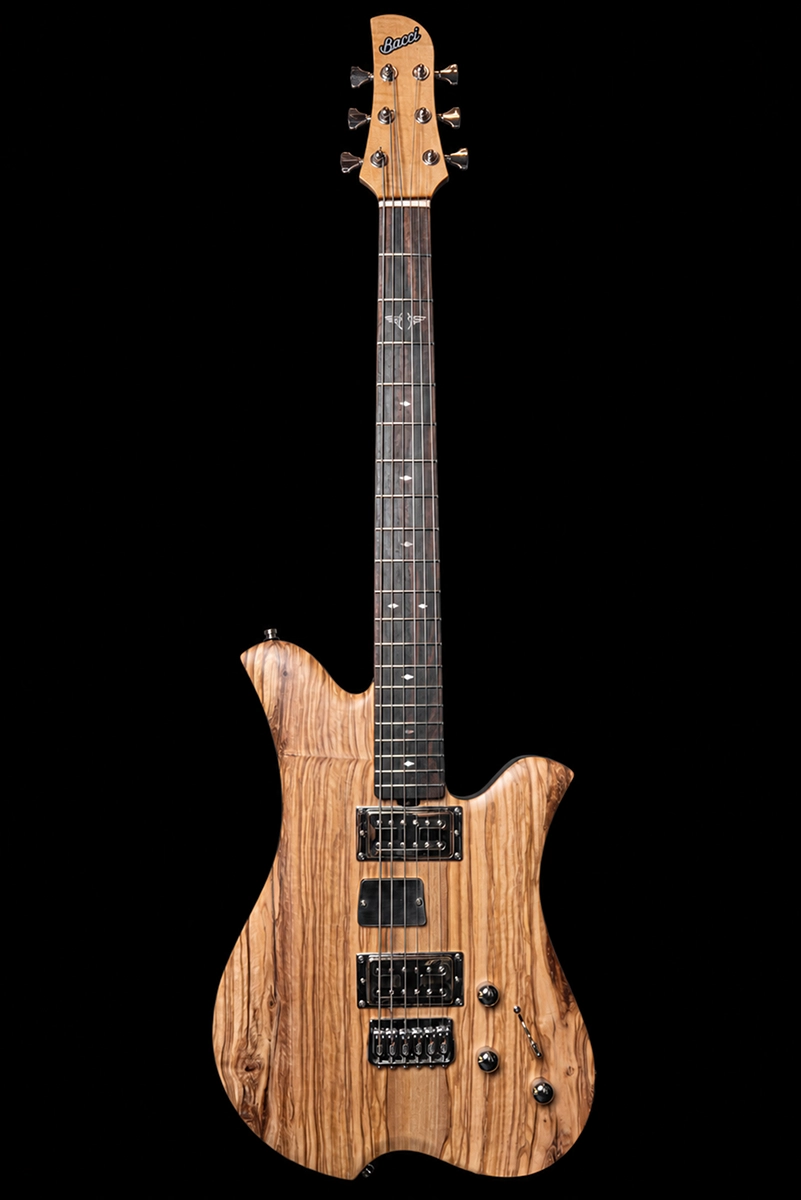
Six hand-painted liveries, drawn from the 1970s, the same instrument under each one.
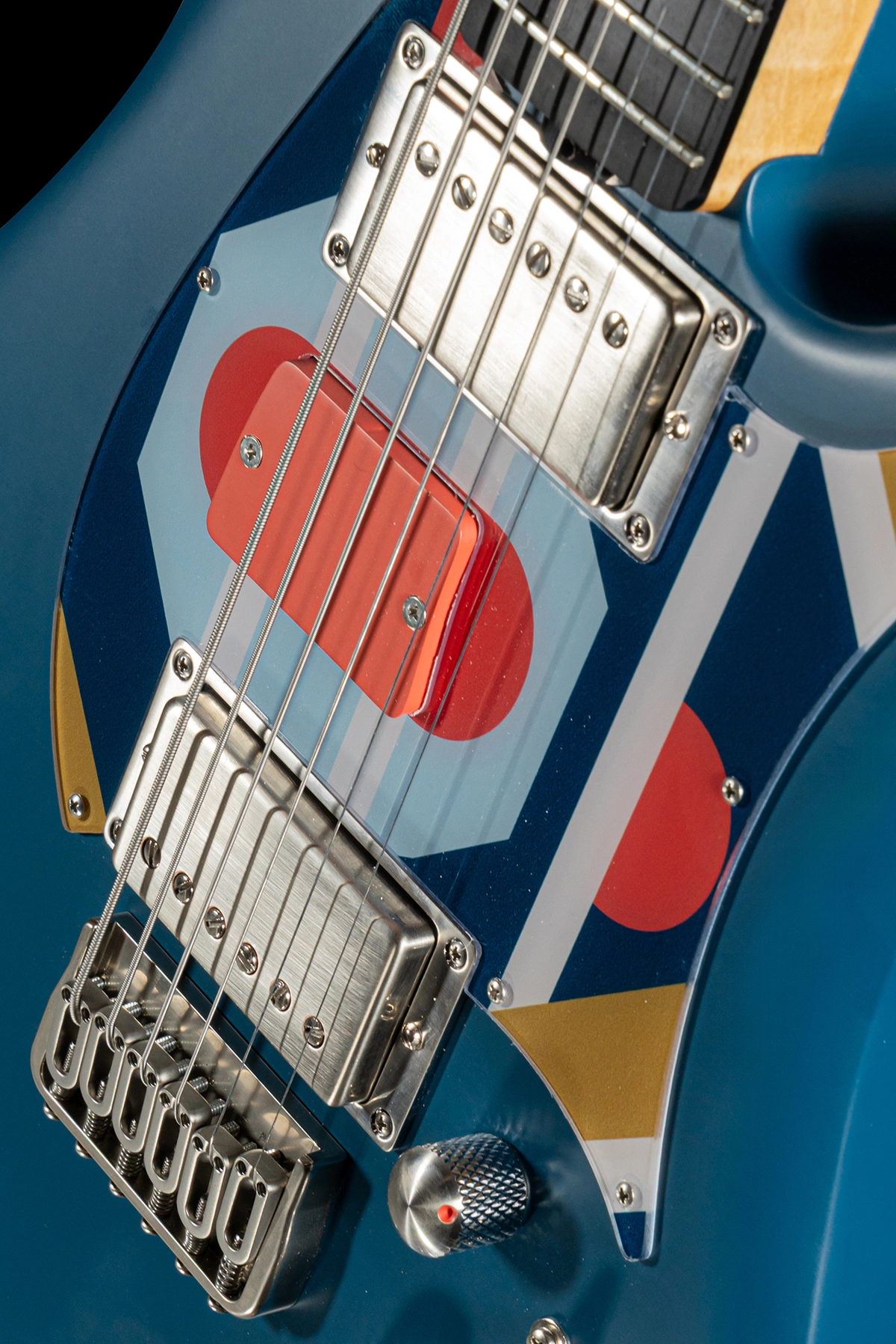
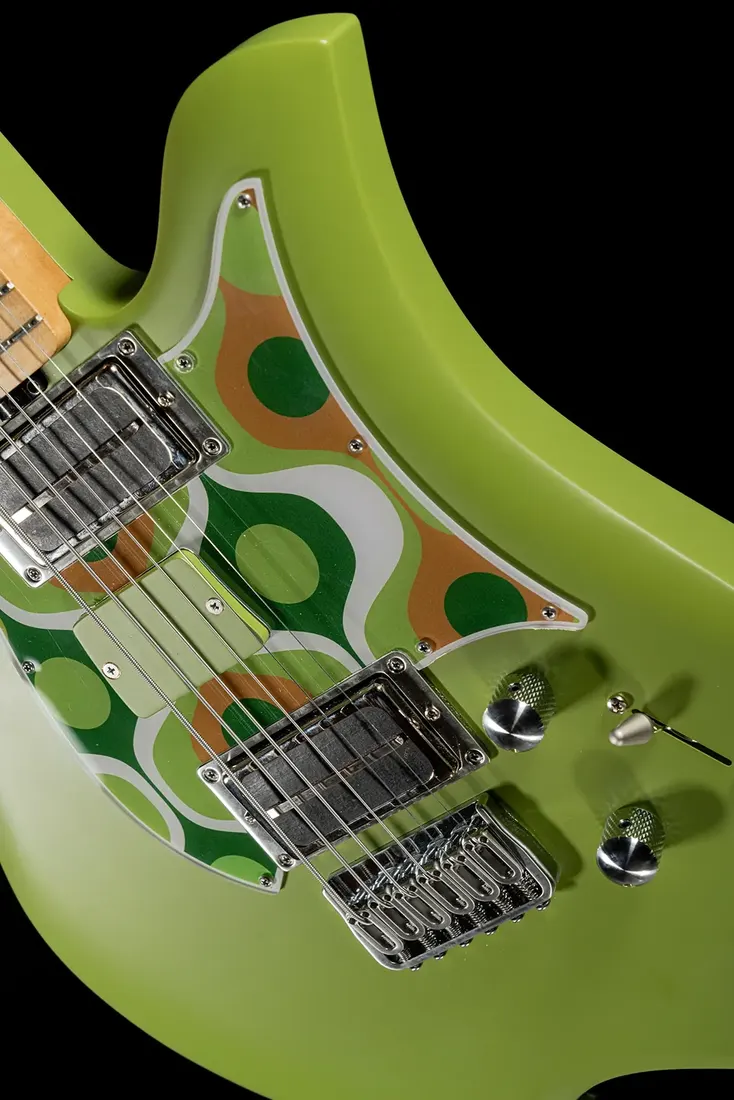
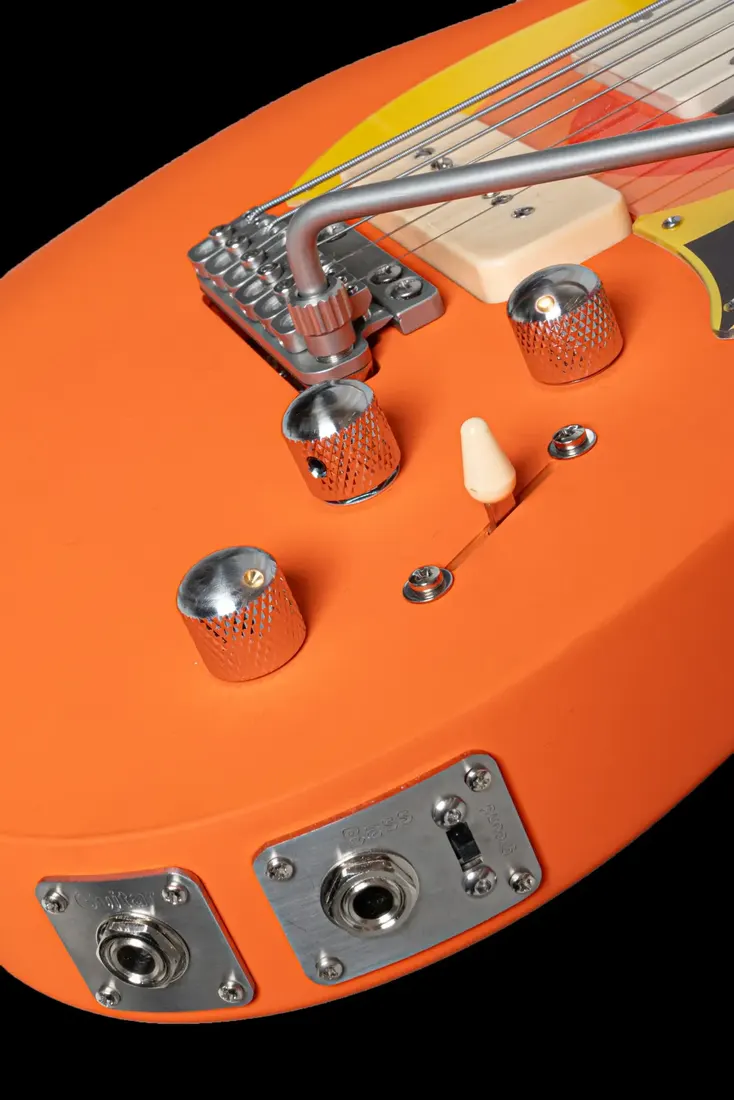
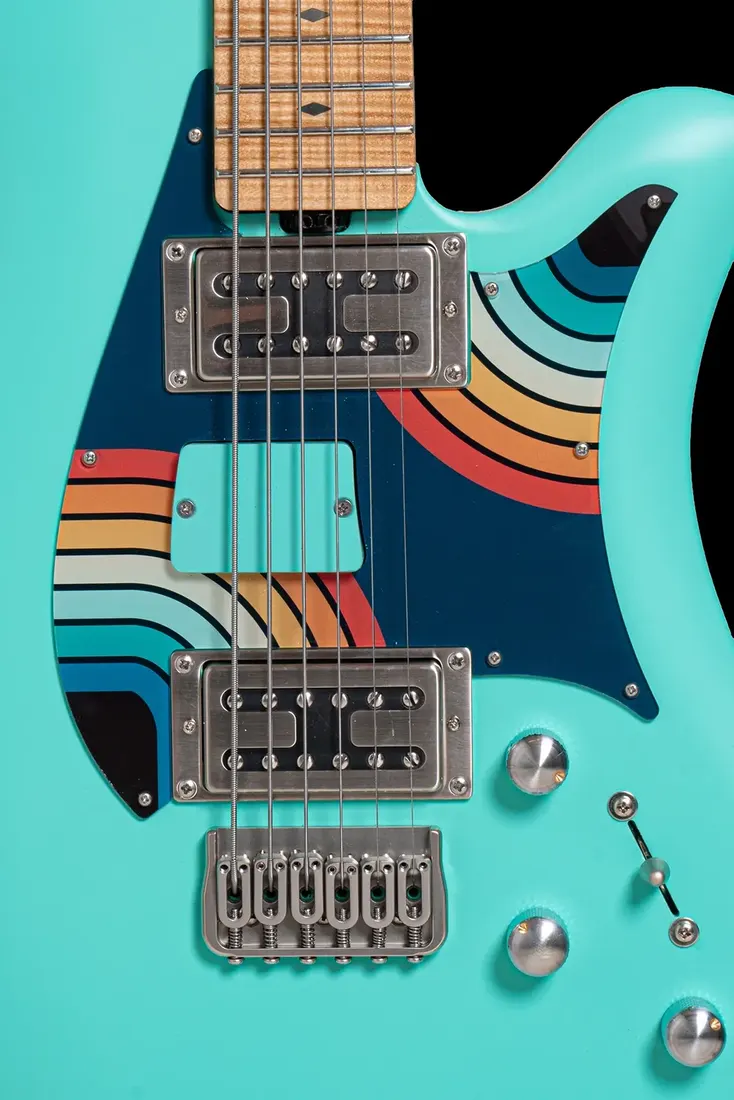
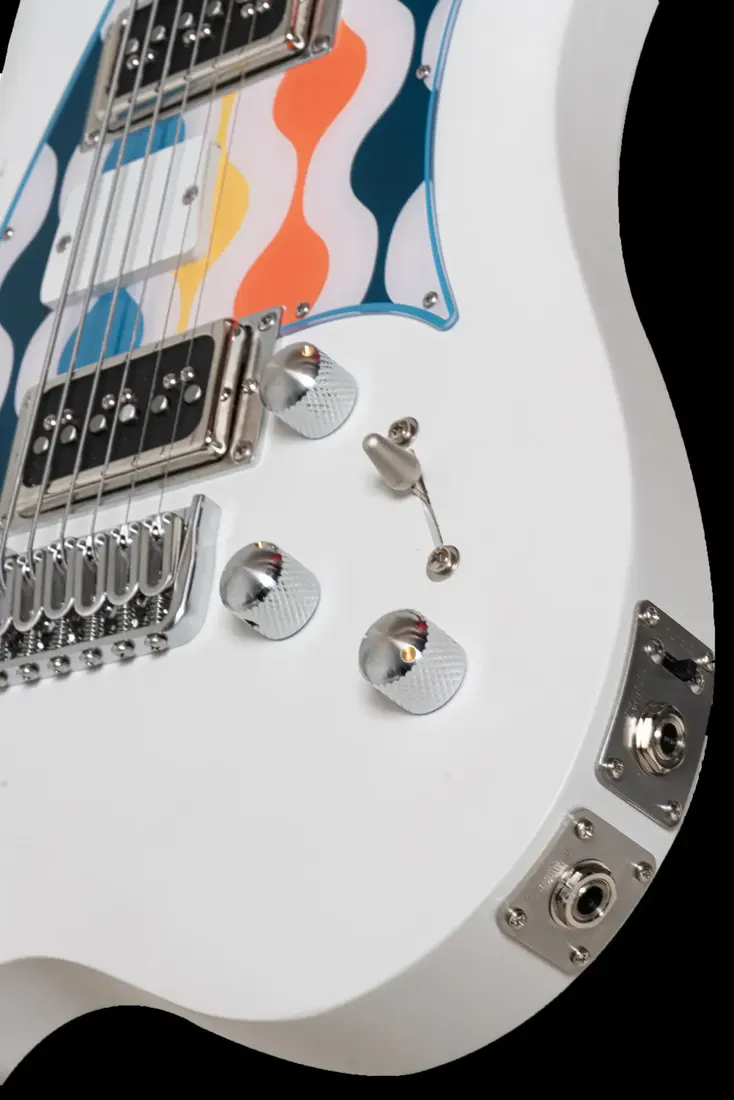
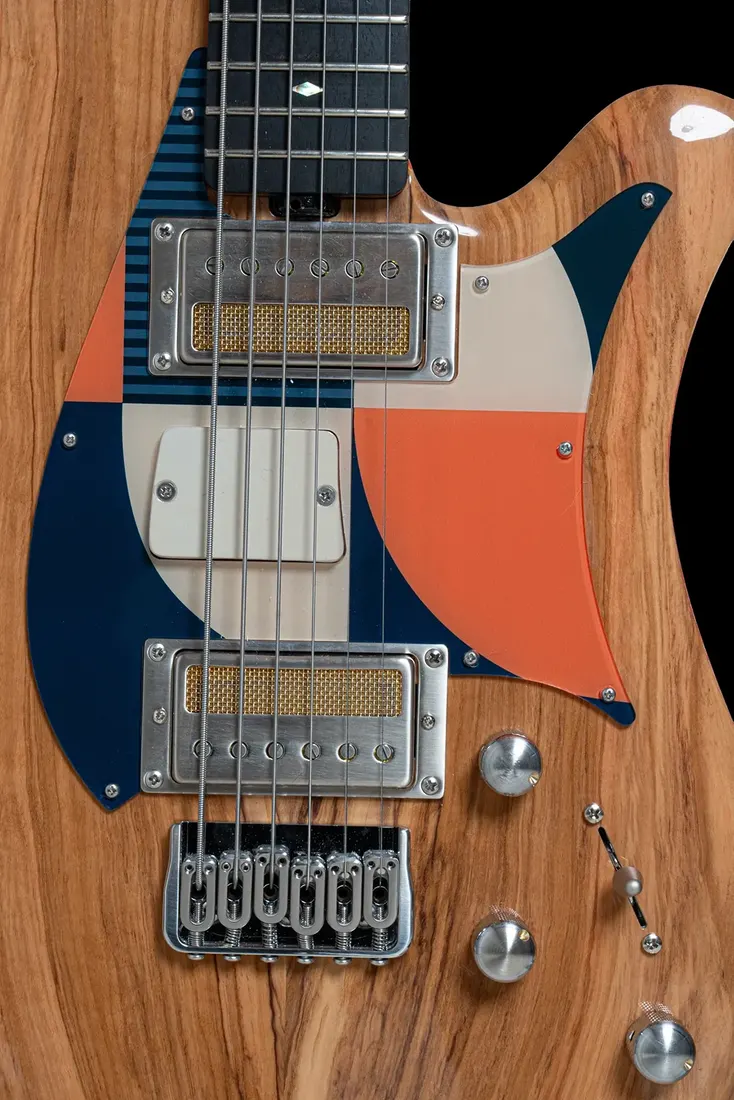
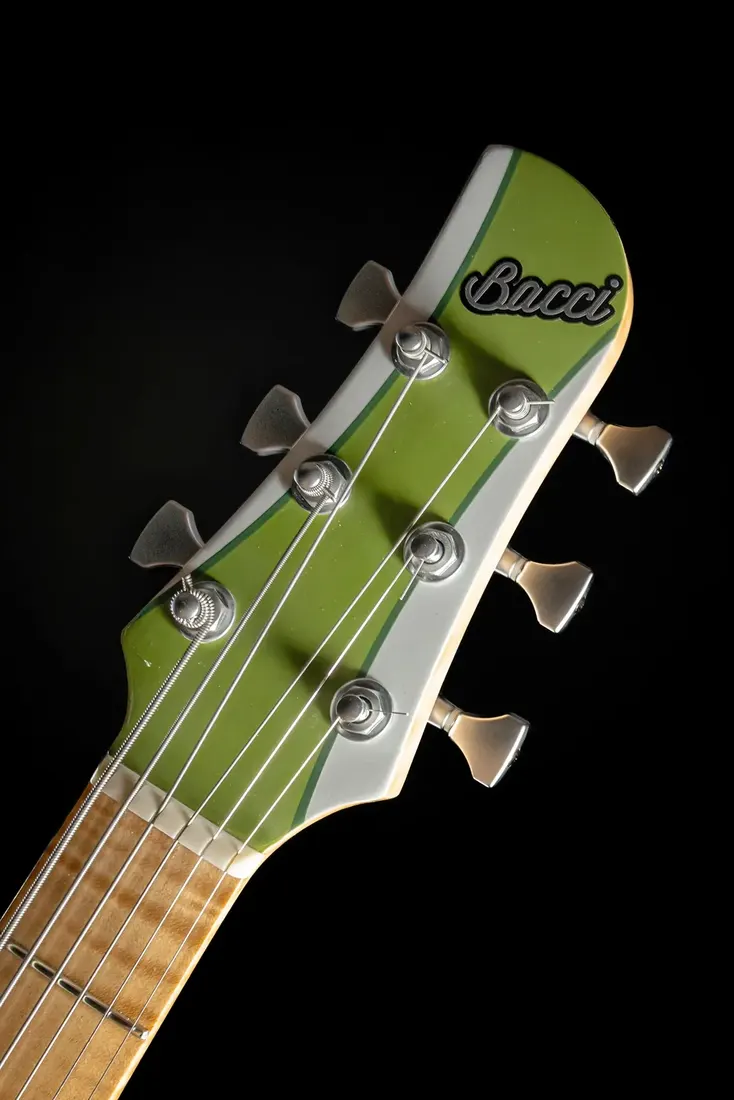
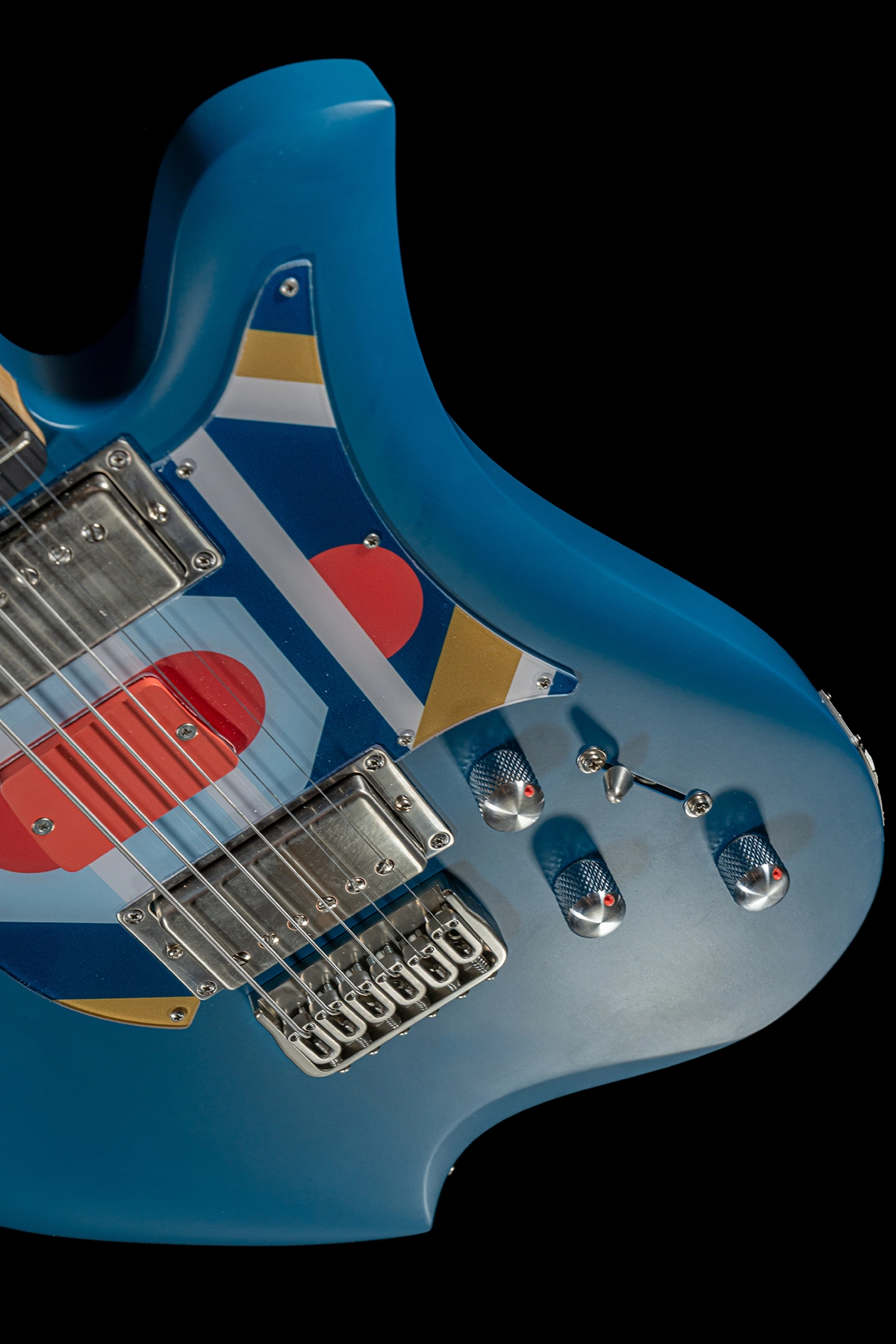
The third way plays the guitar voice and the bass voice at once. The part covers its own low end while it carries the top, and one player fills a space that usually takes two.
The craft here is restraint. Let the bass voice land on the strong beats and leave the pauses open, and the groove breathes. Fill every gap and the two voices crowd each other. Used with space, it is the fullest the Leonardo gets.
Send them to a guitar amp and a bass amp at once, and one player fills the room.
On the Leonardo dual outputSame hands, same part. The question each time is what the song needs under it.
Chords and hooks, in a guitar's register, with a little more weight underneath.
Between guitar and bass, where a riff gains gravity and the low note stays a note.
Guitar voice and bass voice together, used with space, one player filling the room.
The Leonardo is a baritone that carries a bass inside. One part, three registers, and the choice of how much room to take.
Every Leonardo is designed, built and set up by Bruno, one at a time, in Pescia.