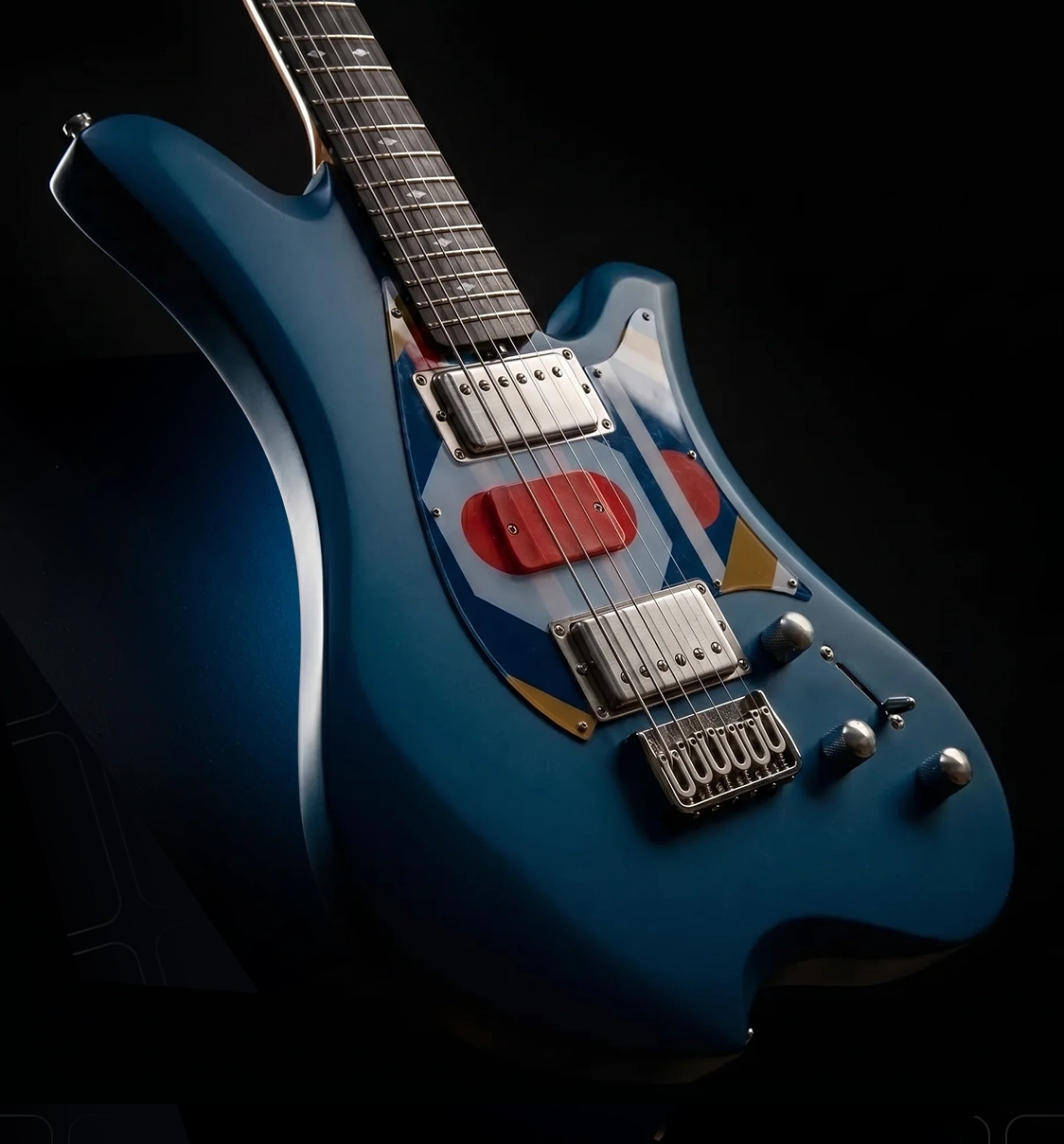
Is a dual output right for you?

Bacci GuitarsPescia, Tuscany
A dual-output baritone lets one player cover a guitar part and a bass part at the same time, on two separate jacks. It is a genuinely different instrument, and it is easy to be seduced by the idea. The useful question is not whether it is clever, it is whether it is right for you.
This is the honest guide. Here is who a dual output is built for, who should save their money, and how to decide before you commission one.
Some players will get enormous value from it, immediately.
Hold a bass line and a chordal part at once and fill a stage that would need two players.
Lay a guitar part and a bass part from a single performance, on separate tracks, alone in the room.
Want a guitar voice and an independently controlled bass voice, not an octave effect, at the same time.
A dual output is built to order, so the specification is a conversation. Tell us how you play and we will tell you honestly if it fits.
It is just as important to be clear about who does not need one. If you play exclusively in a full band with a dedicated bassist and you never record alone, the second voice may sit unused, and a straight baritone or a standard guitar will serve you better for less.
If you want a bass, buy a bass. A dual output is a baritone guitar first, with a bass voice added; it is not a replacement for a dedicated bass in a bassist's hands. Knowing that up front saves disappointment.
You can settle it quickly. Ask yourself whether you ever need to be more than one instrument at once, on stage or on a recording. Ask whether you are drawn to the baritone register anyway, because you will be playing one regardless of the second jack. And ask whether you value the two voices being truly independent, with their own volumes and outputs, rather than an octave effect.
If you answer yes to those, a dual output is not a gimmick for you, it is a tool you will reach for constantly. If you hesitate, a standard baritone is the wiser buy, and you lose nothing in the playing.
Because the Bacci Leonardo is handmade to order, this is not an all-or-nothing choice made in a shop. You decide the specification with Bruno, including how far to lean into the dual output, so the instrument is built around the way you will actually use it.
That is the real advantage of commissioning rather than buying off a shelf: the instrument is shaped around your honest answer to the question in this article.
Solo and duo performers who need to be more than one instrument at once, writers and producers who record alone, and players who want a real, independently controlled bass voice alongside their guitar. If you play one of those roles, it earns its place constantly.
A player who always has a dedicated bassist, never records alone, and is not drawn to the baritone register. For them a standard guitar or baritone is a better, cheaper fit, and the second voice would go unused.
No. An octave pedal tracks one blended signal and struggles with chords. A dual-output baritone produces a separate, independently controlled bass voice on its own jack, so it is two real instruments rather than one with an effect.
For a guitarist covering both parts live or in the studio, it can fill the role of a rhythm section from one instrument. It does not replace a dedicated bass in a bassist's hands; it is a baritone guitar with a true bass voice added.
No. You can play the Leonardo as a straight baritone on one cable and use the bass voice only when you want it. Because it is built to order, you also decide how far to lean into the dual output.
The Leonardo is a dual-output baritone, handmade to order in Tuscany. Tell us how you work and we will build it to fit, or tell you honestly if a straight baritone suits you better.
Every Bacci is designed, built and set up by Bruno, one at a time, in Pescia.