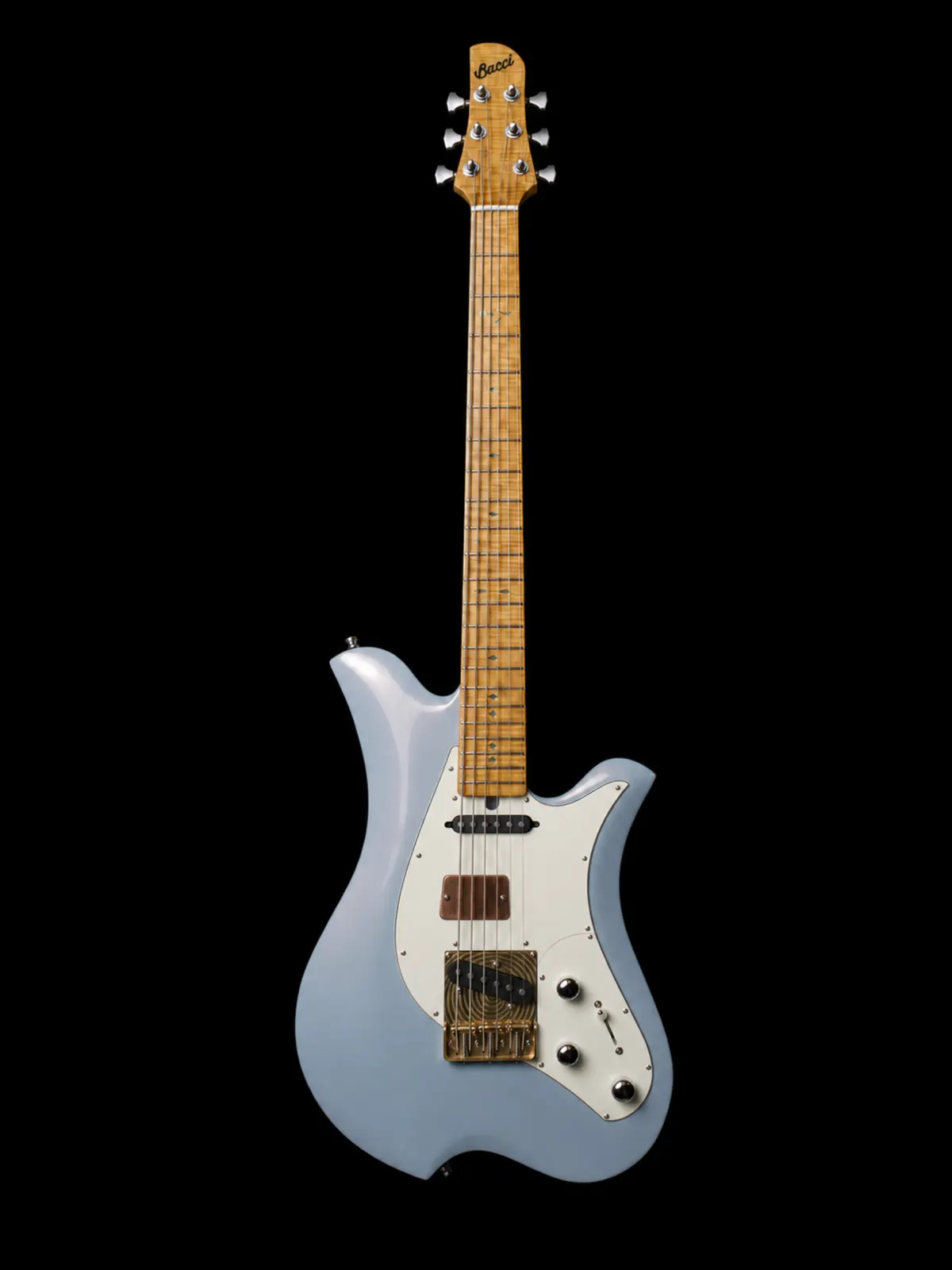
Tuned to the deep end.

Bacci GuitarsPescia, Tuscany
There is a sound that lives below a normal guitar and above a bass, and the first time you hear a chord ring out down there, full, dark and still articulate, it changes what you think a guitar is for. That register is the whole reason a baritone exists, and tuning is how you unlock it.
A baritone is a guitar with a longer scale, built to be tuned lower than standard, usually B to B or A to A. You play it exactly as you would any guitar, the shapes and the technique carry straight over, it simply speaks in a deeper voice. The only thing you need to understand to get there is how to tune it, and why the scale length makes those low notes work.
This guide covers the common baritone tunings, how to tune one correctly, drop tunings for heavier music, and why a well-built baritone holds a low note that a detuned standard guitar never can.
Every Bacci baritone is set up to hold the tuning, scale and strings you choose.
Two tunings cover the vast majority of baritone playing, and both keep every chord shape you already know.
B standard, low to high B E A D F# B, is the most common. It sits a perfect fourth below a standard guitar, so a chord you fingered as E now rings out as B, with the exact same shape. Everything transfers, nothing has to be relearned, and the guitar simply drops into a richer, darker register.
A standard goes a step further, a perfect fifth below standard guitar, for an even deeper and heavier voice. It is the tuning of choice when you want maximum weight, and it asks only for slightly heavier strings to keep the lowest string tight. Beyond these, players tune to C or D for specific projects, but B and A are home base.
B E A D F# B, a fourth below a guitar. The most common baritone tuning.
A D G C E A, a fifth below. Deeper and heavier, needs slightly thicker strings.
Long enough to keep the low string tight at those pitches.
Tuning a baritone is mechanically the same as tuning a guitar: use a chromatic tuner and bring each string to pitch, string by string. The difference is everything around that act, the strings and the setup, which is where a baritone is made or broken.
Use strings made for the tuning. A baritone set is heavier than a standard set precisely so that, pulled down to B or A, the strings land at a tension that feels and sounds right, firm enough to be defined, loose enough to bend. Put standard-gauge strings on a baritone tuned low and they go slack and tubby. Match the gauge to the tuning and the instrument comes alive.
Then let the setup hold it. Intonation, nut slots and relief all have to suit the heavier strings and lower pitch, which is why an instrument built and set up for your tuning stays in tune and plays cleanly, while a standard guitar forced down low fights you the whole way.
When you want still more weight, you drop the lowest string a further whole step, the way players drop a standard guitar from E to D. On a baritone this opens enormous, cinematic low ends and single-finger power chords on the low strings, which is why baritones are a mainstay of heavy, modern and film music.
The reason it works, and does not turn to mud, is the scale. A longer string under more tension stays defined even very low, so a dropped baritone note reads as a clear, powerful pitch rather than a loose rumble. The instrument was built to go there.
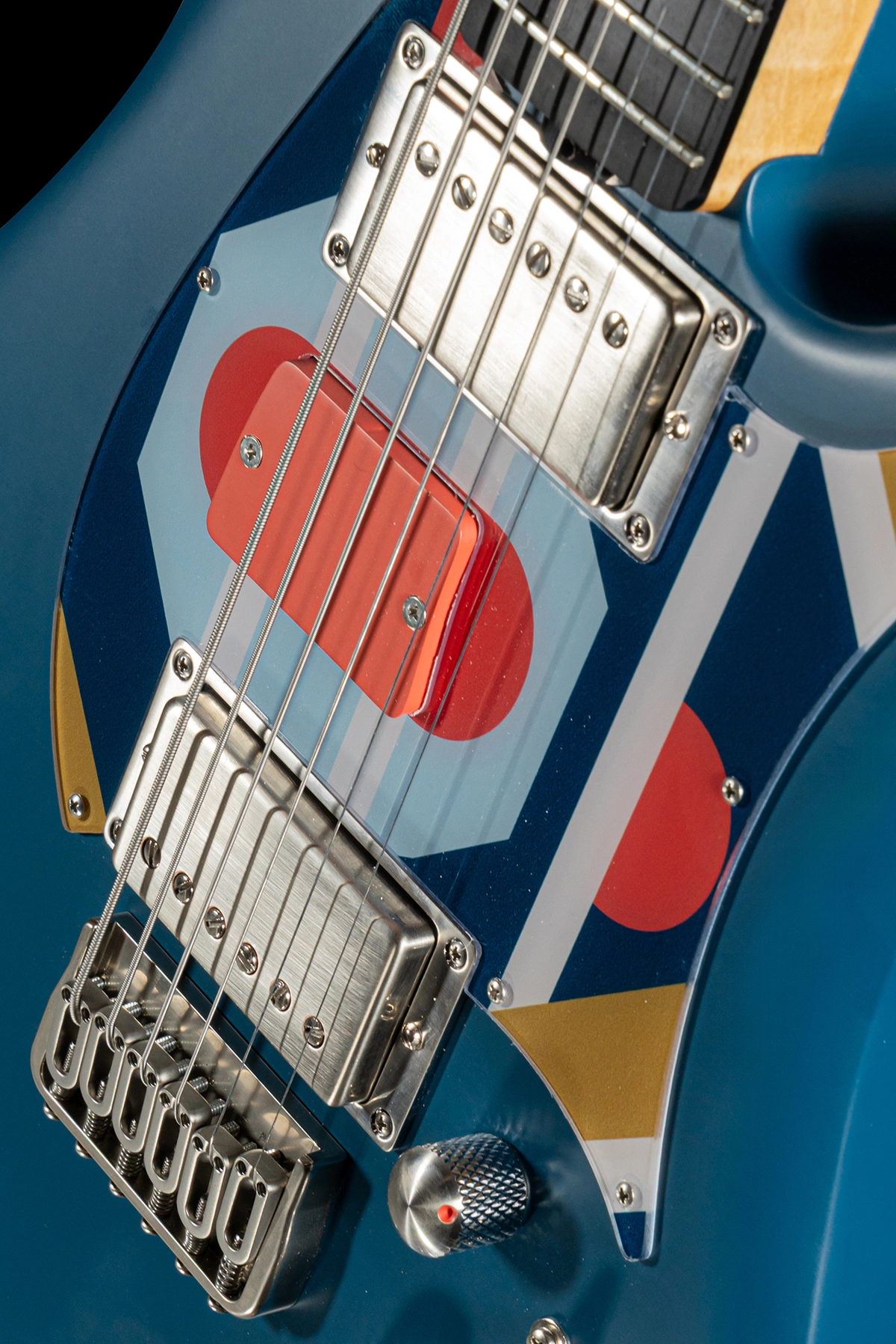
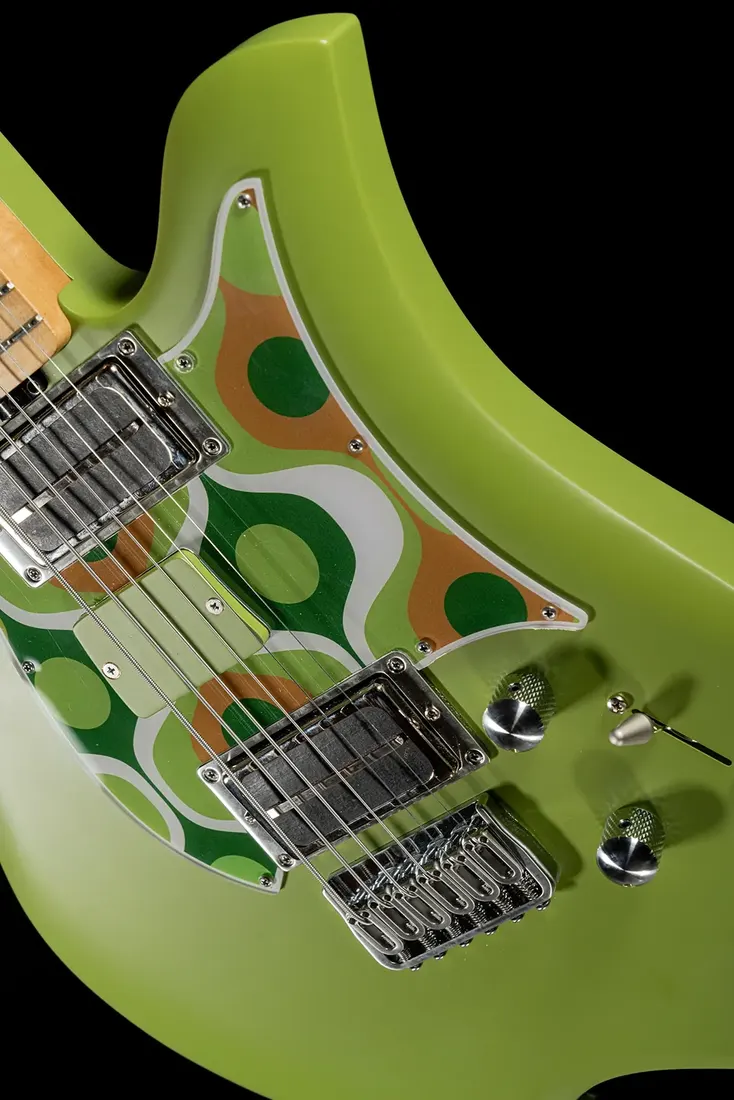
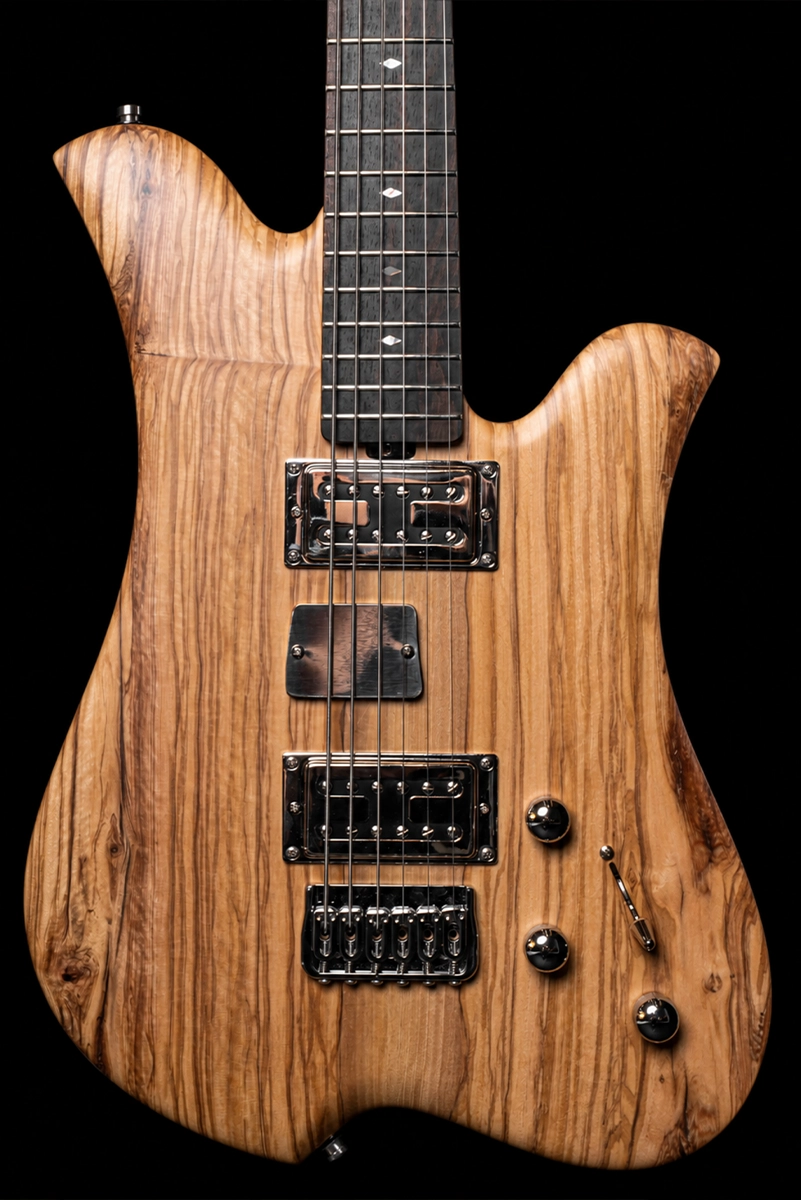
The hard truth about baritone tuning is that the instrument has to be built for it. A longer scale holds more tension at a given pitch, so a 28-inch Bacci baritone keeps a low B or A tight and defined where a standard scale would go slack. Pair that with pickups chosen for the register and strings matched to the tuning, and the deep end stays musical rather than muddy.
Because every Bacci is built to order, you choose the scale, the strings and the tuning up front, and the instrument is set up to hold exactly that. The low notes are not a compromise you manage, they are the voice the guitar was made for.
A longer scale holds the low note as a note, with pickups chosen for the baritone register.
On the Bacci baritoneThe most common baritone tuning is B standard, B to B, a perfect fourth below a standard guitar. A to A, a fifth below standard, is the next most common. You tune it exactly as you would a guitar, with a tuner, but with heavier strings and a longer scale that keep those low notes tight.
B standard: low to high, B E A D F# B. It keeps every interval and chord shape of a standard guitar, simply moved down a perfect fourth, so everything you already play transfers directly.
B standard sits a perfect fourth below a guitar and feels the most guitar-like. A standard drops a further step, a perfect fifth below standard, for an even deeper, heavier voice. Both keep standard chord shapes, A standard just needs slightly heavier strings to stay tight.
You can, but it works against the instrument. A baritone's longer scale is designed for lower tunings; pulled up to standard E the strings feel tight and the point of the baritone is lost. It is built to live lower.
Yes. The chord shapes, scales and technique are identical to a standard guitar, just on a slightly longer neck and a few steps lower. Most guitarists are at home within minutes.
A longer scale holds more tension on a string at a given pitch, which is what keeps a low B or A tight and defined instead of loose and flabby. A Bacci baritone is 28 inches for exactly this reason: the low note stays a note.
Whatever you ask for. Every Bacci is built to your preferred scale, string gauge and tuning, so the instrument is set up to hold your tuning from the first note.
Yes. Drop tunings, lowering the lowest string a further whole step, sit naturally on a baritone, and the longer scale keeps even those very low notes defined, which is why baritones are favoured for heavy and cinematic music.
Choose the scale, the strings and the tuning, and Bruno builds a baritone set up to hold it. Handbuilt one at a time in Tuscany.
Every Bacci is designed, built and set up by Bruno, one at a time, in Pescia.