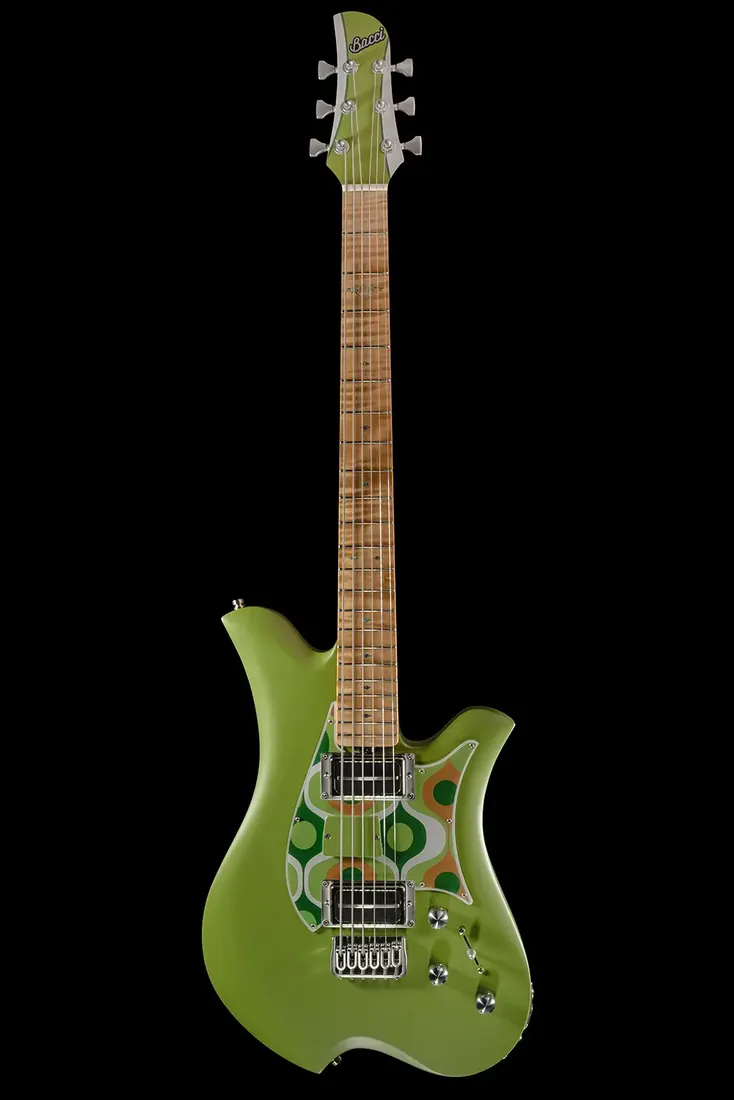
The right weight.

Bacci GuitarsPescia, Tuscany
Everyone talks about scale length and pickups, and then strings the baritone with whatever is in the drawer and wonders why the low end sounds loose. The truth is that on a baritone, strings are not an accessory, they are half the instrument. Get the gauge right and the low B blooms, firm and clear. Get it wrong and the best-built baritone in the world goes slack and tubby.
The logic is simple physics, and once you see it you never guess again. A string tuned lower needs to be heavier to reach a firm, playable tension. That is the whole game: match the weight of the strings to the pitch you are tuning to, and the baritone comes alive.
This guide covers the gauges that work for B and A standard, why heavier strings are not optional, how gauge shapes tone and feel, and how a built-to-order baritone is cut and set up for exactly your strings.
Every Bacci baritone is built and set up for your chosen scale, gauge and tuning.
There is no single correct set, because gauge depends on scale length, tuning and feel, but there are reliable starting points.
For a 27 to 28-inch baritone in B standard, a set roughly from .013 to .062, or a touch heavier at .014 to .068, lands most players in the sweet spot: firm enough that the low B is defined, light enough to bend and play comfortably. For the deeper A standard, go heavier, around .014 to .072, so the lowest string keeps its tension a full step down.
From there it is fine tuning. Want a stiffer, more percussive low end, go up a gauge. Want more give for lead playing, come down slightly. The principle never changes: lower tuning, heavier strings.
A balanced starting set for a 27 to 28-inch baritone. Defined low B, comfortable to play.
A touch heavier for a tighter, more powerful bottom, popular for heavier styles.
Heavier again, to keep the lowest string firm a full step lower.
Gauge is a dial between two qualities. Heavier strings bring a fuller, tighter low end, more volume and a stiffer, more percussive feel, which is why heavy music reaches for them. Lighter strings bend and vibrato more easily and feel slinkier under the fingers, but can lose definition when tuned very low.
The art is finding the gauge that holds your tuning firmly while still playing the way you want. On a baritone that balance point is heavier than most players expect, and landing on it is the difference between an instrument that feels taut and alive and one that feels like a detuned guitar.
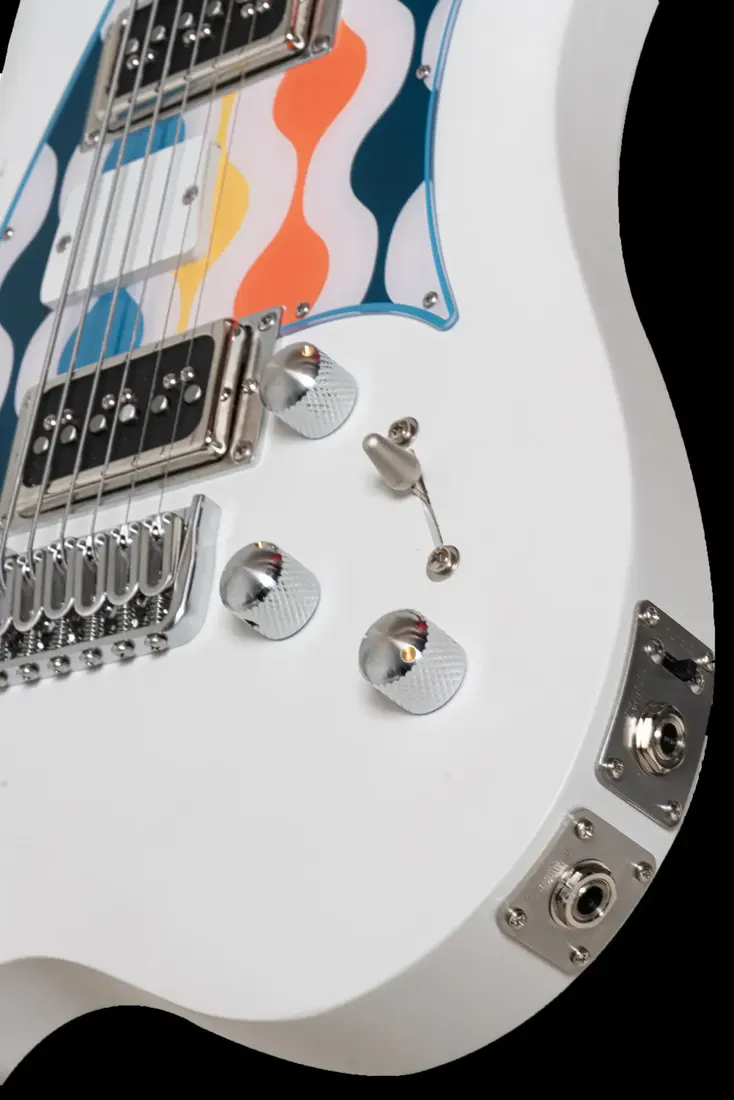
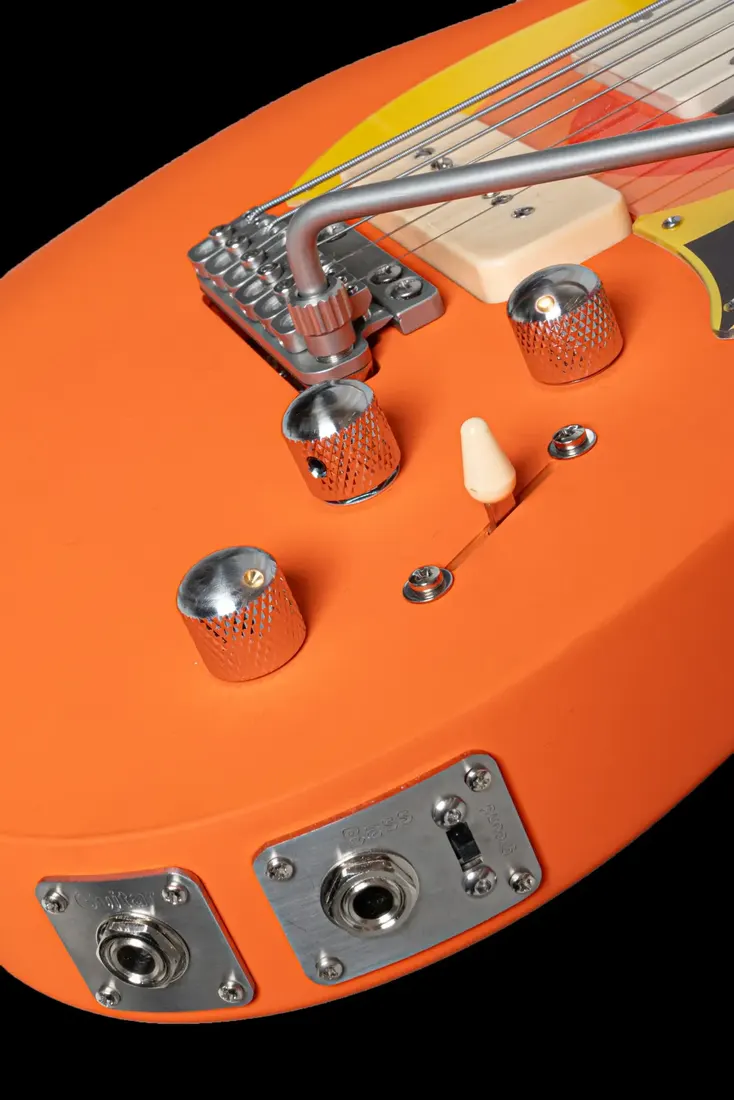
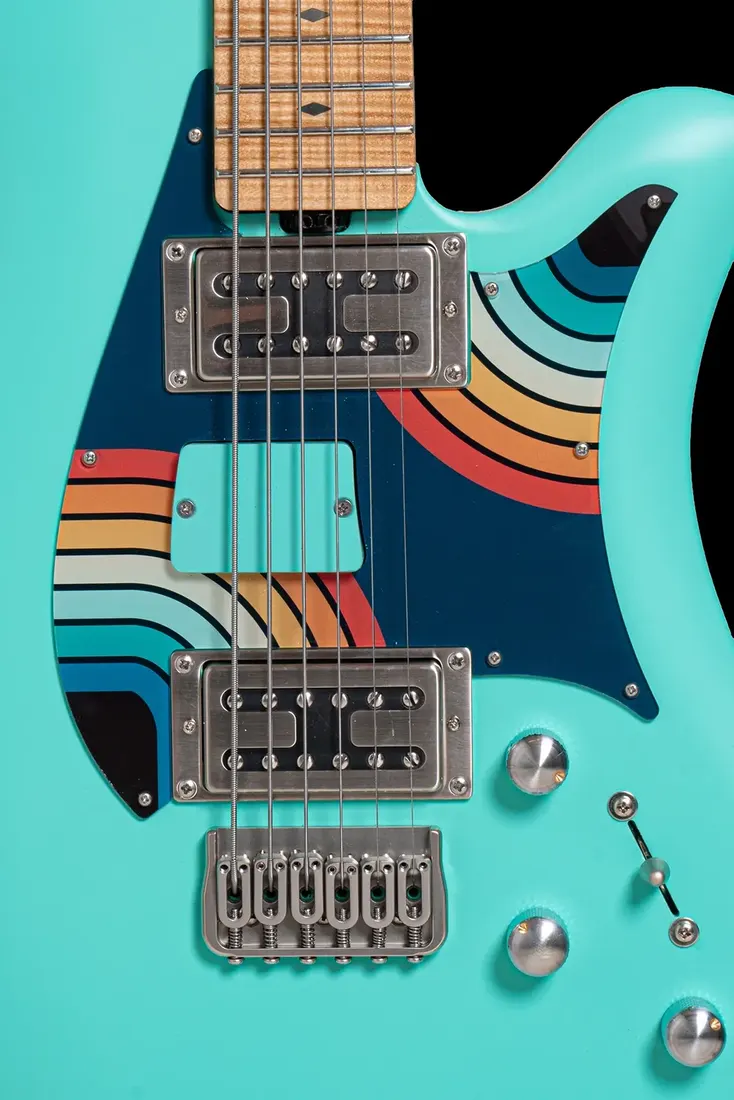
Heavier strings change more than tension. The nut slots have to be wide enough for the thicker strings to seat and move freely, the intonation has to be set for the new gauge and pitch, and the neck relief has to suit the extra pull. Skip any of these and even the right strings will play poorly and drift out of tune.
This is where a built-to-order instrument pays off. When the baritone is cut and set up for your chosen gauge and tuning from the start, the nut, the saddles and the neck are all right for your strings, so the instrument seats, intonates and holds tuning the way it should.
Every Bacci is built to your preferred scale, gauge and tuning.
On ordering a Bacci baritoneOn a mass-made instrument you fit your strings to whatever setup came in the box. On a Bacci the opposite is true: you choose the scale, the tuning and the gauge, and the instrument is built and set up around that choice. The result is a baritone that feels taut and alive on your strings, with a low end that is defined from the first note.
It is a small-sounding detail with an outsized effect. The right weight of string, on a scale built to hold it, set up to match, is what separates a baritone that sings from one that merely sounds low.
For a 27 to 28-inch baritone in B standard, a set roughly from .013 to .062, or .014 to .068, is a common starting point. For the deeper A standard, players go heavier still, around .014 to .072. The exact set depends on scale length and the tuning you want to hold.
Because they are tuned lower. A thicker string reaches a usable, firm tension at a lower pitch, so a heavy baritone set lands at the right feel when tuned to B or A, where a standard-gauge set would go slack and tubby.
You can physically fit them, but they will feel loose and sound flabby at baritone pitches, and the intonation and setup will suffer. Baritone-specific gauges are what make the instrument feel and sound right.
B standard works well around .013 to .062 or .014 to .068. A standard, being deeper, usually wants a heavier set, around .014 to .072, to keep the lowest string tight. Heavier tuning, heavier strings.
Yes. Heavier strings give a fuller, tighter low end and more volume, with a slightly stiffer feel. Lighter sets bend more easily but can lose definition down low. The goal is the gauge that holds your tuning firmly while still playing comfortably.
The nut slots need to fit the thicker strings, which is part of a proper baritone setup. On a built-to-order instrument the nut is cut for your chosen gauge from the start, so the strings seat correctly and stay in tune.
Bacci builds each baritone to your chosen scale, gauge and tuning, and sets it up to match, so the recommendation is simply the gauge that holds your tuning on your scale. The instrument is cut and set up for exactly that.
Yes, but a big change in tuning usually means a change in gauge and a setup adjustment to keep the feel and intonation right. Within a small range you can retune freely; for a large move, change the strings to suit.
Choose the scale, the tuning and the gauge, and Bruno builds and sets up a baritone to hold it. Handbuilt one at a time in Tuscany.
Every Bacci is designed, built and set up by Bruno, one at a time, in Pescia.