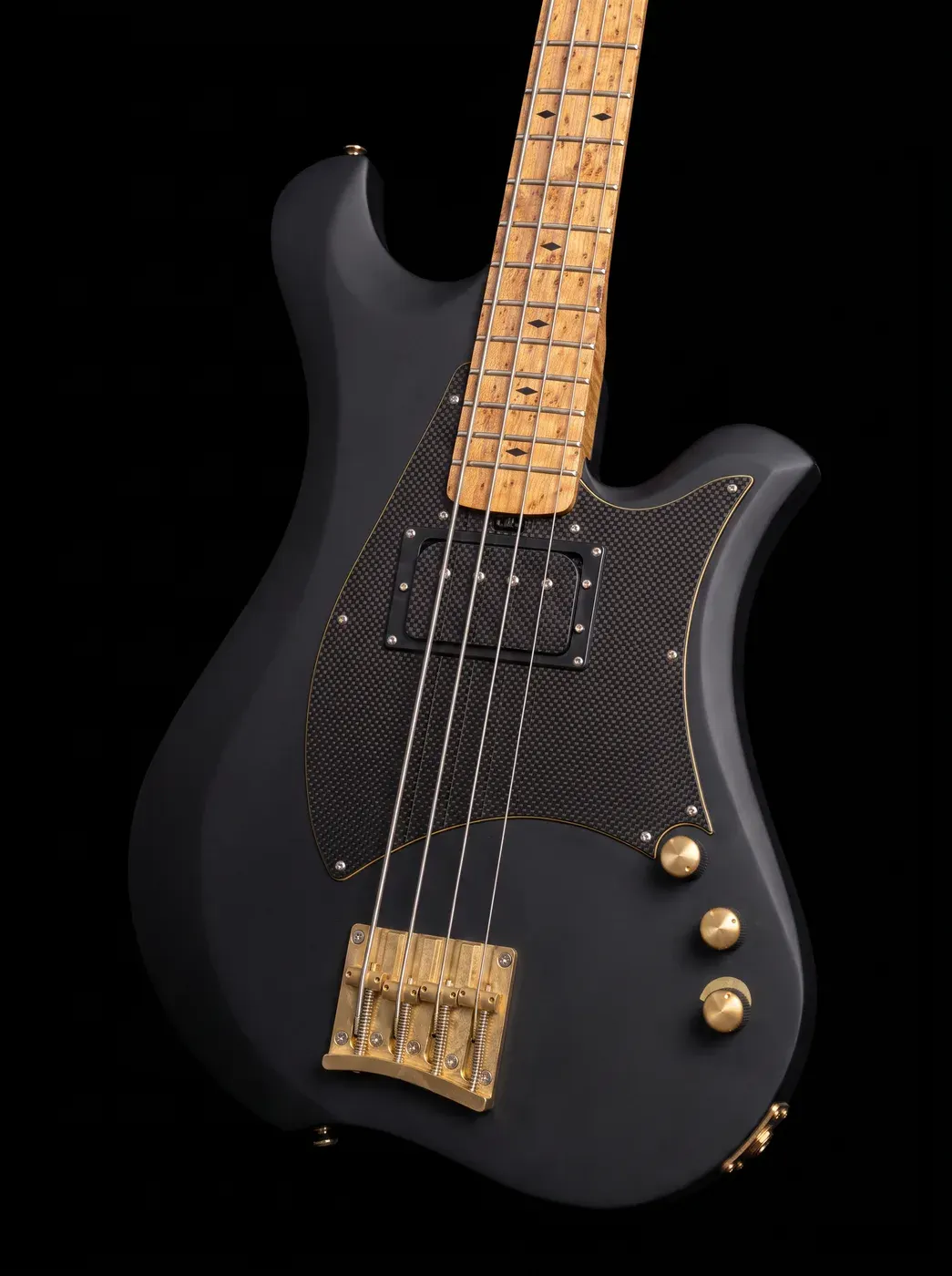
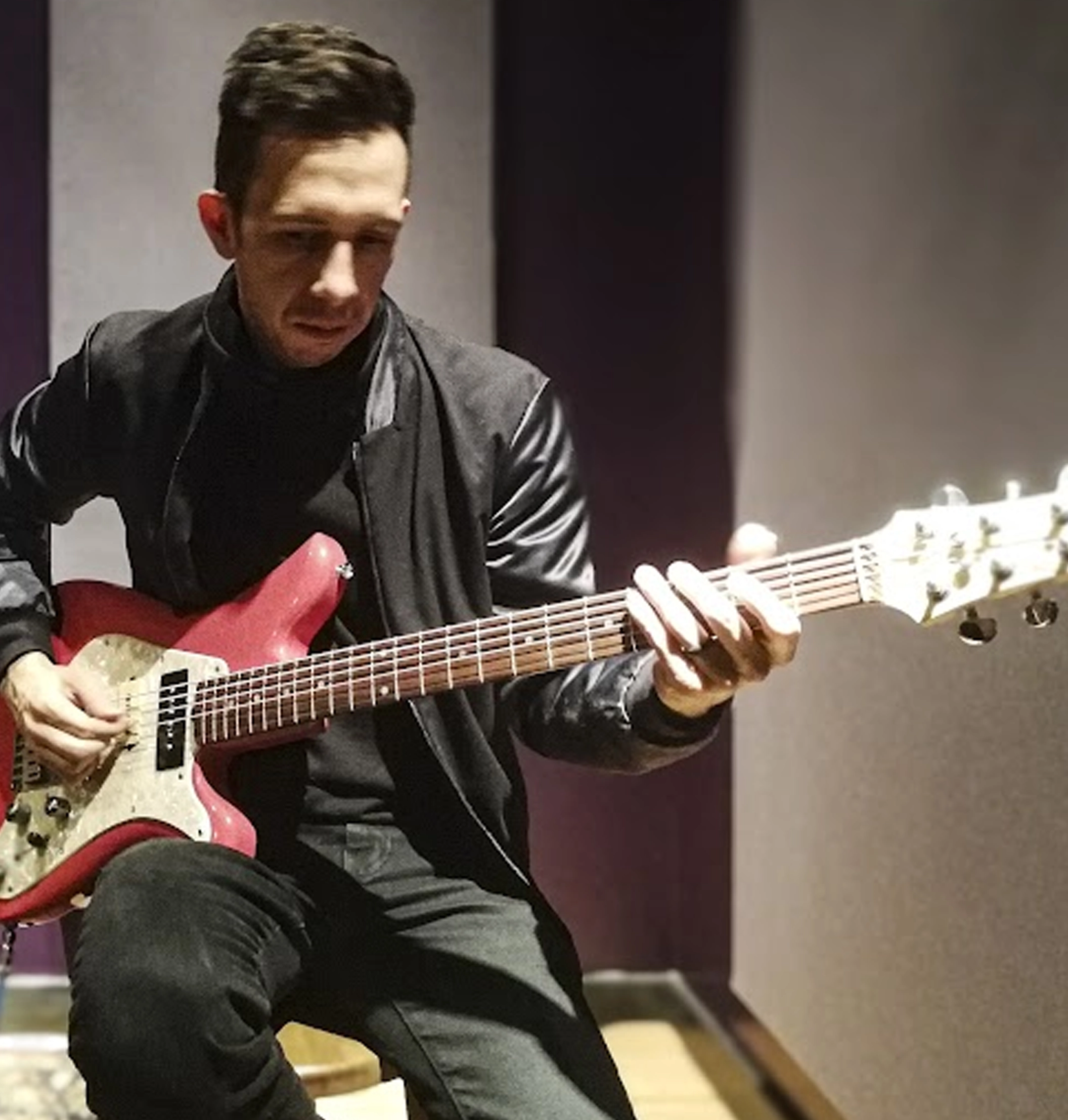
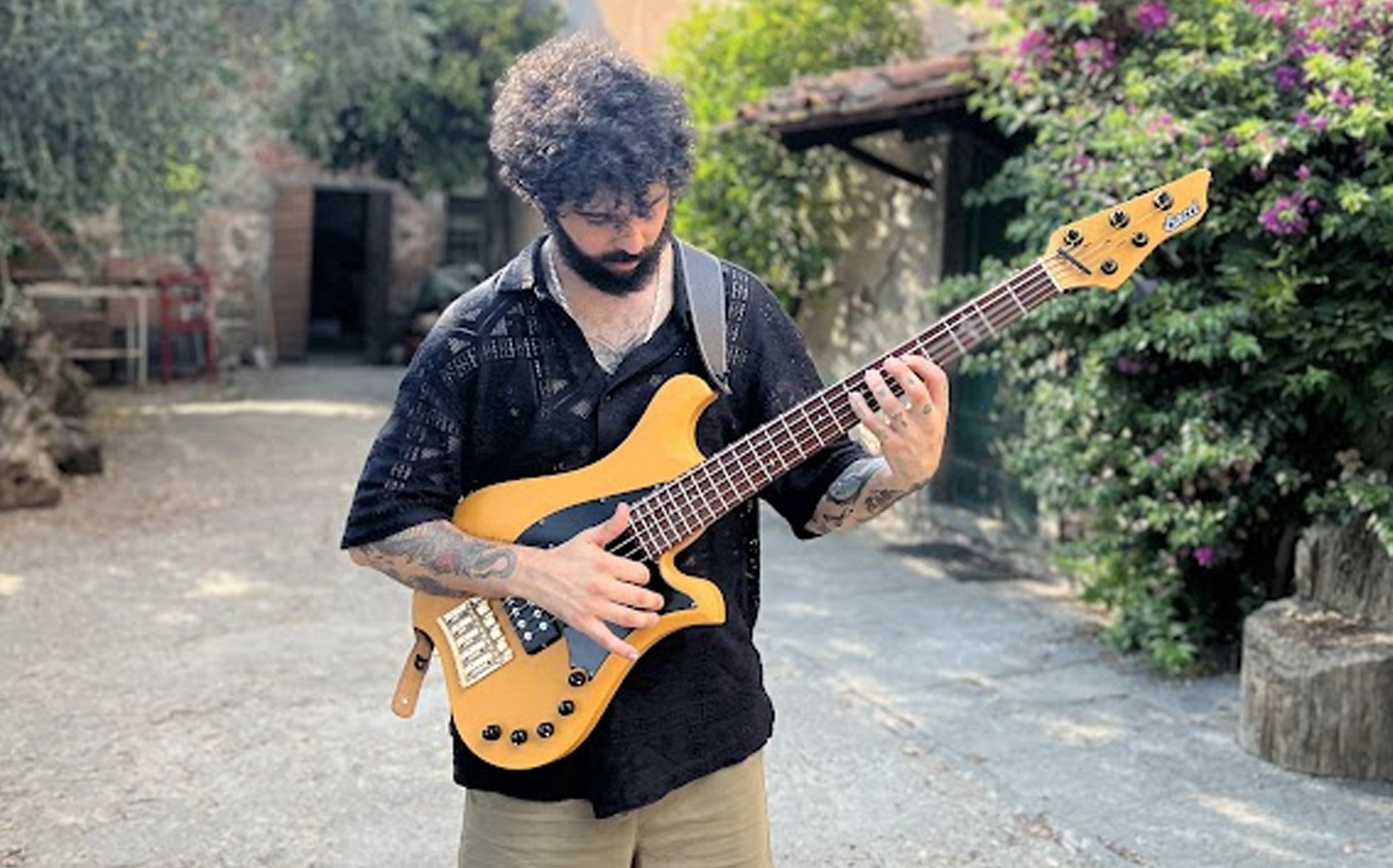
Scale length is the single biggest choice on a baritone. It decides how low you can tune, how the strings feel, and how tight the bottom end stays.
Scale length is the vibrating distance from nut to bridge. On a baritone it governs two things at once: string tension and low-end clarity. A longer scale holds more tension at the same pitch, so notes stay tight and articulate instead of flapping.
Around 27–28″ is the sweet spot for tuning comfortably to B, with a feel most guitarists adapt to immediately. Push to 30″ and beyond when you want to sit reliably at A or lower, or run heavier strings: the bottom gets tighter and cleaner, at the cost of a slightly longer reach in the low positions.
Because every Bacci is made to order, the scale is not fixed. Bruno builds the neck to your target tuning, string gauge and hand, so the instrument is optimised for how you actually play.
Around 27–28″ is the sweet spot for tuning comfortably to B, with a feel most guitarists adapt to immediately.
Push to 30″ and beyond to sit reliably at A or lower, or to run heavier strings.
Every Bacci is made to order: Bruno builds the neck to your target tuning, string gauge and hand.
A longer scale holds more tension at the same pitch, so notes stay tight and articulate instead of flapping.
The dual-output baritone. Guitar and bass, two independent outputs from one neck.
The Dual Output Story →The signature solid-body baritone, played by Cory Wong, Mark Lettieri and Munky.
Explore Officina →Tonal-chamber and semi-hollow baritones in solid Italian tonewoods.
Explore Art of Nature →
Bruno Bacci is a Tuscan luthier with a background in metallurgy, woodworking and design. A guitarist first, he became a builder after a hand injury and trained at the violin-making school of Cremona, where Stradivari had worked three centuries earlier.
He does not begin with a shape. He begins with the sound he wants to hear and builds the instrument around it, testing each piece of wood by hand as though in conversation with it. Every Bacci is made individually and is backed for life by Bruno himself.
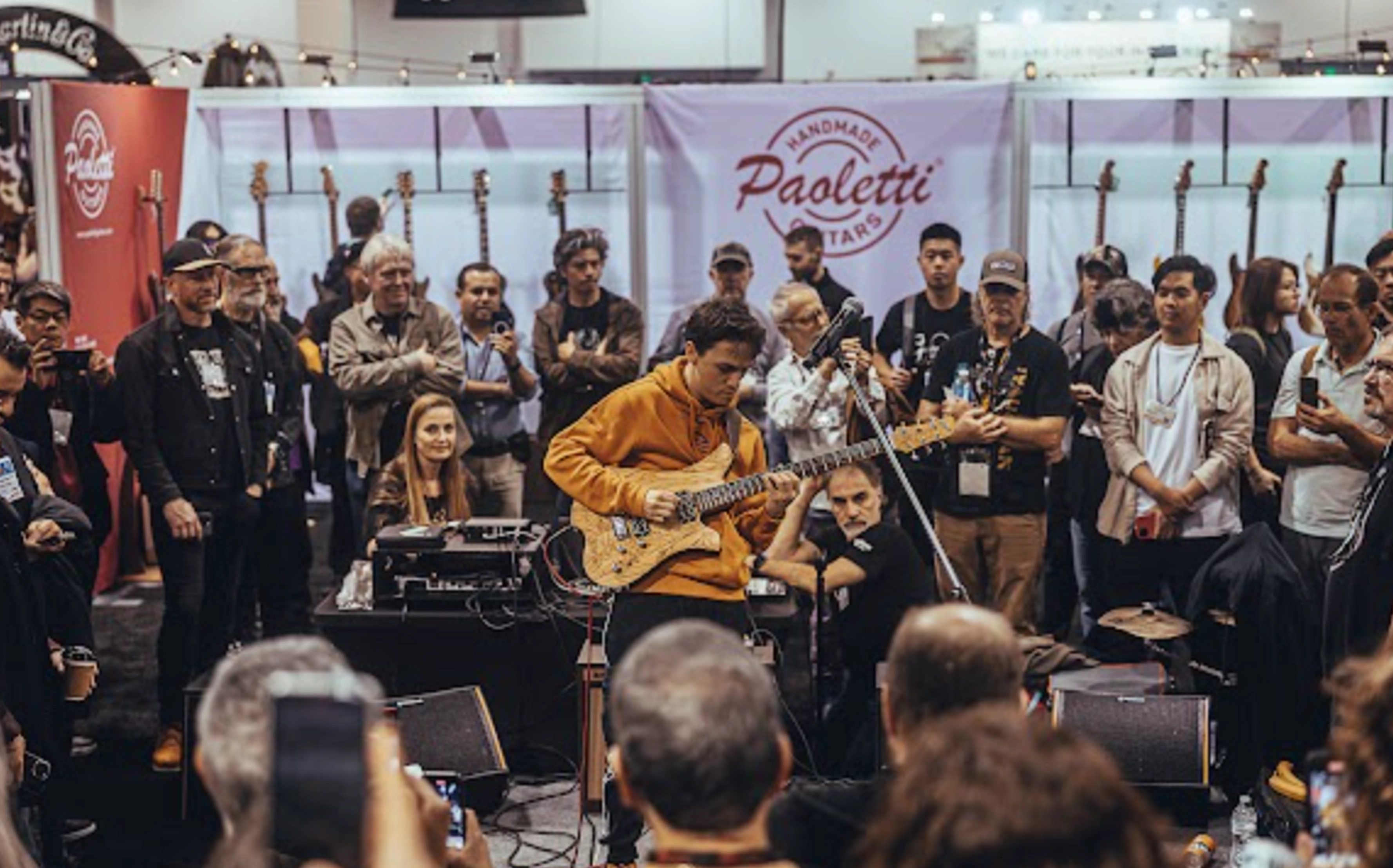
His first guitar, a Telecaster he built as a young man, carried no name. He could not write Fender because it was not their instrument. He could not write Bacci because it was not his design either. That is why he began creating instruments that could only be his.
On the bench this week: the hollow top of Tosca №06, and a Marlita in Ceruleo being voiced for a player in Tokyo.


Put flats on it and it sounds like an old P bass. Put round-wounds on it and there’s a lot of bite.
The amount of low end and even saturation coming from this bass is insane.
When I play it, I don’t really miss the bass player.
This is a funk machine, it nails the baritone funk rhythm sound.
The precision bass for the modern era. Everything I love about vintage basses, with all the innovation of a modern one.
I’ve never found anything like this. The shape, the sound, the playability, everything is really in the right place.
Bruno’s baritone guitars are inspiring a whole generation of top players, he’s developing a whole new musical canon.
Put flats on it and it sounds like an old P bass. Put round-wounds on it and there’s a lot of bite.
The amount of low end and even saturation coming from this bass is insane.
When I play it, I don’t really miss the bass player.
This is a funk machine, it nails the baritone funk rhythm sound.
The precision bass for the modern era. Everything I love about vintage basses, with all the innovation of a modern one.
I’ve never found anything like this. The shape, the sound, the playability, everything is really in the right place.
Bruno’s baritone guitars are inspiring a whole generation of top players, he’s developing a whole new musical canon.
▶
▶
▶
▶
▶
▶A short, hand picked network of shops keeps Bacci on the wall.
Go and play one in person, or start a custom build directly with Bruno in Tuscany.
Austin Guitar House
Chicago Music Exchange
Eddie’s Guitars
Empire Music
Guitars Etc
Heartbreaker Guitars
Lead Music
Music Store Live
Musikhaus André Louis
Pitbull AudioBaritones generally run from about 27″ up to 30″ or more, versus around 25.5″ on a standard guitar. The longer scale is what keeps low tunings tight.
Yes. At the same pitch and gauge, a longer scale carries more tension, which improves clarity and tuning stability in the low register.
If you mainly live around B, ~28″ is ideal. If you want A or lower as home base, go longer. Bacci will advise based on your tuning and strings.
Yes. Every Bacci baritone is handbuilt to your chosen scale, gauge and tuning, with Dogal Custom Bacci strings matched to it.
Commissions
Nothing here is in stock, and nothing ever will be.
Every instrument is claimed by one player before the first cut.
A €1,000 deposit holds your place at the bench and sets the work in motion. It comes off the price in full.
Woods, pickups, finish, decided one by one, together. The instrument is drawn around you.
The balance falls due once the specification is closed. Eight months later, it is in your hands.
Not sure which instrument is yours?
Ask before you commit.