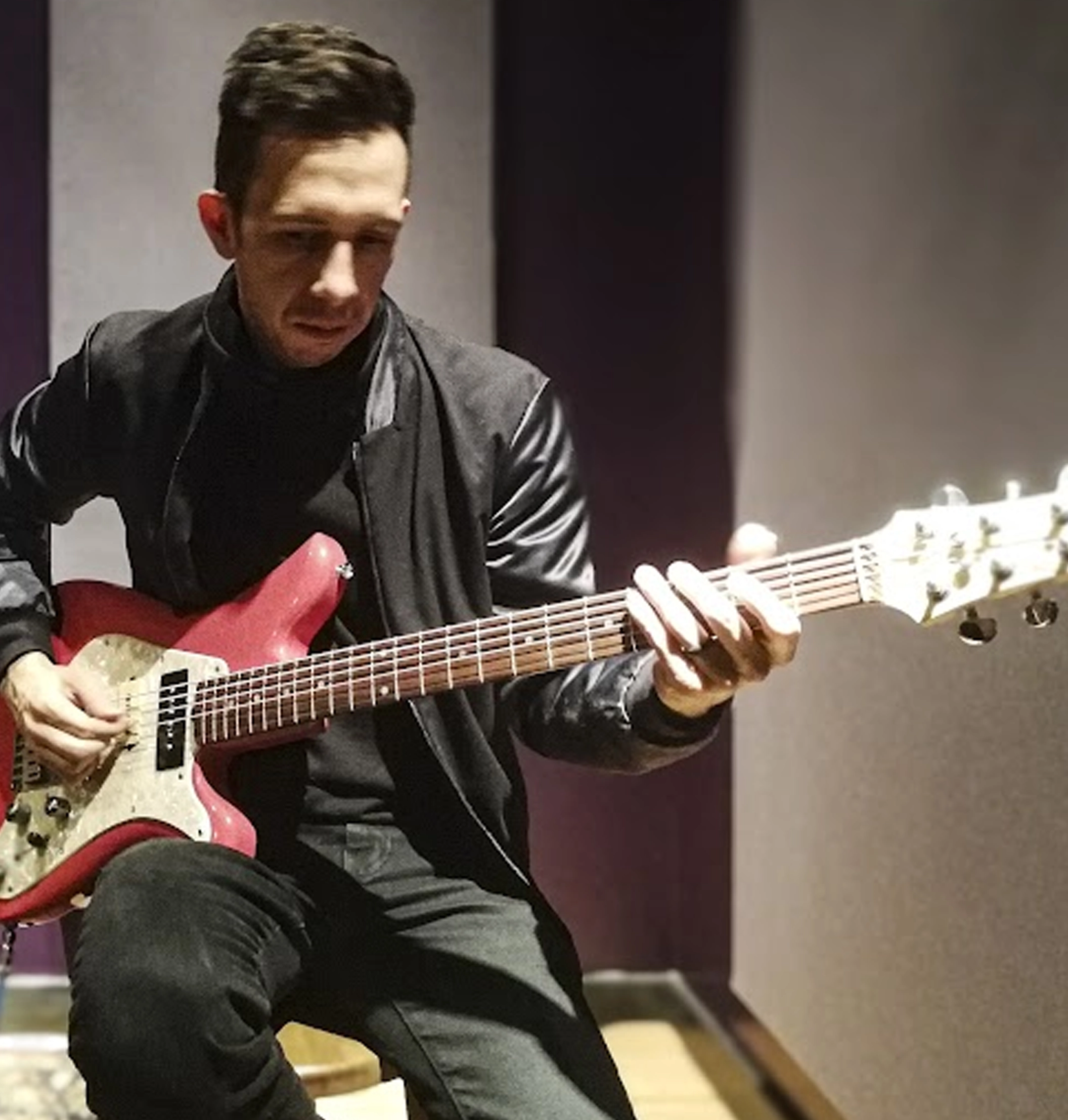
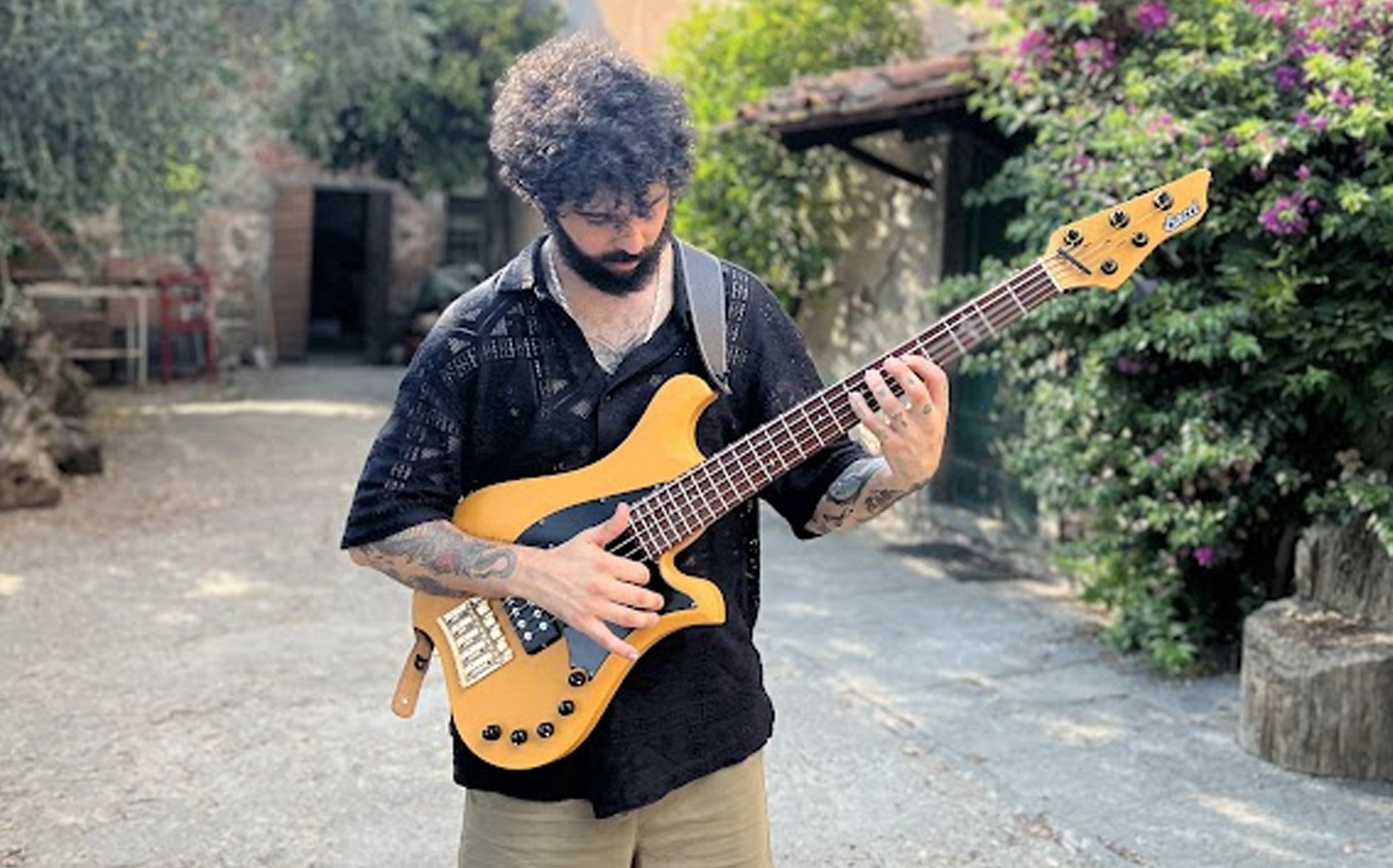
Baritone vs standard guitar

Baritone or standard guitar?
How to choose.

Same six strings, same shapes, same technique, a deeper voice. Here is the real difference between a baritone and a standard guitar, and how to pick the one for your music.

The short answer

Baritone or standard guitar? How to choose.

A standard electric guitar has a scale length around 25.5″ and is tuned E to E. A baritone has a longer scale, roughly 27″ and up, and is tuned lower, usually a fourth or fifth down, so the lowest string reaches B or A. The longer scale keeps those low notes tight and defined instead of loose and muddy.

You play a baritone exactly like a guitar: same chord shapes, same scales, same picking. It simply lives in a deeper register, sitting between a guitar and a bass. Choose standard when you want the classic range you already know. Choose a baritone when you want weight, a darker cinematic low end, heavier riffs, or a voice that sits under a standard guitar without fighting it.

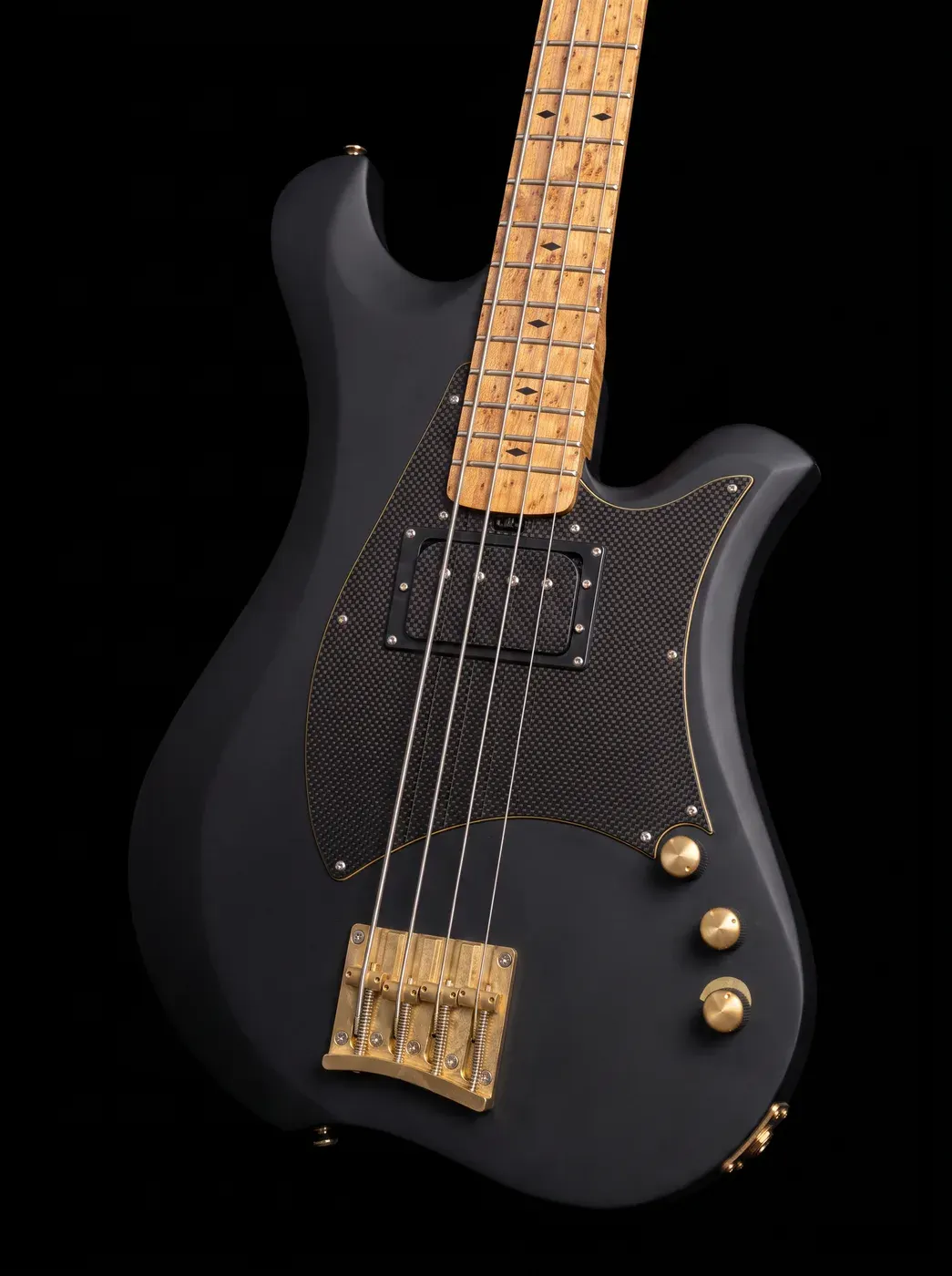
A Bacci Leonardo goes one step further with its dual output: guitar and bass, two independent signals from a single instrument, so one player covers both worlds at once.

At a glance

Standard guitar

  • Scale ~25.5″
  • Tuning E to E
  • Voice classic, familiar range
  • Best for the sound you already know

Baritone

  • Scale 27″ and up
  • Tuning B to B or A to A
  • Voice deep, tight, cinematic
  • Best for low riffs, layering, new textures
Which Bacci

Built for it, in Tuscany.

The maker

It all begins with one man, and his hands.

Bruno Bacci, master luthier, in his Tuscan workshop

Bruno Bacci is a Tuscan luthier with a background in metallurgy, woodworking and design. A guitarist first, he became a builder after a hand injury and trained at the violin-making school of Cremona, where Stradivari had worked three centuries earlier.

He does not begin with a shape. He begins with the sound he wants to hear and builds the instrument around it, testing each piece of wood by hand as though in conversation with it. Every Bacci is made individually and is backed for life by Bruno himself.

Played by the musicians that players love

They chose Bacci.

Matteo Mancuso
Matteo Mancuso
Tim Lefebvre
Tim Lefebvre
Munky, Korn
Munky, Korn
Michael League
Michael League
Cory Wong
Cory Wong
Vincen Garcia
Vincen Garcia
Matteo Mancuso / Tim Lefebvre / Munky / Cory Wong / Mark Lettieri / Michael League / Marcus Miller / Vincen Garcia / Ron Artis / Emma Nolde / 
In their words

What players say.

When I play it, I don’t really miss the bass player.

Matteo Mancuso

This is a funk machine. It nails the baritone funk rhythm sound.

Mark Lettieri

Bruno Bacci’s baritone guitars have been inspiring a whole generation of top players, a whole new musical canon.

Jamie Gale, Boutique Guitar Showcase
The sound

Watch it. Hear it played.

Bacci baritone video
Available at selected dealers

Where to play one.

Good to know

Questions.

Is a baritone harder to play than a standard guitar?

No. The chord shapes and technique are identical, you just work on a slightly longer neck. Most guitarists feel at home within minutes.

How is a Bacci baritone tuned?

Most players tune B to B (a fourth below standard) or A to A. Bacci builds each instrument to your preferred scale and tuning.

Can I play my usual songs on a baritone?

Yes. Everything transposes down with the instrument, so your shapes stay the same and the song simply sounds lower and fuller.

What makes the Bacci baritone different?

The Leonardo dual output gives you two independent outputs, guitar and bass from one neck, a signature that does not exist anywhere else.

Keep reading

Related guides.

Make it yours.

Commissions

Crafted for one

Nothing here is in stock, and nothing ever will be.
Every instrument is claimed by one player before the first cut.

  1. 01

    Reserve

    A €1,000 deposit holds your place at the bench and sets the work in motion. It comes off the price in full.

  2. 02

    Define the sound you need

    Woods, pickups, finish, decided one by one, together. The instrument is drawn around you.

  3. 03

    Play

    The balance falls due once the specification is closed. Eight months later, it is in your hands.

Not sure which instrument is yours?
Ask before you commit.