
The vintage thump.

Bacci GuitarsPescia, Tuscany
The classic vintage bass sound, the round, warm thump behind decades of records, is as much the strings as the bass. It is easy to credit the instrument alone, but swap the strings and the character changes completely. Flatwound strings, with their smooth flat winding, give a warm, controlled low end and almost no finger noise, and they are the foundation of the Precision voice.
That voice only reads clearly on a bass that stays out of the way. A passive circuit, with no preamp re-shaping the signal, lets the strings and your hands do the talking, which is why the string choice is so audible on a simple passive bass and easy to mask on a heavily active one.
This article explains the two families of bass strings, where the vintage thump actually comes from, how to choose between them, and why a passive Bacci bass makes the string choice matter.
A flatwound string wraps a smooth, flat ribbon of metal around the core, leaving a slick, even surface. You feel the difference immediately: no ridges under the fingers, no squeak when you shift, and a glassy ease on fretless. You hear it as a warm, rounded tone with a fast decay and a tight, controlled low end, the thump rather than the zing.
Flats also last. Their smooth surface traps far less dirt and oil than roundwounds, so they keep their voice for years, and many flatwound players never change them until one breaks, because the broken-in sound is the sound they are after. For a warm, vintage, pocket-focused voice, flats are the classic answer.
What they are not is bright. Flats will not give you modern slap zing or aggressive high-gain attack. That is a job for the other family.
A roundwound string wraps round wire around the core, leaving a ridged surface that you can feel and, when you move, hear. The tone is bright and punchy, with long sustain, more top-end bite and the zingy attack that slap, funk, rock and modern fusion are built on.
The trade-offs are the mirror image of flats: more finger and fret noise, and a tone that fades faster as the strings age and dull. Players who love fresh rounds often change strings frequently to keep that bright attack. For bite, clarity and a modern voice, rounds are the answer.
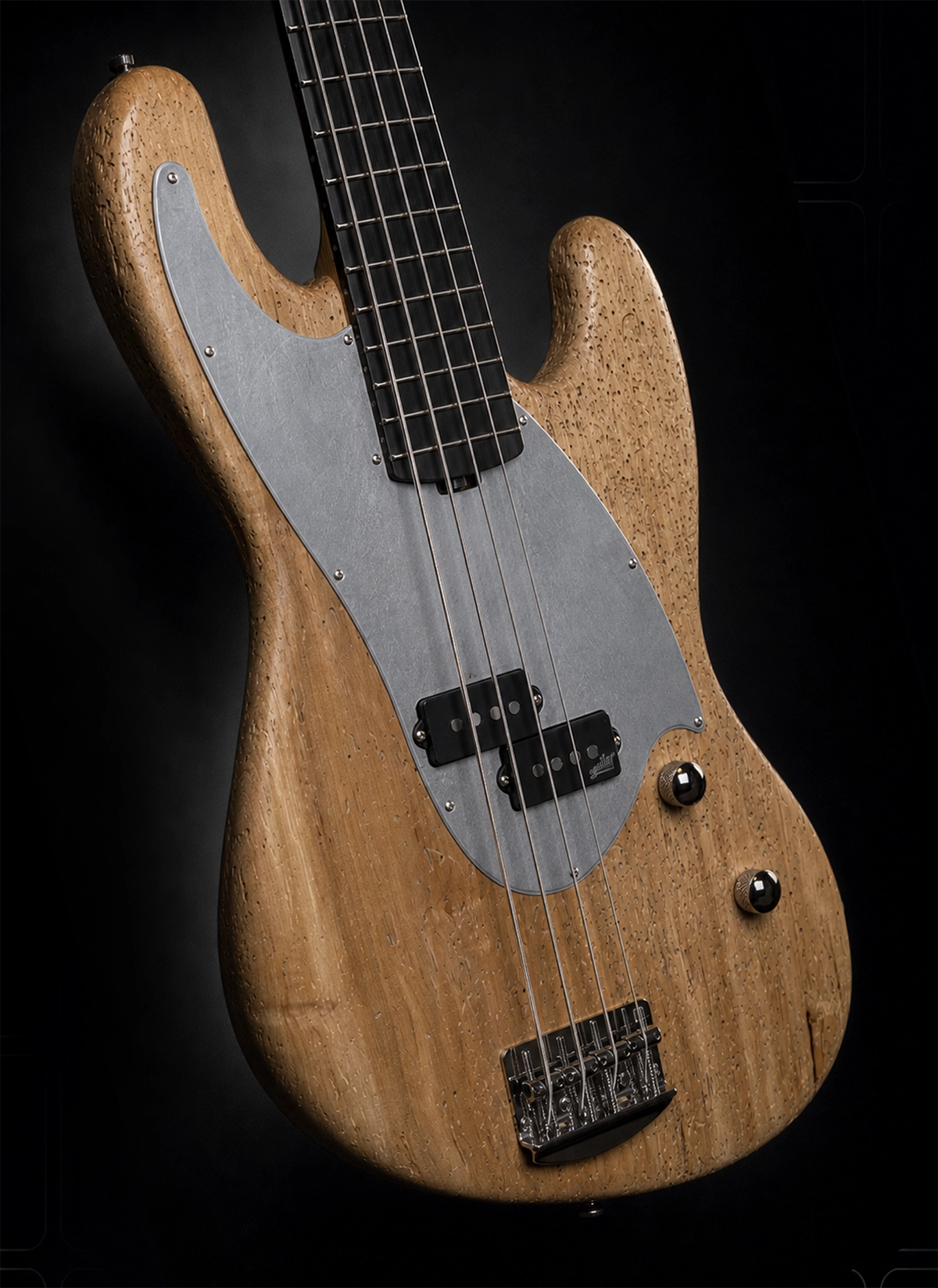
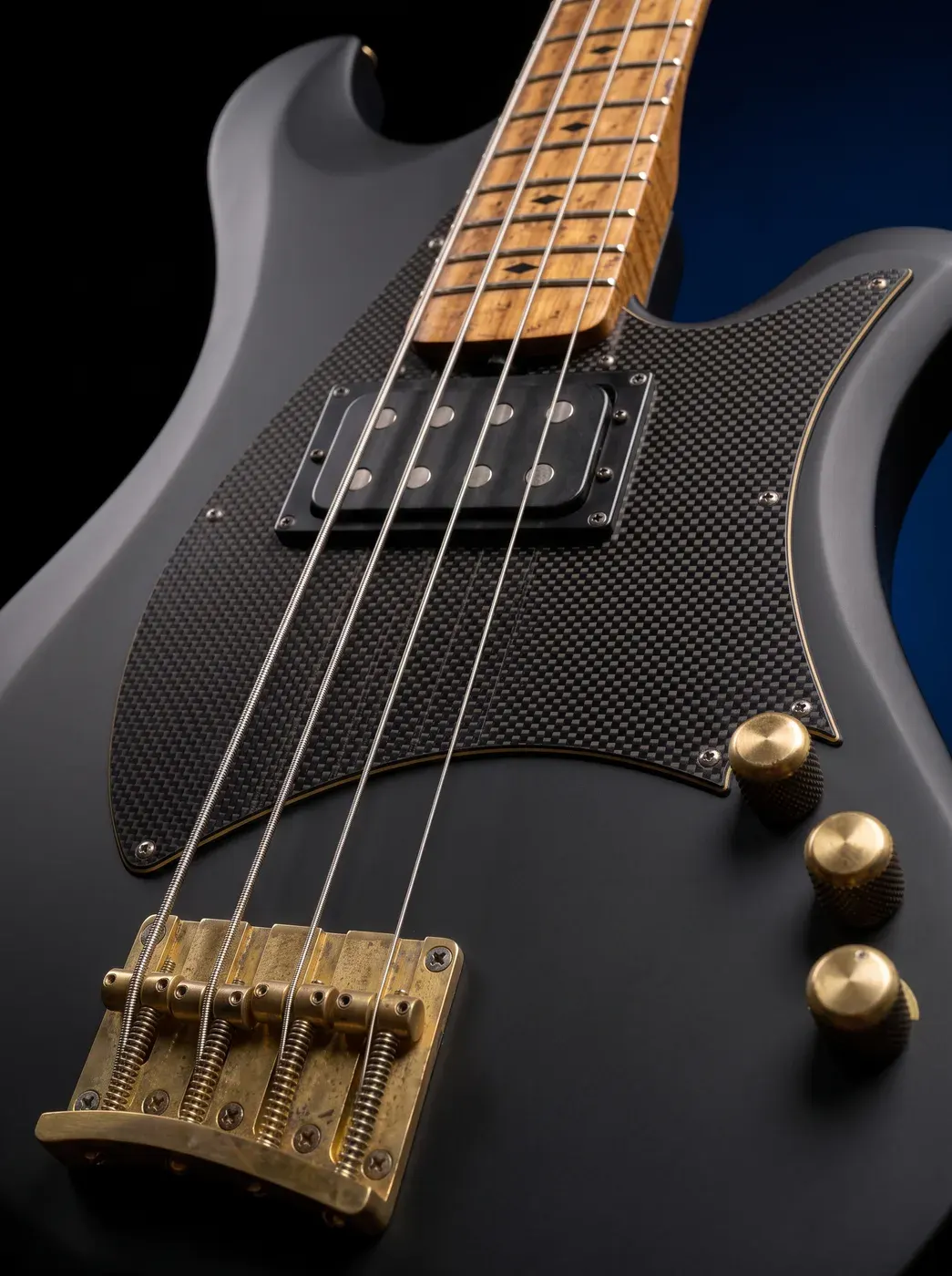
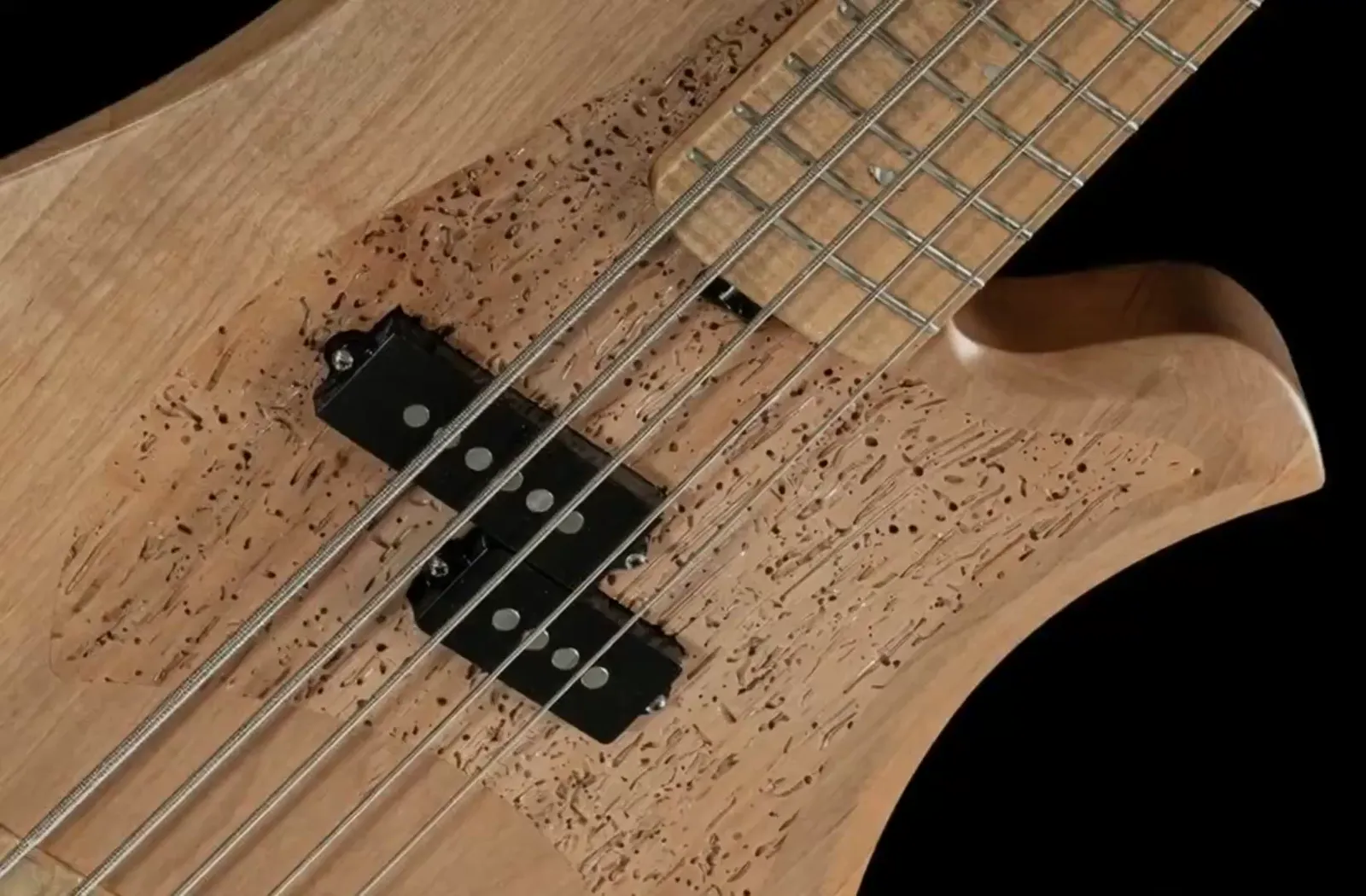
Michael League's Bacci Amrita is the clearest case of why the bass and the strings work together. Its P-style simplicity puts the sound in your hands: there is little between the strings and the amp, so the string choice comes through plainly. Flats with the tone rolled back give an old Precision thump, rounds bring a modern edge, and the same bass covers both.
The Marleo follows the same thinking. It ships with Dogal Vintage Nickel and a passive voice, so the vintage character is there from the first note, and whatever you string it with afterwards is heard clearly. The instrument does not impose a tone, it reveals the one you choose.
It is very versatile. You can put flat ones on it and put the tone really low and it sounds really like an old P bass. You can put round wounds on it and there is a lot of bite to the sound.
They contain all the frequencies you want from a bass, and none you do not.Michael League
Decide the voice first. If you want warmth, thump and a vintage, pocket-focused sound, with smooth feel and strings that last for years, choose flatwounds. If you want brightness, bite, slap zing and modern attack, and you do not mind changing strings to keep it, choose roundwounds. Many players own both and switch by project.
Then let the bass reveal it. On a passive Bacci, with nothing re-shaping the signal, the string you pick is the sound you get, which is exactly why a simple passive bass and a considered string choice are such a powerful pair.
Flatwound strings have a smooth, flat outer ribbon wound over the core, instead of the round wire of roundwounds. They feel smooth and slick under the fingers, last a very long time, and give a warm, thumpy, vintage voice with almost no finger or fret noise.
Roundwounds are bright, punchy and modern, with more sustain, more bite and more finger noise. Flatwounds are smoother, warmer and more vintage, with a faster decay and a controlled low end. Many players keep both and switch depending on the music.
They are a large part of the classic Precision thump. On the Bacci Amrita, Michael League puts flats on with the tone rolled back and, in his words, it sounds really like an old P bass. The strings are as much of that sound as the bass.
Yes, noticeably. Their smooth surface traps less dirt and oil, so they keep their tone far longer, often for years. Many flatwound players never change strings until one breaks, because the sound they want is a settled, broken-in one.
Generally no. Slap and pop rely on the bright, zingy attack of fresh roundwounds. Flatwounds are smooth and warm, which is the opposite of that voice, so slap players almost always choose rounds.
The Marleo ships strung with Dogal Vintage Nickel for its vintage-leaning voice. Because the bass is passive, with nothing re-shaping the signal, the string choice is heard clearly, so you can tailor the sound with your strings.
Yes, and that is the point of a simple passive bass. Michael League's Amrita covers both: flats with the tone down for an old P-bass sound, rounds for modern bite, the same instrument. The bass stays out of the way and lets the strings and your hands decide.
Because a passive circuit has no preamp re-shaping the signal, the sound of the strings reaches the amp largely as it is. On an active bass the onboard EQ can mask string character, while on a passive bass the strings come through clearly.
A passive Bacci bass puts the sound in your hands, flats or rounds, deep and punchy, handbuilt in Tuscany to your scale and voice.
Every Bacci bass is designed, built and set up by Bruno, one at a time, in Pescia.