
The bass behind Snarky Puppy.

Bacci GuitarsPescia, Tuscany
Michael League is the founder, bassist and bandleader of Snarky Puppy, the Grammy-winning instrumental collective, and one of the most recognisable bass voices in modern music. He is also a producer and writer, and his signature instrument with Bruno Bacci is the Amrita.
The clearest sign of how right the instrument is came when Bruno asked the obvious question of any signature collaboration, what should we change. The answer was one word. Nothing. It is perfect. A signature model usually begins with a list of modifications. This one began with a bass that already was what the artist wanted.
This article is about why: the player, the unusual wood at the heart of the Amrita, the voice it produces, and how it lives on in the Marlita.
The sound of that instrument is the sound I like to hear from a bass.
Michael LeagueThe Amrita grew out of a four-year research and design process built around a material most makers avoid: rare, twenty-year-aged worm-eaten alder. Bruno drew his inspiration from the legendary Pistolesi and ventured into this tarred, aged wood, turning what had always been seen as a flaw into the voice of the instrument.
The science of it is elegant. The tiny voids left inside the body by woodboring beetles act as micro-resonating chambers, small pockets of air that enrich the low end with depth and warmth, the way a hollow body resonates but distributed through the wood itself. The result is light in weight and rich in sound, a robust, immediate voice reminiscent of vintage basses yet with modern clarity.
No two pieces of this wood are the same, so no two Amritas are the same. The body is quite literally one of a kind each time, which is part of why the bass carries the character it does.
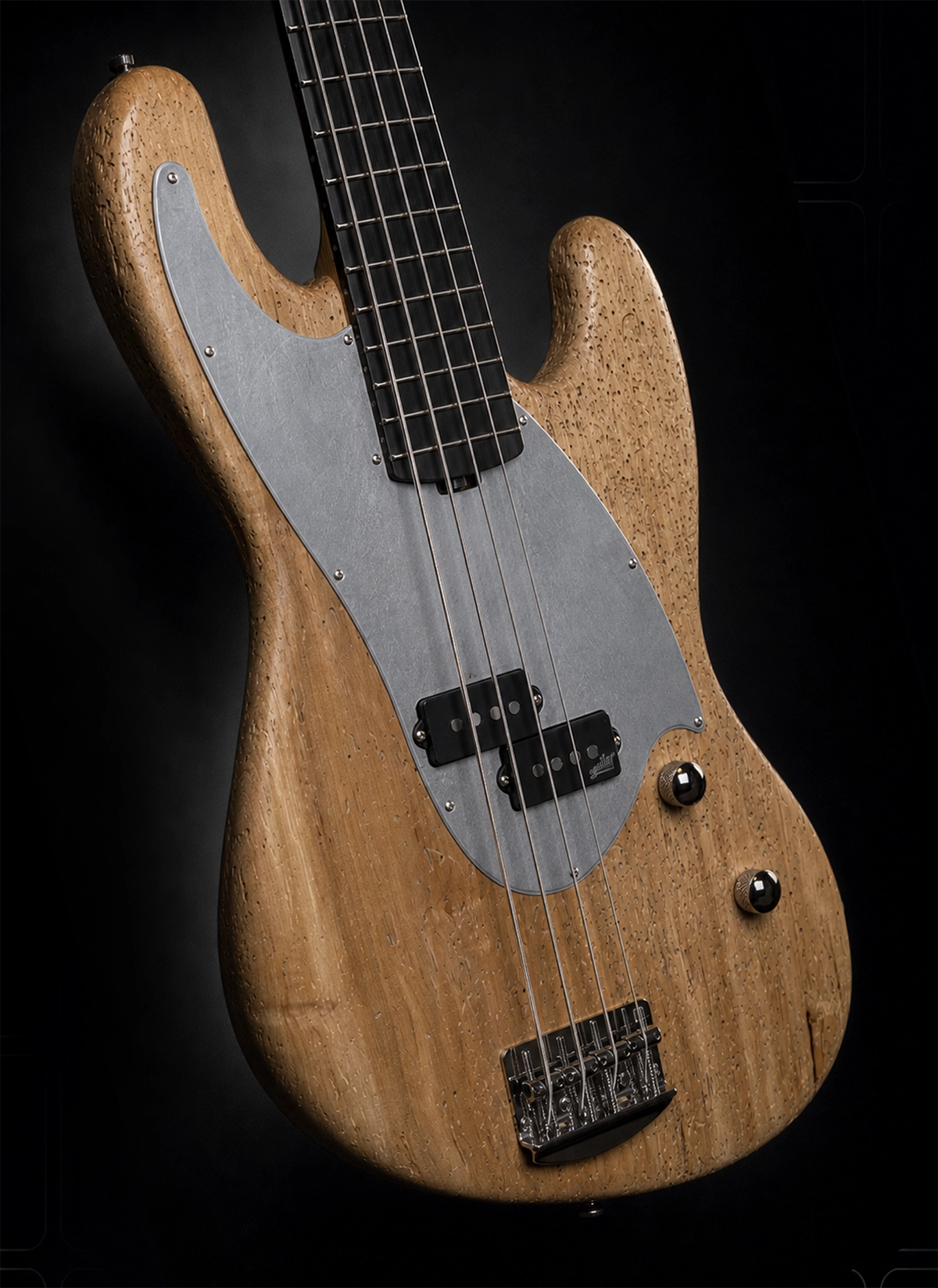
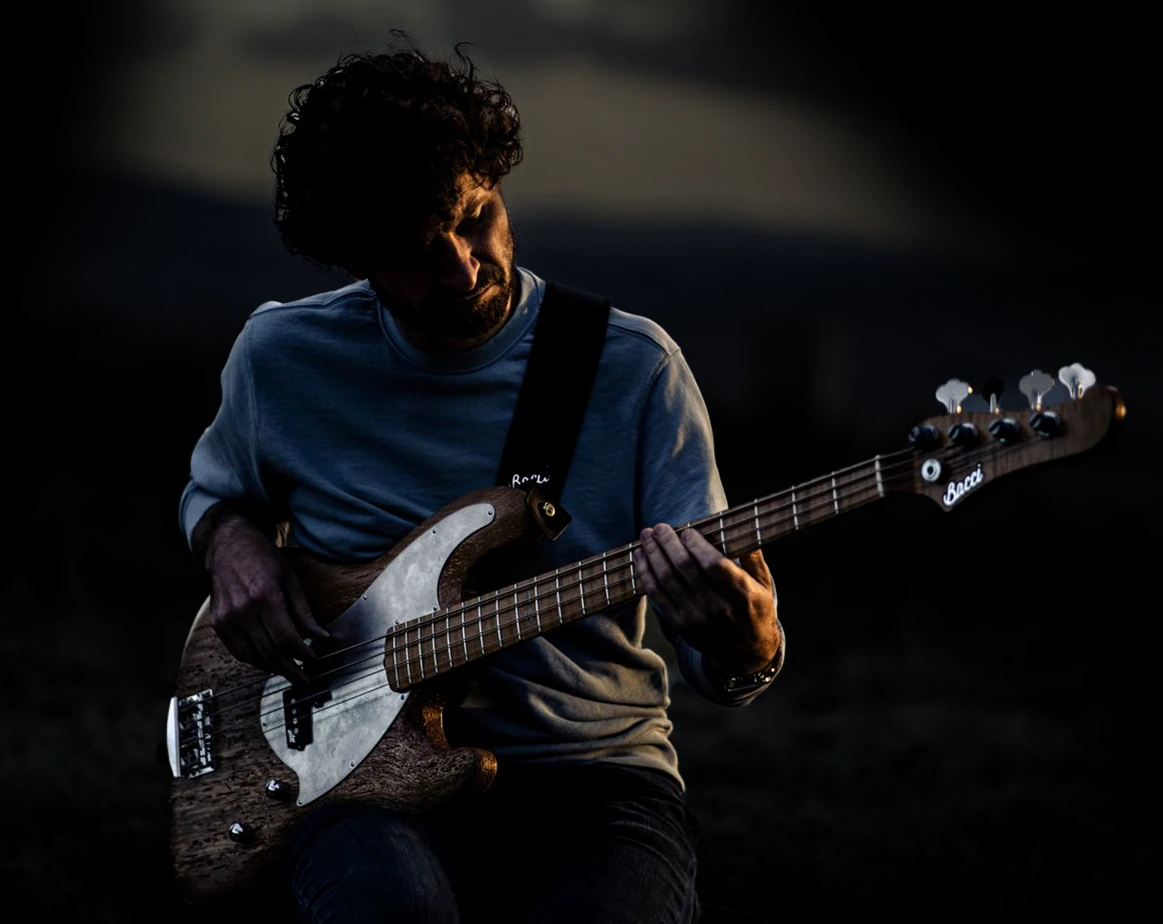
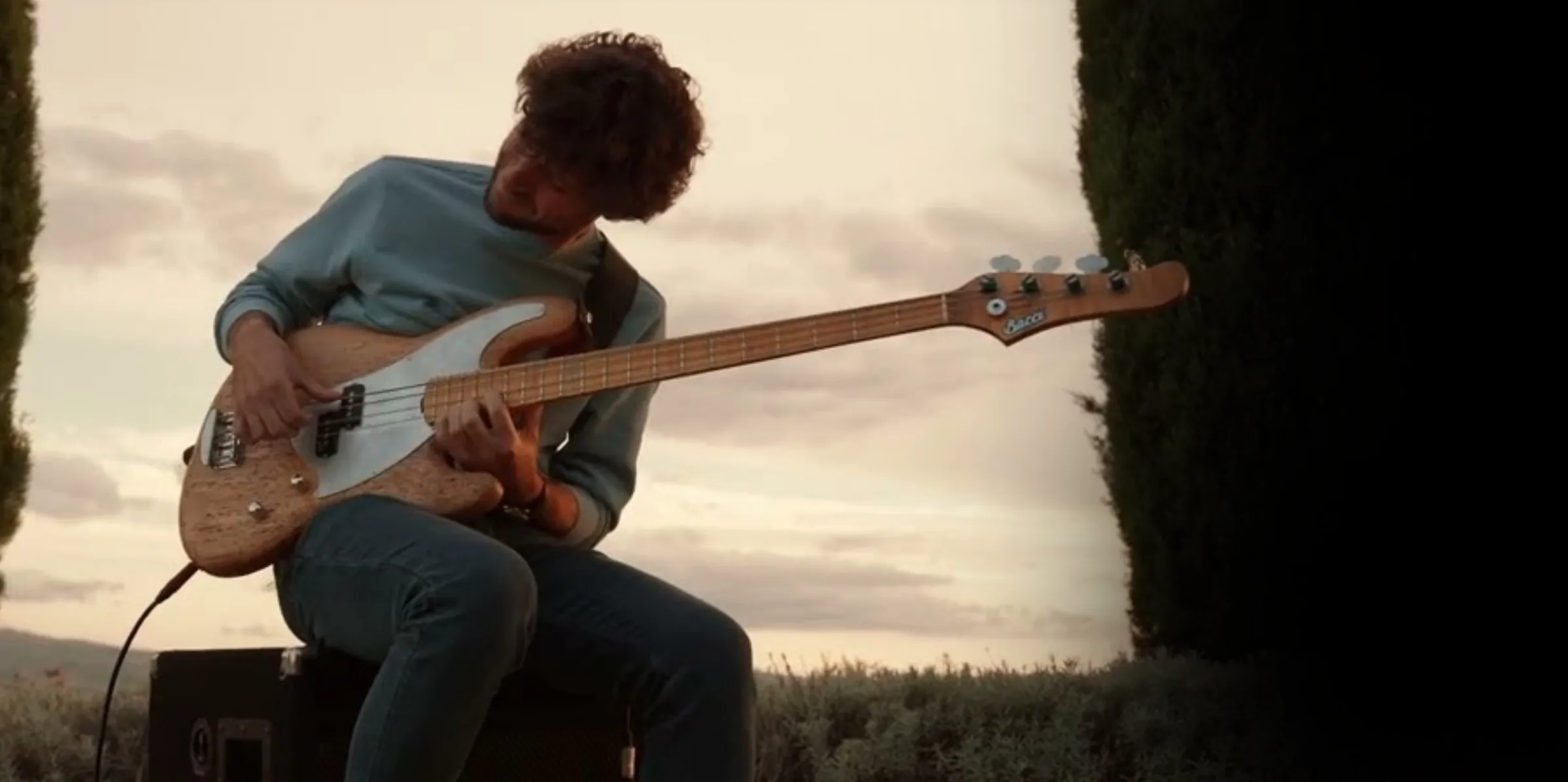
The Amrita is a P-style bass, and its simplicity is the point. There is little between the strings and the amp, so the player controls the sound: flats with the tone rolled back give an old Precision thump, rounds bring bite, and the worm-eaten body keeps the whole thing light and alive underneath either choice.
That versatility is what makes it a professional's bass rather than a boutique curiosity. It brings the '50s, '60s and '70s back with a modern twist, capturing the essence of vintage tones while meeting the demands of contemporary music. For a player who moves between Snarky Puppy, production work and his own records, one bass that covers all of it is not a luxury, it is the tool.
It is very versatile. You can put flat ones on it and put the tone really low and it sounds really like an old P bass. You can put round wounds on it and there is a lot of bite to the sound.
They contain all the frequencies you want from a bass, and none you do not.Michael League
Behind the Amrita is Bruno Bacci, a master luthier from Tuscany who came to the craft through metallurgy, woodworking and design, and who does not begin with a shape and fill it with sound. He begins with the sound he wants to hear and builds the instrument around it.
With the Amrita that meant taking a material everyone else discarded and proving it could be the heart of a great bass. It is the same instinct that runs through the whole Bacci family: only what is necessary, made to last, built one at a time by hand, and backed for life by the maker himself.
The original limited-edition signature.
The rare worm-eaten alder at its heart.
Behind the design of the bass.
The Amrita was a limited edition of forty. Its heir, the Marlita, carries the same Aguilar P-HOT pickup and the same worm-eaten alder, now as a limited production bass, built only while that rare wood lasts. Michael plays them both.
The story of the wood is part of it. The worm-eaten alder came from the workshop of a luthier who had passed. That wood became Michael League's Amrita, and it lives on in every Marlita, which is why the heir is more than a reissue, it is the same timber, the same voice, carried forward while it remains.
Michael League is the bassist, bandleader and founder of Snarky Puppy, the Grammy-winning instrumental collective, and a producer and multi-instrumentalist. His signature bass with Bacci is the Amrita.
He plays the Bacci Amrita, a limited-edition P-style bass built by Bruno Bacci from rare worm-eaten alder. Its heir, the Marlita, carries the same Aguilar P-HOT pickup and worm-eaten wood as a limited production bass, and Michael plays them both.
The Amrita is built from rare twenty-year-aged, worm-eaten alder. The tiny voids left by woodboring beetles act as micro-resonating chambers inside the body, giving a punchy, airy voice that blends vintage warmth with modern clarity, in a light, resonant instrument.
Worm-eaten alder was traditionally considered unsuitable for instruments. Bruno Bacci turned the flaw into the feature: the wormholes work as natural tonal chambers, enriching the low end with depth and warmth while keeping the bass light. It is a case of a defect becoming the voice.
When Bruno asked what he would change to make it a signature, Michael League answered, nothing, it is perfect. He describes the two Amritas he owns as containing all the frequencies you want from a bass and none you do not.
Yes, it is a P-style bass: simple, passive, and voiced in the Precision tradition. Flats with the tone rolled back give an old P-bass thump, rounds bring bite, and the player controls the sound.
The Amrita was a limited edition of forty. Its heir, the Marlita, keeps the same pickup and worm-eaten wood and is built only while that rare wood lasts.
The original Amrita edition is limited to forty. The Marlita, its heir, is the way to get the same pickup and worm-eaten alder today, built to order while the wood lasts. You can reserve one from the Marlita page.
The Marlita keeps the Amrita's pickup and worm-eaten wood, built only while that rare timber remains. Handbuilt to order in Tuscany.
Every Bacci bass is designed, built and set up by Bruno, one at a time, in Pescia.