Baritone, Bass VI, or bass?

Bacci GuitarsPescia, Tuscany
Three instruments sit in the space below a standard guitar, and almost everyone blurs them together at some point: the baritone guitar, the Bass VI, and the bass guitar. They look related, they all go low, but they are genuinely different tools, and knowing which is which saves a lot of wrong purchases.
Here is the clear version, from a workshop that builds in this register every day.
A baritone guitar is a six-string guitar with a longer scale, tuned down, usually to B or A. You play it exactly like a guitar, the same chord shapes and technique, it simply lives in a deeper register. It is not a bass; it is a guitar that has moved down.
Reach for it when you want guitar playing, chords, melody, riffs, in a darker, heavier register, without changing how you play.
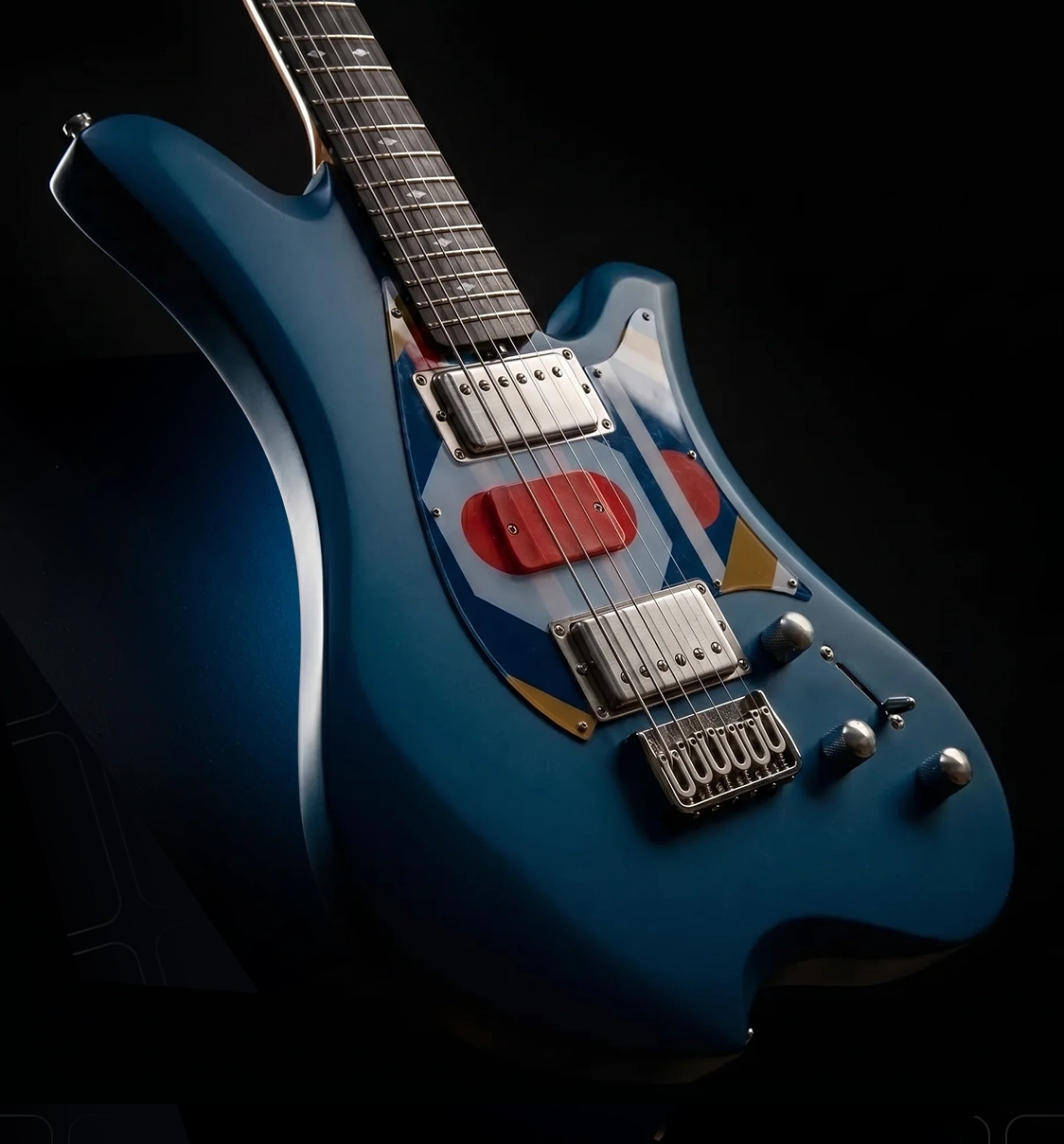
The Bacci Leonardo is a baritone with a dedicated bass voice on a second jack. Handbuilt to order in Tuscany.
A Bass VI is a six-string instrument tuned like a guitar but a full octave below, E to E at bass pitch. It bridges the two worlds: guitarists feel at home on the six strings and familiar shapes, but it speaks in bass territory, with a distinctive clicky, tic-tac character.
Reach for it when you want a true low instrument that a guitarist can play intuitively, or that classic baritone-guitar-meets-bass twang. It is closer to a bass in pitch than a baritone is.
A bass guitar is usually a four or five string instrument, tuned in fourths, built to be the harmonic and rhythmic foundation. It is a different instrument with its own technique, not a guitar you play low, and nothing else quite replaces it for holding down the bottom.
Reach for a bass when you need the foundation, full stop. The baritone and Bass VI colour the low end; the bass defines it.
Think of it as a ladder. The baritone is a guitar that stepped down a few rungs; the Bass VI is a guitar that stepped all the way to the bottom; the bass is the floor itself, a different instrument built to be the foundation.
Baritone colours the low end, Bass VI bridges to it, bass defines it. A dual-output baritone does two rungs at once.The low end, in one line
There is a fourth option worth knowing. A dual-output baritone like the Bacci Leonardo carries a guitar voice and a dedicated bass voice at once, on two jacks, so one instrument can give you baritone guitar up top and a real bass line underneath at the same time.
It does not replace a dedicated bass for a bassist, but for a guitarist who wants both registers from one instrument and one performance, it answers a question the other three cannot.
A baritone is a six-string guitar with a longer scale tuned lower, played exactly like a guitar in a deeper register. A bass is a separate, usually four or five string instrument built to be the foundation, with its own technique. A baritone is a guitar that goes low; a bass is a bass.
A Bass VI is a six-string instrument tuned like a guitar but a full octave down, E to E at bass pitch. Guitarists find it intuitive, and it has a distinctive tic-tac character between a baritone and a bass.
No. A baritone is usually tuned to B or A, only a fourth or fifth below a guitar, while a Bass VI is a full octave down at bass pitch. The baritone stays closer to a guitar; the Bass VI sits closer to a bass.
Not on its own, a baritone is still a guitar. But a dual-output baritone like the Bacci Leonardo adds a dedicated bass voice on a second jack, so one instrument can cover guitar and a real bass line at the same time.
Choose a baritone for guitar playing in a deeper register, a Bass VI for a guitar-tuned instrument at bass pitch, and a bass to be the foundation. If you want guitar and bass from one instrument and one take, a dual-output baritone is the answer.
A guitar voice and a dedicated bass voice, on two jacks, handbuilt to order in Tuscany. When you want both registers from one instrument.
Every Bacci is designed, built and set up by Bruno, one at a time, in Pescia.