Baritone or seven string?

Bacci GuitarsPescia, Tuscany
Guitarists who want a heavier, deeper voice usually land on the same fork in the road: a baritone, or a seven string. Both reach below a standard guitar, but they get there in completely different ways, and the choice shapes how the instrument feels under your hands.
A seven string keeps a normal scale and adds a low string, usually a low B, below the standard six. A baritone keeps six strings and lengthens the whole scale, tuning the entire instrument down, usually to B or A. One adds range at the bottom; the other moves the whole instrument into a lower register.
This article lays out the real difference, how each one plays, the sound each gives you, and why a growing number of players, including Matteo Mancuso, reach for a baritone.
On a seven string, the six strings you know stay exactly where they are. You add a seventh below them and keep playing your usual shapes up top, dropping onto the low string when you want weight. The scale stays around 25.5 inches, so the feel is familiar and fast.
The trade is tension and clarity on that lowest string. On a standard scale a low B can feel slack and sound loose unless you use a heavy gauge and a careful setup. Seven strings shine when you want mostly standard playing with an occasional dip into the basement, which is why they are a staple of modern metal and progressive music.
A baritone takes a different path. It lengthens the scale, commonly to 27, 28 or 30 inches, and tunes the whole guitar down. Every string sits in a deeper register, and the longer scale keeps them tight and defined instead of floppy. You still play it like a guitar, the chord shapes and technique are identical, it simply lives lower.
That is the key feeling: a baritone does not ask you to learn a new string, it moves your existing playing down into a register between a guitar and a bass. Chords ring with weight, single notes land like a film score, and the low end is a real, clear pitch rather than a rumble.
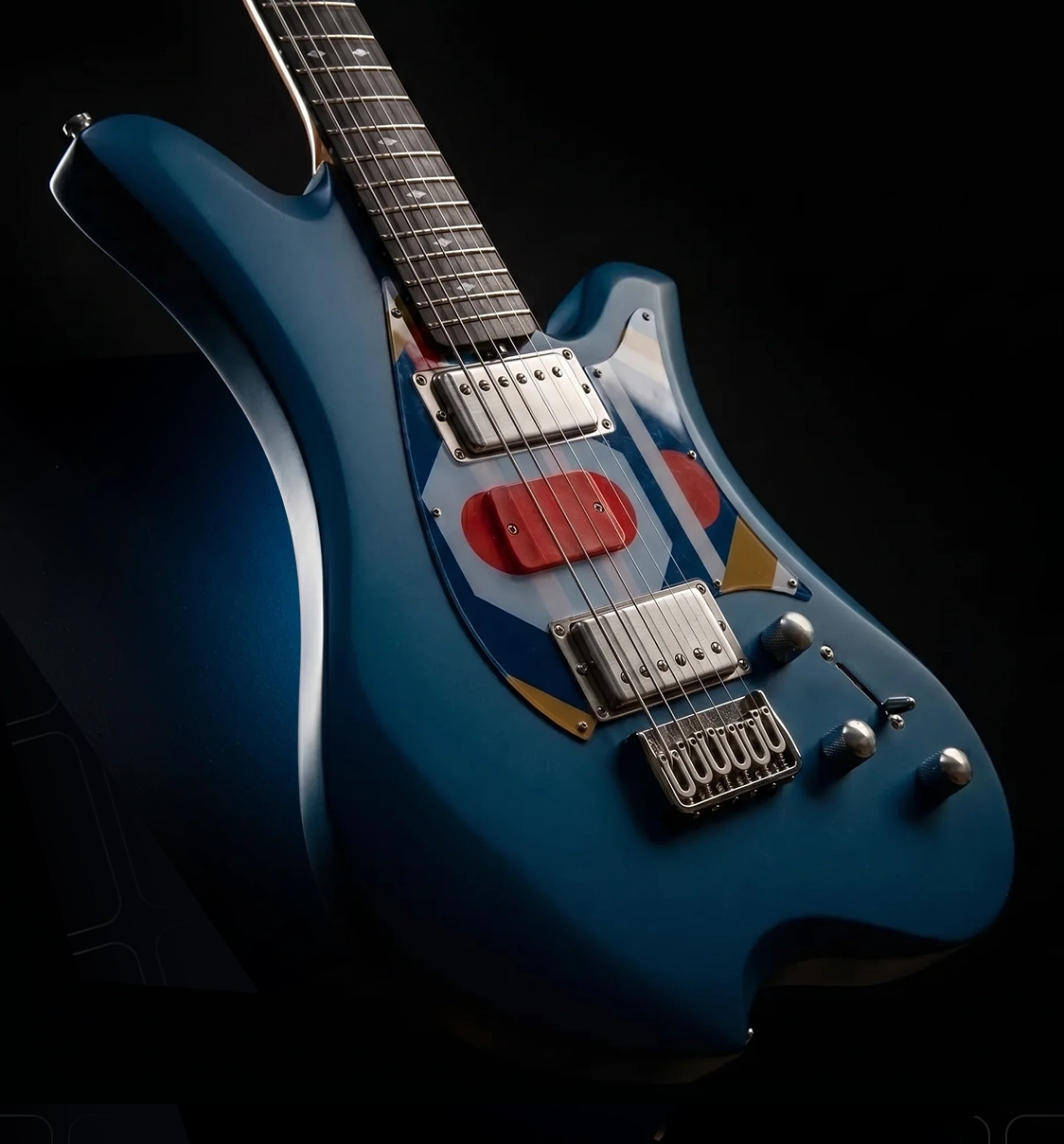
The Bacci Leonardo is a baritone built around a longer scale and, if you want it, a dedicated bass voice. Handbuilt to order in Tuscany.
In the hands, the seven string feels like your guitar with a bonus string; the baritone feels like your guitar transposed, with a slightly longer reach. Neither is harder, they are simply different.
In the mix, the difference is even clearer. A seven string gives you standard-guitar brightness with a low anchor on demand. A baritone gives you a whole instrument with a darker, rounder character, which is why it sits so beautifully under jazz, funk and cinematic music rather than only metal.
Neither approach is wrong, and both make great music. The seven string is built for standard playing with a low note on tap; the baritone is built to move your whole voice into a deeper register.
If you want the pure six-string feel, lower, choose a baritone. If you want standard playing with an extra low note, choose a seven string.Baritone vs seven string, in one line
When Matteo Mancuso was asked why he leans on baritones rather than seven-string guitars, his answer was about feel and voice: a baritone keeps the pure six-string experience while opening a deeper register, instead of changing the instrument's geometry with an extra string.
That is the heart of it for a lot of players. If your music is about phrasing, chords and tone rather than the lowest possible note, a baritone gives you a new register without asking you to relearn the neck. The seven string earns its place where that extra low note is the point.
No. A seven string adds a low string to a standard-scale guitar, while a baritone keeps six strings but uses a longer scale and lower tuning. One adds range at the bottom, the other shifts the whole instrument into a lower register.
Neither is harder. A seven string plays like your guitar with an extra string; a baritone plays like your guitar transposed down, with the same chord shapes on a slightly longer neck. The right one depends on the music, not the difficulty.
Because a baritone keeps the pure six-string feel and simply moves it into a deeper register, rather than changing the neck with an extra string. Players focused on phrasing, chords and tone, like Matteo Mancuso, often find it more natural.
Most baritones are tuned B to B or A to A, a fourth or fifth below a standard guitar, with the longer scale keeping the low strings tight and clear.
No. Metal uses baritones, but their round, deep voice suits jazz, funk, fusion and cinematic music just as well. Bacci's players span funk, fusion and jazz.
Bacci builds baritones around longer scales such as 28 inches, chosen so the low strings stay defined. The exact scale is set when you commission the instrument.
The Bacci Leonardo is a handmade baritone: a longer scale, a lower register, and the option of a second, bass voice. You play it exactly like a guitar.
Every Bacci is designed, built and set up by Bruno, one at a time, in Pescia.