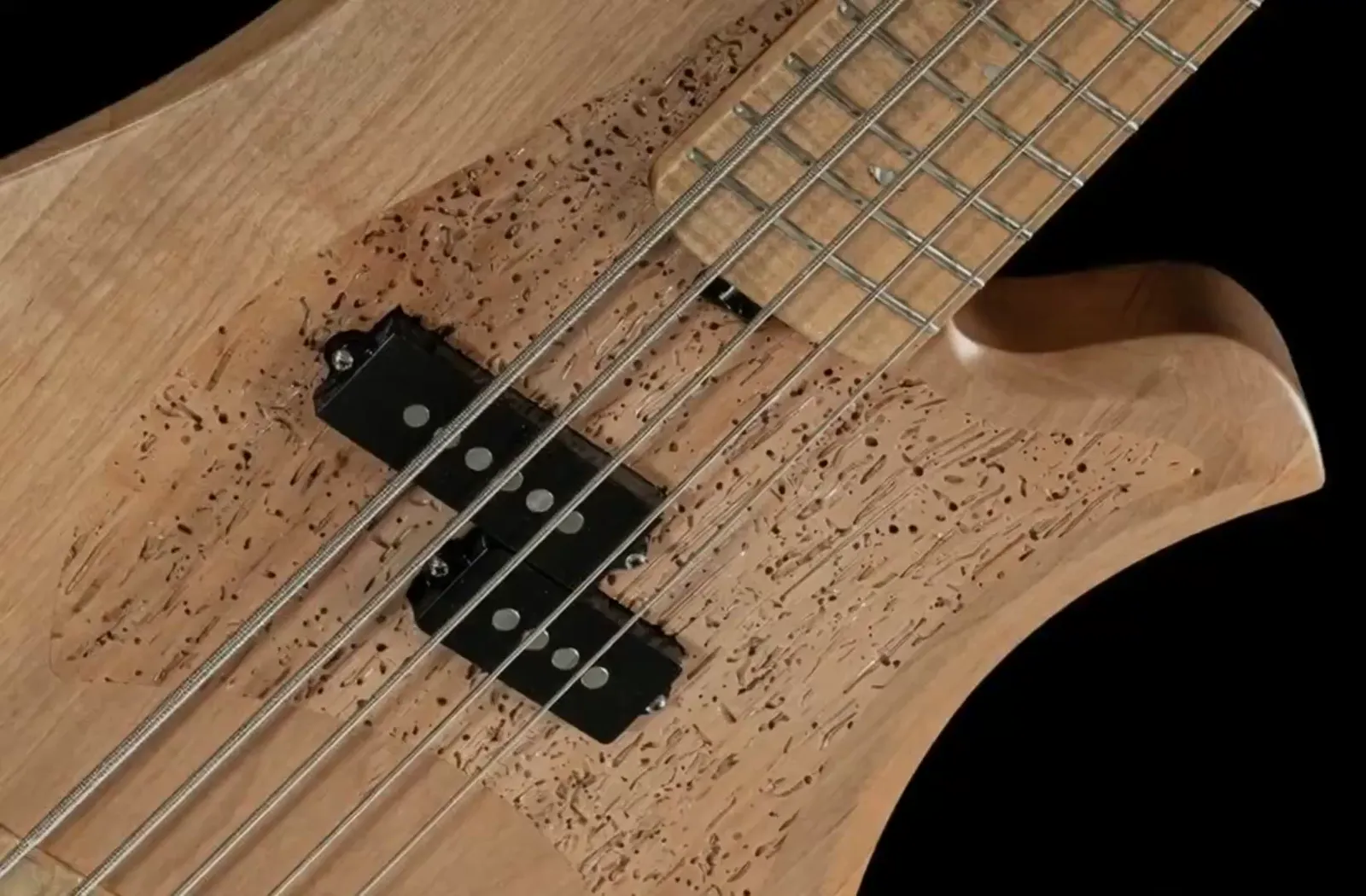
The bass for James Jamerson.

Bacci GuitarsPescia, Tuscany
For a decade of hit records, the bass you were hearing was almost always one man, in a basement studio in Detroit, uncredited on the sleeve. James Jamerson, of the Funk Brothers, played the lines that made Motown move, and did it with a feel so deep and so human that players have spent fifty years trying to learn it note for note.
His setup was almost comically simple. A Fender Precision, a passive bass with no electronics to hide behind. Heavy La Bella flatwound strings he reportedly never changed, because the broken-in sound was the sound. High action, and a single plucking finger he called the Hook. No preamp, no tricks, nothing in the way of his hands.
It is the purest argument in music that the sound lives in the player, not the gadgetry. And it is the exact philosophy a Bacci Marleo is built on.
Deep, punchy and alive, with nothing in the way of the player.
Strip the Motown sound to its parts and you get a passive Precision, flatwound strings, the tone rolled back, and a great pair of hands. The first three are exactly what Bruno builds into the Marleo: a passive circuit with no batteries and no signal loss, so the amplifier's full response stays in your hands, a Precision voice among its options, and Dogal Vintage Nickel strings for that warm, vintage character.
The fourth part, the hands, is the one no instrument can give you. But an instrument can get out of the way so completely that your hands are all that is left, and that is precisely what a passive Bacci does. It is the Jamerson recipe, handbuilt to order in Tuscany.
Flatwounds, a passive circuit, and the vintage P-bass voice, explained.
The highest compliment you can pay a bass is that you forget it is there. Jamerson's Precision never got in his way, and the Marleo is built to the same standard: only what is necessary, and nothing that makes the bass harder to play. You plug in, and what comes out is you.
That is why this homage feels so natural. A passive, flatwound, Precision-voiced bass with nothing between the strings and the amp is not a tribute to Jamerson, it is simply the kind of instrument his music was made on, built today by one pair of hands in Tuscany.
He proved how much of the sound is in the hands. A great bass just gets out of their way.
On James JamersonThis is an homage, not a claim. Jamerson made history on a Fender, and nothing needs rewriting. But if we ask what his documented sound points toward, the answer is a passive bass, flatwound, Precision-voiced, with nothing in the way, which is the Marleo, almost to the letter.
Deep, punchy and alive, handbuilt to order in Tuscany. The Motown recipe, in a bass made for one player.
Choose the voice, the scale and the strings, and Bruno builds it around you.
James Jamerson was the bassist on most of Motown's greatest records, a member of the studio band known as the Funk Brothers. Largely uncredited in his lifetime, he is now recognised as one of the most influential bass players in history, the architect of the Motown groove.
A Fender Precision bass, famously a 1962 he called the Funk Machine, strung with heavy La Bella flatwounds that he reportedly never changed, played with a single plucking finger he called the Hook. A passive bass, flatwound strings, pure feel.
His sound was a passive Precision with flatwound strings and nothing in the way: all feel, all hands. The Bacci Marleo is built on exactly that idea, a passive circuit, a Precision-leaning voice, strung with vintage nickel, with nothing re-shaping the signal. It is the Motown recipe, handbuilt to order.
They are the heart of it. A passive bass with flatwound strings and the tone rolled back gives that warm, round, thumpy voice, and the rest is the player's touch. Jamerson proved how much of the sound lives in the hands.
No. This is an homage, our view of the instrument James Jamerson's documented sound points toward, not a claim that he played or endorsed one.
Yes. The Marleo is handbuilt to order, passive, in a Jazz, Precision or blended voice, strung with Dogal Vintage Nickel. You can start from the Marleo page.
A passive Marleo, Precision-voiced, strung with vintage nickel, with nothing in the way of your hands. Handbuilt to order in Tuscany.
Every Marleo is designed, built and set up by Bruno, one at a time, in Pescia.