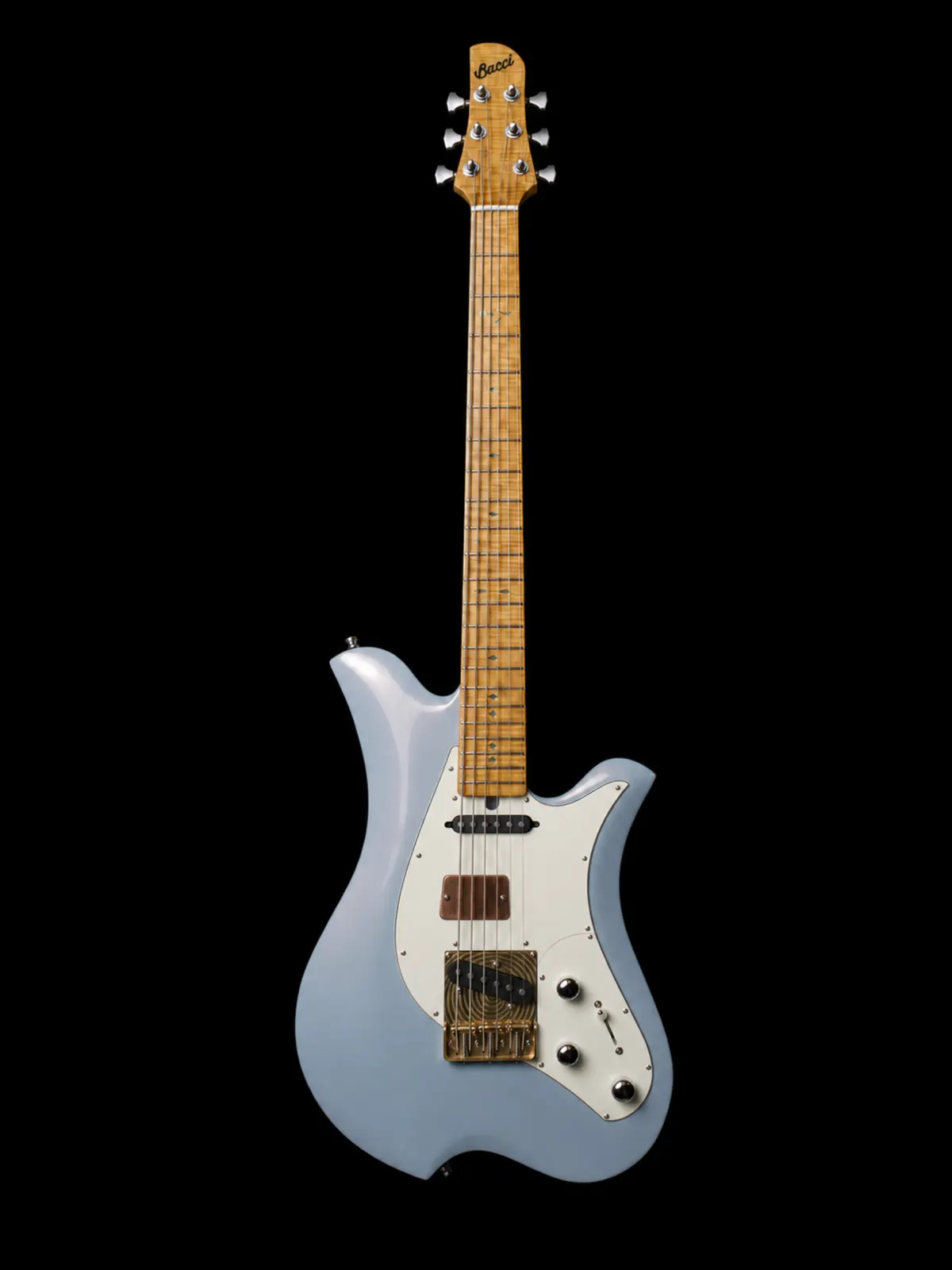
The baritone for Duane Eddy.

Bacci GuitarsPescia, Tuscany
Most guitarists treat the low strings as a foundation to build chords on. Duane Eddy built his whole career down there. Playing melodies on the bass strings, with a bright attack and oceans of reverb, he gave the world a sound it had never heard: deep, twangy, cinematic, wide as a desert horizon. Rebel-Rouser, Peter Gunn, a string of instrumentals that made the low end of the guitar a lead voice.
That sound did not just sell records, it shaped the atmosphere of early rock and the whole language of the spaghetti western. When a film wants danger and open space, it still reaches for an echo of what Duane Eddy invented.
He played it on a standard guitar, because that is what existed. We think, if he were starting today, he would have reached for a baritone, and we think it would have been a Bacci.
A Bacci baritone built to make the low strings carry the melody, tight and singing.
Everything Duane Eddy did pointed downward. A standard guitar can play low, but its bass strings run out of room, they lose tension and definition before they reach the depth his melodies wanted. A baritone is built for exactly that place: a longer scale and a lower tuning that keep the low strings tight and clear, so a melody played down there stays a melody rather than a mumble.
A Bacci baritone is 28 inches, with pickups chosen for the register and a setup that holds the tuning. It is, in other words, an instrument designed to make the low strings sing, which is the one thing Duane Eddy spent a lifetime doing on a guitar that was never quite built for it.
How scale length keeps a baritone's bass strings tight and defined.
This is more than a nice idea. The corner of the baritone world built on western, cinematic, twangy playing carries a Duane Eddy heritage openly: it is the lineage of that deep, melodic low-string sound, and it is alive and growing among baritone players today.
A Bacci baritone drops straight into it. The reverb and the tremolo are yours to add; what the instrument gives you is the foundation, low strings that stay tight and sing, the exact canvas the King of Twang painted on.
He turned the bass strings into a lead voice, and the baritone is where that voice finally has a home.
On Duane EddyThis is an homage, not a claim. Duane Eddy played the instruments of his era, brilliantly, and made history with them. But if the question is what his documented sound points toward today, the answer is clear: a baritone, built to make the low strings sing, handbuilt to the scale and tuning that hold them.
A Bacci baritone, in other words. The deep, twangy, cinematic voice he invented, on the instrument that was finally built for that register.
Duane Eddy was the King of Twang, the guitarist who built a career on deep, twangy, low-string melodies drenched in reverb. Instrumentals like Rebel-Rouser and Peter Gunn made the low end of the guitar a lead voice, and influenced generations of players and film composers. He died in 2024.
Melodies played low on the guitar's bass strings, with a bright pick attack and heavy reverb and tremolo, a twang that felt cinematic and wide. It was the sound of early rock instrumentals and spaghetti-western atmosphere.
His whole sound was built on the low strings carrying the melody, which is exactly the register a baritone owns. A Bacci baritone keeps those low notes tight, defined and singing, the deep, twangy voice he spent a career chasing, with the scale built to hold it.
Yes. The baritone's deeper register is a natural home for twangy, cinematic, low-string melody, which is why the style has a strong following among baritone players. Bacci's own data points to a Duane Eddy heritage in that corner of the baritone world.
No. This is an homage, our view of the instrument Duane Eddy's documented sound points toward, not a claim that he played or endorsed a Bacci.
Yes. Every Bacci baritone is handbuilt to order, to your scale, strings and tuning, set up to make the low strings sing. You can start from the Leonardo page.
A Bacci baritone, handbuilt to your scale and tuning, built to carry a melody down low. One at a time, in Tuscany.
Every Bacci is designed, built and set up by Bruno, one at a time, in Pescia.