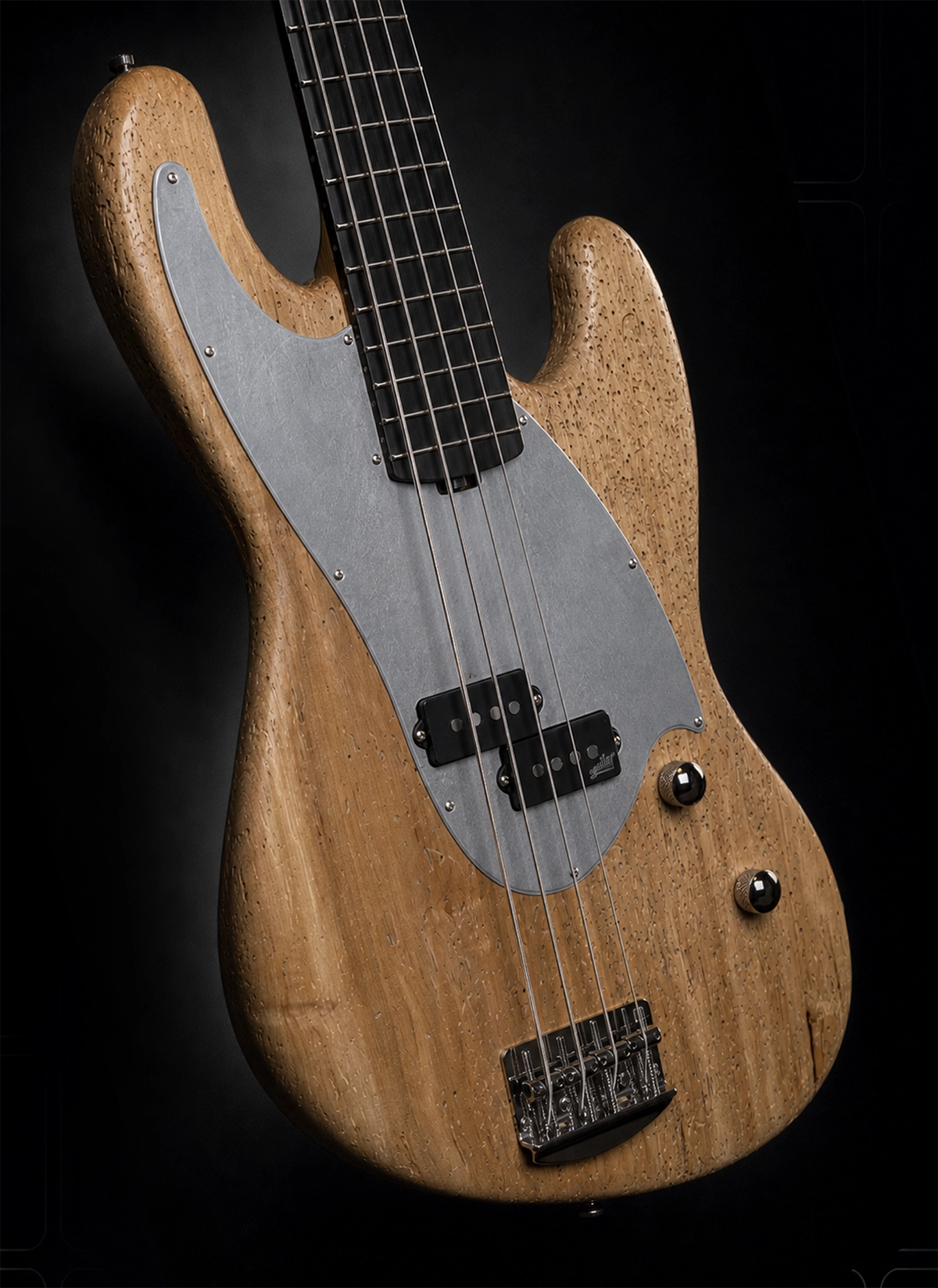
Medium scale, or long?

Bacci GuitarsPescia, Tuscany
Scale length is one of the most important numbers on a bass, and one of the least understood. It is the distance the string vibrates, from the nut to the bridge saddle. That single measurement sets the string tension at a given tuning, the spacing of the frets under your hand, and a large part of how the instrument feels and sounds.
Long scale is 34 inches, the reference most basses are built to. Medium scale is around 32 inches. Short scale is around 30. The differences sound small on paper, two inches between long and medium, but they are clearly felt under the hands and heard in the voice.
This article explains what scale length does, how 32-inch medium and 34-inch long really compare, where a shorter scale helps and where a longer one does, and why a well-built medium-scale bass gives up nothing at the bottom.
The Marleo is made in 32 or 34 inch, four or five strings, exactly as you order it.
At the same tuning and string gauge, a longer scale stretches the string tighter. Higher tension gives a firmer feel under the fingers, a quicker, more defined attack, and a tight low end. Lower tension, from a shorter scale, feels slinkier and a touch warmer, with a rounder attack.
The second effect is reach. A longer scale spreads the frets further apart, so stretches, especially in the first few frets, are wider. A shorter scale brings them closer, which is easier on the hands and part of why medium and short scales suit smaller players or anyone who finds a 34-inch neck a stretch.
Neither is correct. A firm, defined long scale and a slinky, rounder medium scale are two feels, and plenty of great bass lives on each. The question is which one fits your hands and your music.
The most compact reach, warmest and roundest voice.
A shorter reach and a rounder feel, still holding a strong low B.
Tight tension and defined lows, the classic reference feel.
Set side by side, the trade is clear. A 34-inch long scale is the reference: tight tension, defined low notes, the feel most players grew up with and the safe default for a punchy, articulate bottom. A 32-inch medium scale trades a little tension for a shorter reach and a rounder feel, easier to play, slightly warmer, and, on a well-made instrument, with no real loss at the low end.
Tight tension and defined low notes, the classic bass feel and the reference most players know. The safe choice for maximum low-end definition.
A shorter reach and a rounder, slinkier feel, easier on the hands, still holding a strong low B. A growing favourite, and Tim Lefebvre's choice.
Built to order in either scale, four or five strings, with a low B that stays a note whichever you pick.
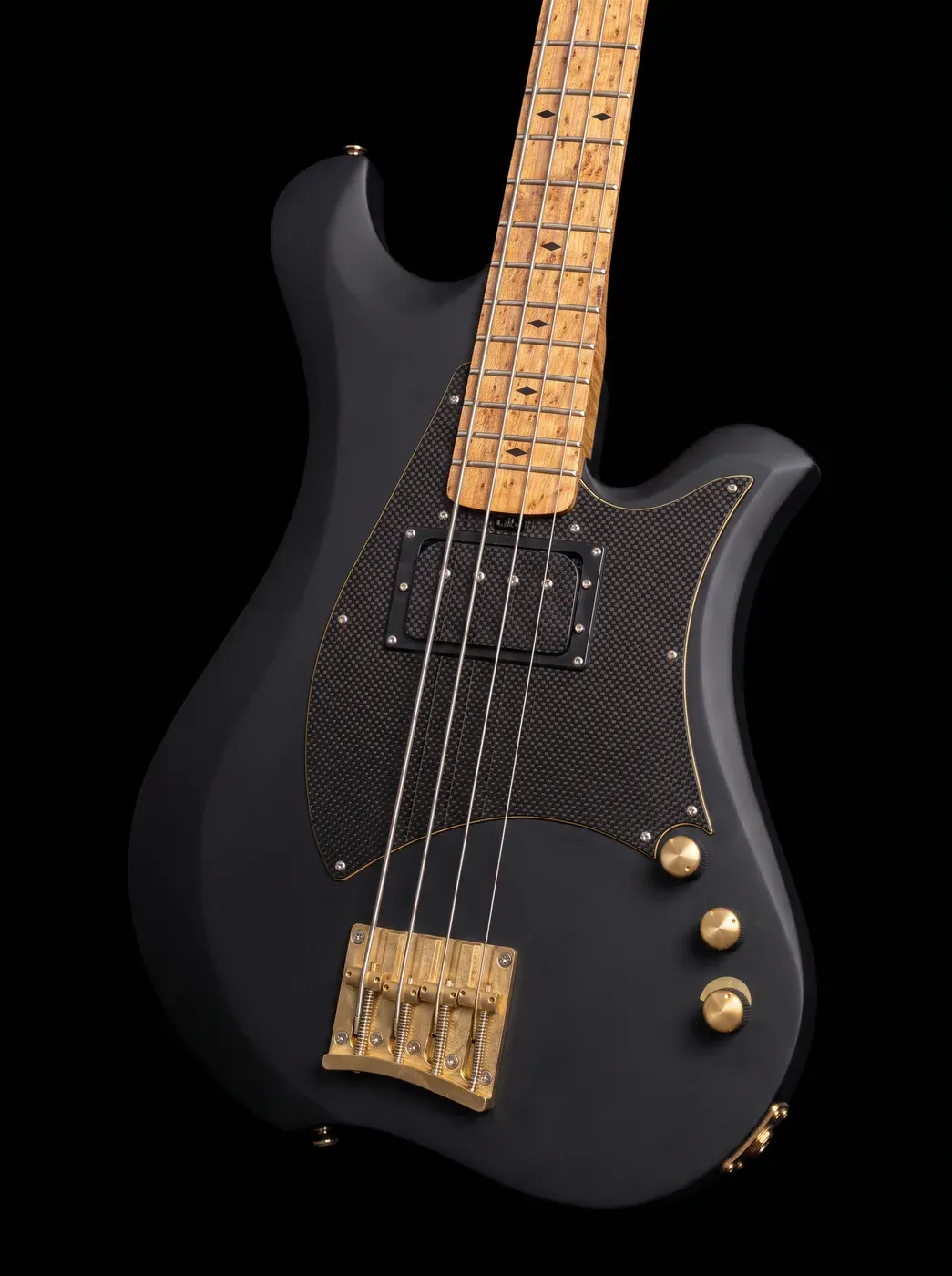
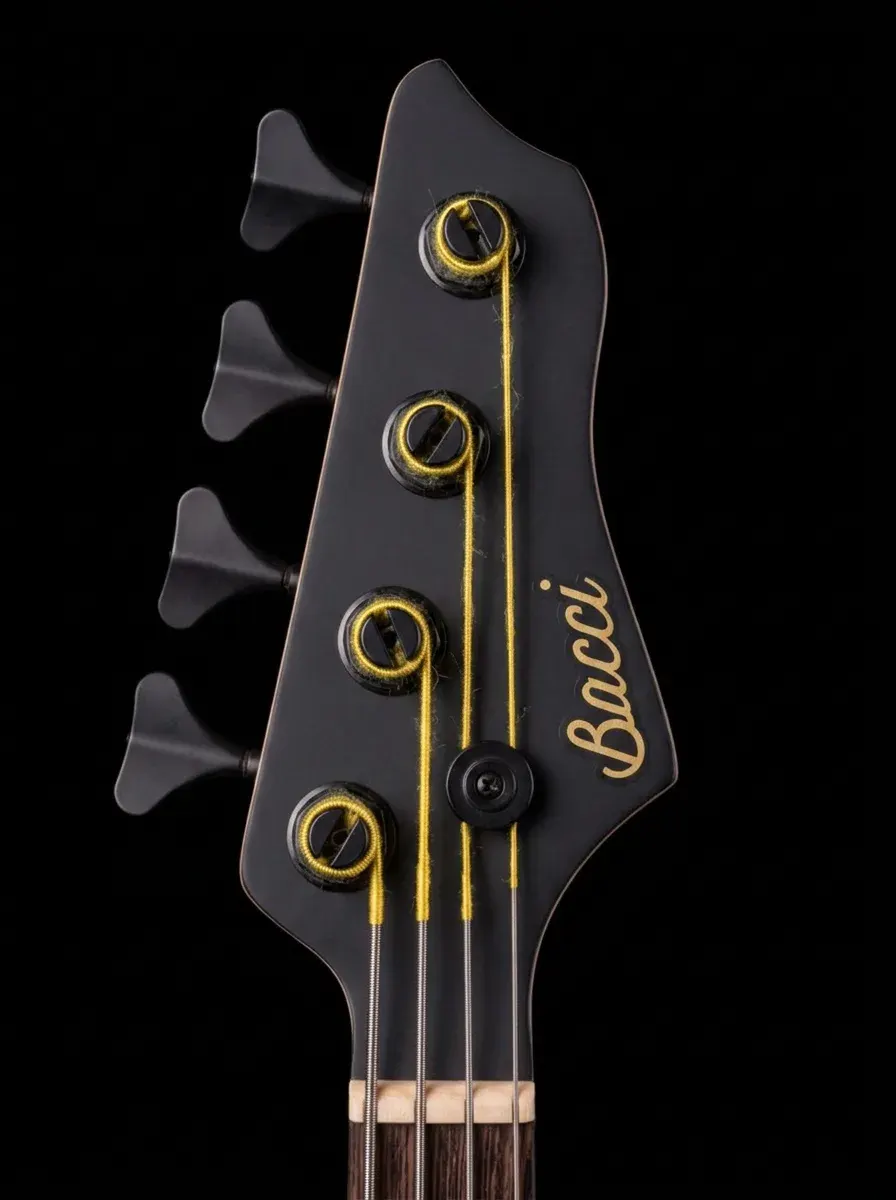
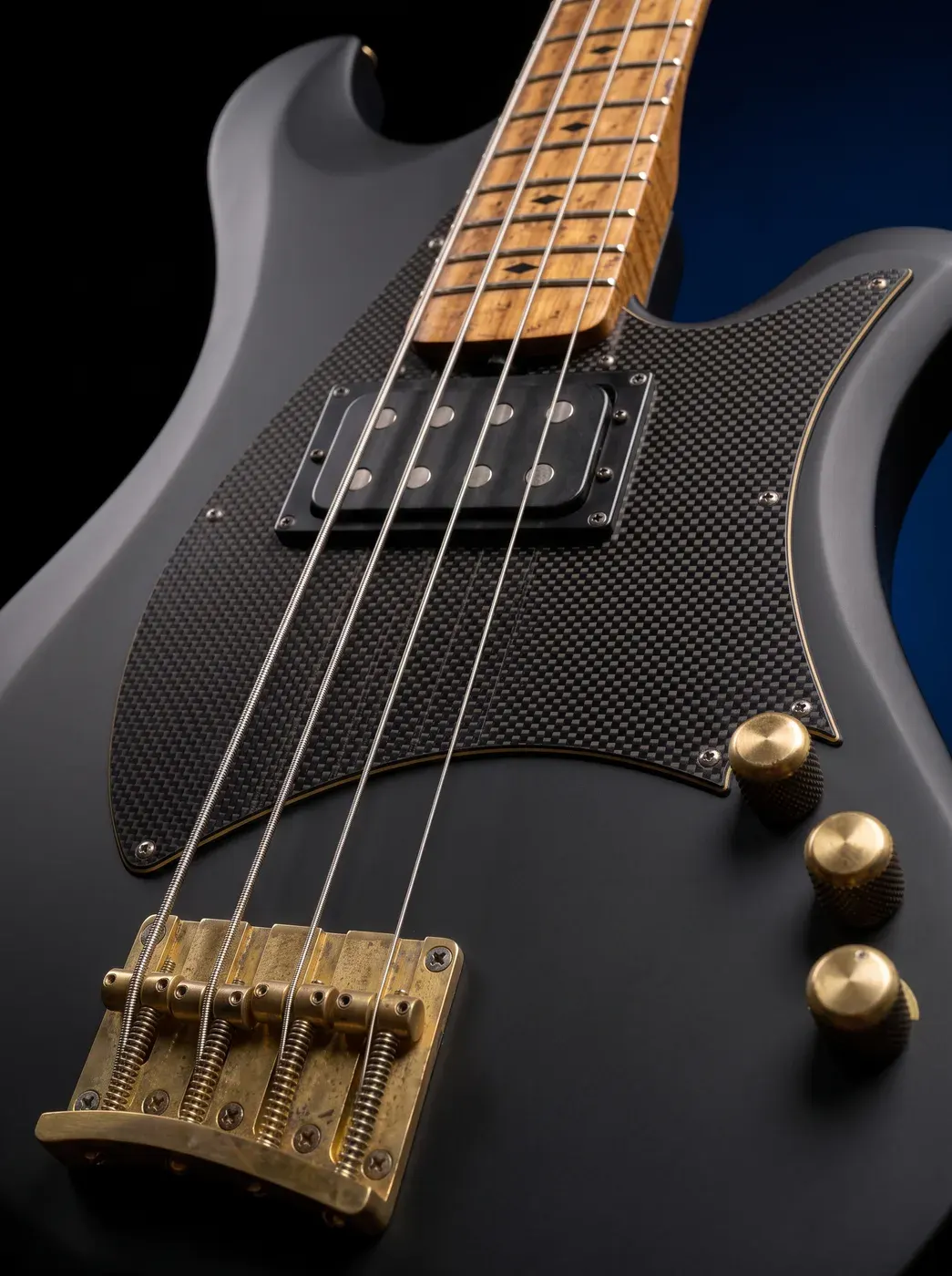
The old objection to medium and short scales was that you lose the low end, that a shorter string goes loose and woolly down low. On a poorly built bass that can be true. On a well-built one it is not, and the Marleo is the proof: what pulled players to it was a monstrous-sounding low B on a 32-inch scale, the comfort of medium scale with none of the usual compromise.
Tim Lefebvre's signature is a 32-inch medium scale for exactly that reason. The feel is easier, the reach is shorter, and the bottom is still there, firmly. A well-made medium scale is not a beginner's compromise, it is a deliberate choice that many professionals now prefer.
A 32-inch scale with a monstrous-sounding B string. It just grabbed me.
Derek Frank, on first playing a MarleoIf your music wants the tightest, most defined low end and you are comfortable on a standard neck, a 34-inch long scale is the natural home. If you want an easier reach, a rounder feel, or you move between guitar and bass and like a shorter stretch, a 32-inch medium scale is worth taking seriously, especially now that a good one gives up nothing at the bottom.
Because the Marleo is built to order, you are not locked into one answer by what happened to be on a wall. You choose the scale that fits your hands, and the bass is built to hold the low end either way.
Scale length is the distance from the nut to the bridge saddle, the speaking length of the strings. It sets the string tension at a given tuning, the spacing of the frets, and a large part of the feel and voice of a bass.
A 34-inch long scale gives tight string tension, defined low notes and the classic bass feel most players know. A 32-inch medium scale keeps the tension a little lower and the reach a little shorter, for a slightly warmer, rounder feel, while still holding a strong, clear low B when the bass is built well.
For many players, yes. The frets are closer together, so the reach is shorter, which is more comfortable low on the neck and easier on smaller hands. That comfort is one reason medium and short scales have become popular, including Tim Lefebvre's 32-inch signature Marleo.
Not on a well-built bass. A shorter scale has slightly lower tension, which can sound a touch warmer, but a good 32-inch instrument holds a defined low B. What drew players to the Marleo was exactly a monstrous-sounding low B on a 32-inch scale.
Longer scales make it easier to keep a low B tight and defined, which is why many five-strings are 34 inches or longer. A well-made 32-inch five-string holds the B too, so the choice comes back to feel: the Marleo is offered as a four or five-string in either scale.
A short scale is around 30 inches, shorter than medium (32) and long (34). It feels the most compact and sounds the warmest and roundest, favoured for a thick, vintage tone and by players who want the easiest reach.
His signature Marleo is a 32-inch medium scale for the balance it strikes: an easier, rounder feel without giving up the low end. The medium scale is a large part of its character.
Yes. The Marleo is handbuilt to order in a 32-inch or 34-inch scale, four or five strings, with the pickup voice and finish you choose.
The Marleo is deep, punchy and alive, in a 32 or 34 inch scale, four or five strings, built one at a time in Tuscany.
Every Marleo is designed, built and set up by Bruno, one at a time, in Pescia.